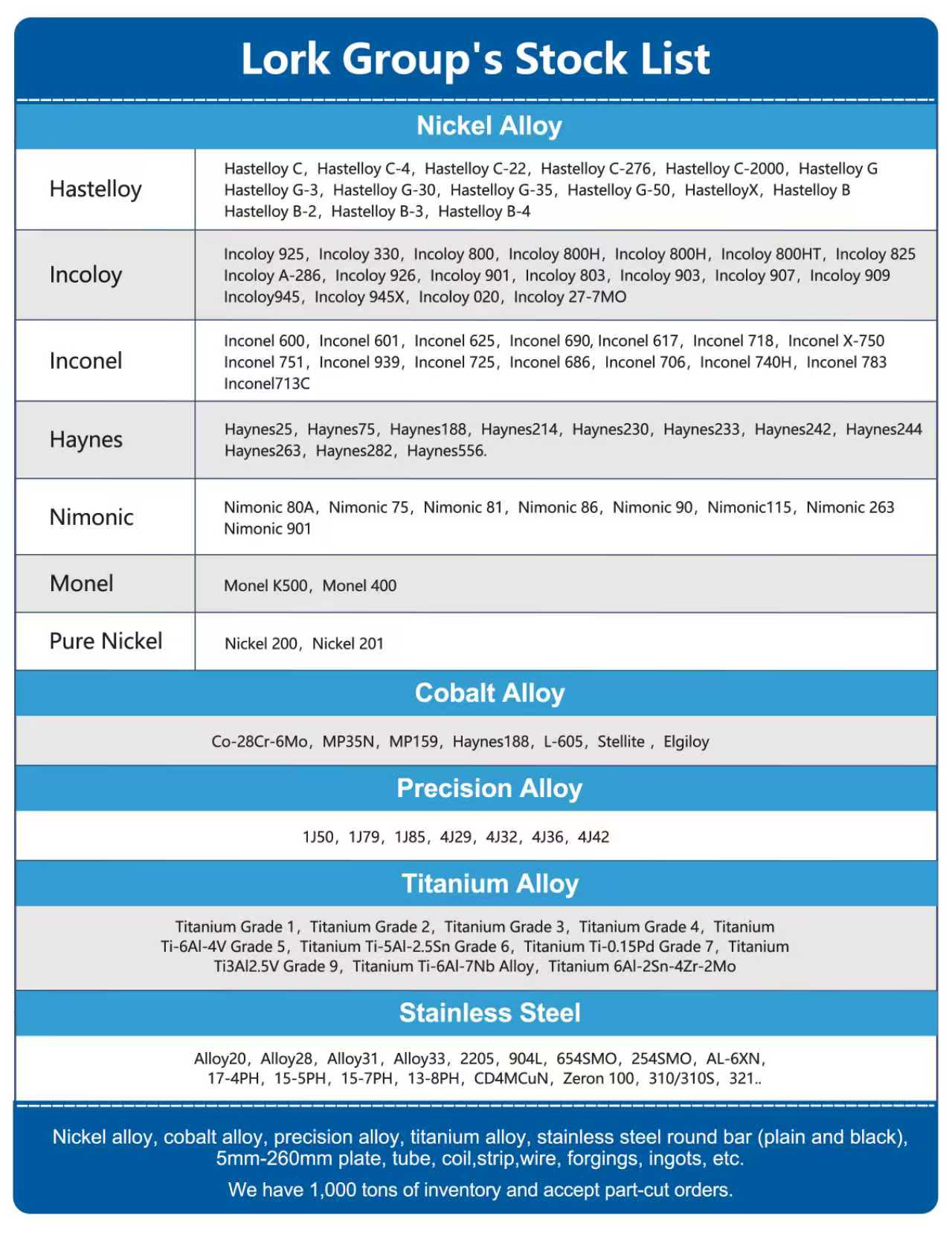


Api 6acra UNS N07718 Inconel 718 Nickel Alloy Bar
Product Introduction
Chemical Composition
| Material Type | Ti | Nb+Ta | Ni | Cr | Mo | Ai | Fe |
|---|---|---|---|---|---|---|---|
| Inconel 718 | 0.80-1.15 | 4.87-5.20 | 50.0-55.0 | 17.0-21.0 | 2.80-3.30 | 0.40-0.6 | 18-22 |
Mechanical Properties
| Tensile strength | Yield strength | Elongation | Reduction of area (%) |
|---|---|---|---|
| ≥ 965 MPa | ≥ 827 MPa | ≥ 20 | ≥ 25-35 |
Supply Specifications and Industry Standards
1. Common Specifications (Common Bar Stock):
Inconel 718 nickel alloy is mostly available in diameters of Φ0.5 inches - 14.0 inches (approximately 12.7-355.6 mm). Larger diameters require forging and customization. Length: Generally 3-6 meters, but custom lengths are also available.
Hollow Bars/Drilled Bars: Some suppliers offer internal bore finishing services for direct use in manufacturing components such as hangers.
For related inquiries, please contact us online.
2. Implementation Standards (Core):
API 6ACRA and UNS N07718 are the most classic combination in the oil and gas industry. Common examples include:
API 6ACRA: American Petroleum Institute standard,"Age-hardening Nickel-based Alloys for Oil Well Equipment."This is the guiding document for the oil and gas industry's 718 procurement standards. It specifies all requirements for materials, from smelting and heat treatment to mechanical properties and microstructure.
NACE MR0175 / ISO 15156: Certification standard for materials' resistance to stress cracking in H₂S environments. Materials must meet the 718 grade recognized by this standard to be used in acidic oil and gas fields.
ASTM B637: A general standard for nickel alloy bars and forgings, often used as a supplementary reference.
3. Smelting Process (related to purity):
Alloy 718 for oil and gas applications must undergo dual vacuum smelting: VIM (vacuum induction melting) + VAR (vacuum arc remelting), or VIM + ESR (electroslag remelting). This is to minimize gases, inclusions, and harmful elements. This is a key technical discussion point that most customers are concerned about.
Quality Inspection Process
We generally offer a free quality inspection process to ensure that the delivered materials meet standard requirements. This typically includes two processes: initial inspection and re-inspection. The initial inspection process consists of five steps: goods list verification, surface observation, packaging safety and compatibility inspection, dimensional tolerance measurement, and quantity verification. The re-inspection consists of four steps: secondary dimensional tolerance measurement, quantity verification, handheld spectrometer chemical composition testing, and hardness testing. Additional paid testing may include non-destructive testing, corrosion performance testing, and mechanical property testing. Non-destructive testing includes ultrasonic testing (UT) and surface testing (PT). We generally conduct targeted testing based on customer needs and material characteristics, and the price varies. Please contact our material experts to explain your specific needs and obtain a real-time quote.
Of course, medical-grade and aerospace-grade materials, which we frequently encounter, have more stringent requirements than those in other industries, resulting in unique performance demands. We generally recommend that these materials undergo testing by a third-party authoritative organization (such as SGS) during the sample testing phase when necessary. These organizations will issue test reports based on material standards, allowing you to gain a more comprehensive understanding of the material's final use during the sample procurement stage. This helps prevent losses from bulk purchases due to errors in material supply or substandard performance.
Other products in stock
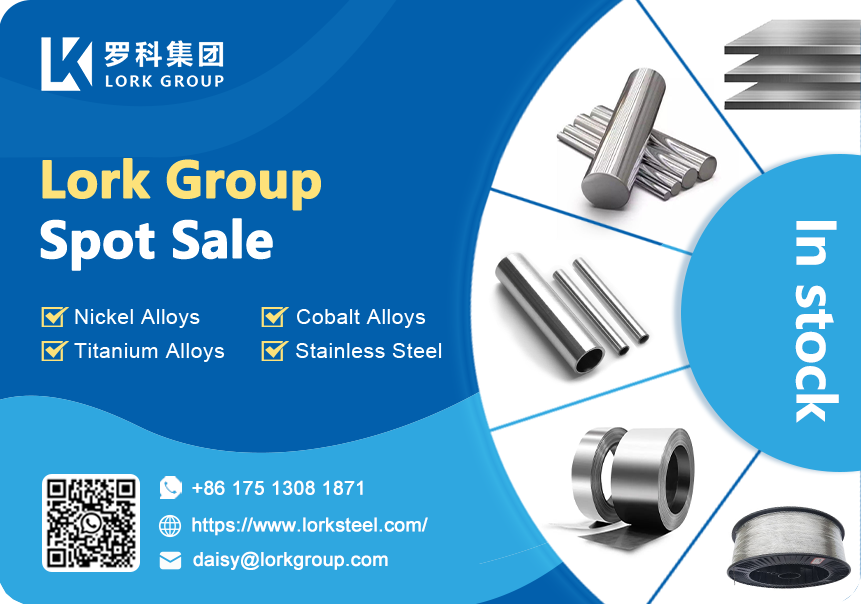
We are a professional supplier of metal raw materials
Long-term supply of the following materials:
- Nickel Alloy
- Cobalt Alloy
- Titanium Alloy
- Precision Alloy
- Stainless Steel