
Subscribe to our Newsletter


Model No: Ti-15Mo
Custom Ti-15Mo ASTM F2066 Titanium Alloy
Lork Group is a long-term supplier of Ti-15Mo ASTM F2066 titanium alloy for medical applications. We support small-batch customization, third-party quality testing, value-added processing services, and more. Contact us to learn more!
Delivery :
FOB
minimum order :
50 kilograms
Supply Ability :
20kilograms / Day
Stock Time :
30-40Day
Country of Origin :
China
Quantity :
US $30.00 - US $40.00 / kilograms
Ti-15Mo ASTM F2066 Titanium Alloy Product Introduction
Ti-15Mo (ASTM F2066, UNS R58150) is a metastable beta titanium alloy specifically designed for surgical implant applications. Its excellent biocompatibility, low elastic modulus (closer to that of human bone), and good mechanical properties make it a popular choice for modern medical implants, particularly in orthopedic, dental, and cardiovascular applications.
Ti-15Mo titanium alloy is primarily composed of titanium (Ti) and approximately 15% molybdenum (Mo). Its design was originally intended to avoid the use of elements such as vanadium and aluminum, which have neurotoxin side effects. All alloying elements have been proven to be safe and harmless to the human body.
The chemical composition, mechanical properties, metallurgical requirements, and test methods specified in the ASTM F2066 standard are available.
Contact Lork Group for detailed technical specifications.
WhatsApp: 17513081871
Email: Daisy@lorkgroup.com
Contact Lork Group for detailed technical specifications.
WhatsApp: 17513081871
Email: Daisy@lorkgroup.com
Ti-15Mo ASTM F2066 Titanium Alloy Chemical Composition
| Material Type | H | O | N | C | Mo | Cu | Ti |
|---|---|---|---|---|---|---|---|
| Ti-15Mo ASTM F2066 | ≤0.03 | ≤0.02 | ≤0.02 | 0.60-1.10 | 14.0 - 16.0% | ≤0.30 | Balance |
Ti-15Mo ASTM F2066 Titanium Alloy Physical Performance
| Resistivity | Harness | Tensile Strength | Rp0.2 Yield Strength | Elongation at Break | Elongation at Break |
|---|---|---|---|---|---|
| / | / | ≥ 950 MPa | ≥ 800 MP | ≥ 10% | 78 GPa |
Ti-15Mo ASTM F2066 Titanium Alloy Key Features
- Biocompatibility
Uses non-toxic elements (Ti, Mo) and does not contain potentially toxic elements such as aluminum (Al) and vanadium (V).
It offers high safety for the human body, low risk for long-term implantation, and excellent biocompatibility.
- Elastic modulus
Low (approximately 75-85 GPa), significantly lower than Ti-6Al-4V (approximately 110 GPa) and closer to human cortical bone (10-30 GPa).
This effectively reduces stress shielding, promotes bone healing, prevents bone resorption, and extends implant life.
- Mechanical Properties
High strength that can be adjusted through heat treatment: Solution-treated, it is easy to form; after aging, its strength can exceed that of Ti-6Al-4V ELI (ASTM F136). It also exhibits excellent plasticity.
It meets the mechanical requirements of load-bearing implants (such as joints and femoral stems), providing flexibility for surgeons and designers.
- Corrosion Resistance
Excellent corrosion resistance in human body fluids.
This ensures long-term implant stability, preventing inflammation or failure caused by corrosion products.
This ensures long-term implant stability, preventing inflammation or failure caused by corrosion products.
- Workability
Ti-15Mo ASTM F2066 Titanium Alloy is relatively soft after solution treatment, offering excellent formability. However, due to the high melting point of molybdenum, advanced melting techniques (such as suspension induction melting) are required to ensure a uniform composition during melting.
Also, it facilitates the manufacture of complex implant shapes, but places high demands on the manufacturer's smelting technology.
Also, it facilitates the manufacture of complex implant shapes, but places high demands on the manufacturer's smelting technology.
The mechanical properties of Ti-15Mo ASTM F2066 titanium alloy can be significantly modified through heat treatment processes:
Solution Treatment: The material is relatively soft in its solution state, exhibiting good plastic deformation capabilities and amenable to cold working and forming to create complex shapes.
Aging Treatment: Subsequent aging heat treatment can significantly increase its strength, reaching or even exceeding the strength levels of Ti-6Al-4V ELI (ASTM F136), thereby meeting the strength requirements of various load-bearing implants.
Solution Treatment: The material is relatively soft in its solution state, exhibiting good plastic deformation capabilities and amenable to cold working and forming to create complex shapes.
Aging Treatment: Subsequent aging heat treatment can significantly increase its strength, reaching or even exceeding the strength levels of Ti-6Al-4V ELI (ASTM F136), thereby meeting the strength requirements of various load-bearing implants.
Ti-15Mo ASTM F2066 Titanium Alloy Processing and Manufacturing
The processing of Ti-15Mo alloy presents certain challenges, primarily in the following aspects:
Melting: Due to the high melting point and high density of molybdenum (Mo), traditional melting is prone to segregation. Advanced techniques such as multiple vacuum consumable arc melting (VAR) or electron beam cold hearth melting (EBCHM) are required to ensure uniform composition.
Hot Working: Its hot working window is narrow, requiring high processing temperature and control requirements.
Cold Working: After solution treatment, it exhibits good cold formability.
Additive Manufacturing: Research has shown that Ti-15Mo alloy can be produced using additive manufacturing techniques such as selective laser melting (SLM), particularly for fabricating complex porous implants to further reduce the elastic modulus and promote osseointegration.
Other Products In Stock
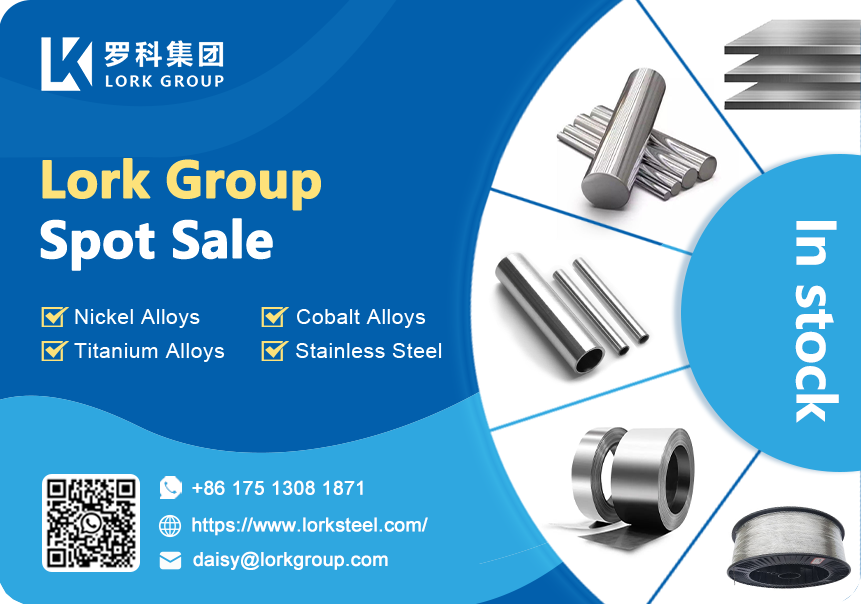
We are a professional supplier of metal raw materials
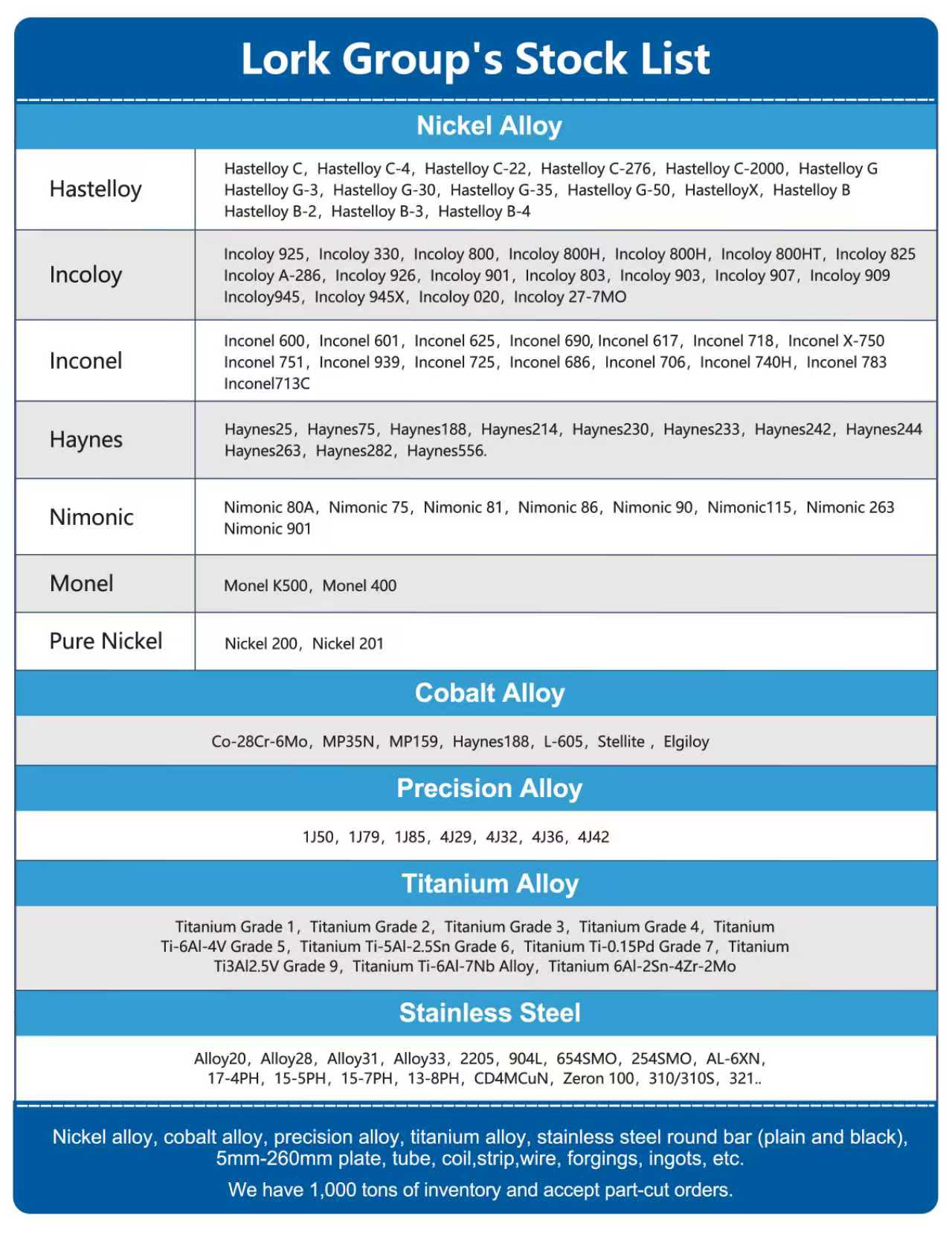
Long-term supply of the following materials:
- Nickel Alloy
- Cobalt Alloy
- Titanium Alloy
- Precision Alloy
- Stainless Steel
If you are interested, please get in touch with us!
Related Products


