
How Does Stainless Steel Resist Corrosion?
2024-07-24
What is Stainless Steel?
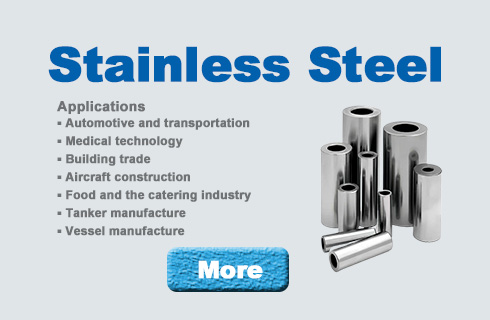
Stainless steel is a type of alloyed steel that contains at least 10.5% chromium, making it highly resistant to corrosion. The added chromium makes it an ideal material for a wide range of applications, from cookware to medical equipment. Its unique properties make it a popular choice for consumers and businesses alike. It is important to note that there are also different grades of stainless steel, each with its own set of properties.
What Are the Types of Stainless Steel?
Thousands of different grades of stainless steel have been formulated, but they can be categorized into four distinct groups:
Austenitic Stainless Steels: This group contains at least 16% chromium and 6% nickel (the basic grade 304 is 18% chromium, 8% nickel). It is widely used in chemical plants and food processing equipment because it will not readily corrode, rust, or stain after contact with water.
Ferritic Stainless Steels: This group contains chromium (usually between 11 and 27%) and little or no nickel. They are less corrosion-resistant than the austenitic grades but are more iron-like and exhibit better mechanical properties at elevated temperatures.
Martensitic Stainless Steels: This group contains chromium (between 14 and 18%) and moderate levels of carbon (usually between 0.2% and 1.2%). They can be hardened and tempered like carbon steel.
Duplex Stainless Steels: This group contains chromium (between 18 and 28%) and nickel (between 3.5% and 5.5%). They have better corrosion resistance than the austenitic grades and, because of their lower carbon content, are less susceptible to embrittlement than the martensitic grades.
How Does Stainless Steel Resist Corrosion?
While various stainless steel grades might differ in their metallurgic composition and alloying or manufacturing processes, one trait they all share is a passivation layer. This layer of chromium oxide forms when the surface of the metal is exposed to oxygen.
The layer is too thin to observe directly and under most circumstances remains clear. This allows the finished texture of a stainless steel product to show through and provides a variety of appearance options from high gloss to matte.
Impervious to water, the passivation layer is self-generating and serves to protect the metal. While it might discolor under extreme temperatures, it’s still working. However, stainless steel is not invincible. It’s still susceptible to corrosion under the right situations.
If you’re planning to use stainless steel, consider exposure to the following to gauge general corrosion risks.
Acids
Stainless steel is generally resistant to acidic corrosion. However, exact resistance levels will depend on the steel in use, concentration, and types of acid, and environmental temperature.
For example:
Grades 316 and 317 offer resistance to phosphoric acid at most concentrations and sulfuric acid at concentrations below 10 percent.
Grade 904 offers resistance to high concentrations of sulfuric acid.
Hydrochloric acid is an exception to the general acid resistance of stainless steel and should be avoided.
Bases
Stainless steel offers strong resistance to weak bases in both high concentrations and high-temperature environments. However, stronger bases will cause cracking or etching corrosion. Particular care must be taken with chloride solutions such as sodium hypochlorite.
Organics
Resistance to organics differs. In general, 300-series steels perform best with these solutions. However, exact recommendations vary based on environmental factors such as temperature and oxygen availability.
If you’re planning to use stainless steel to store organics, consulting a professional, such as Lork Group, can help to both highlight concerns and identify options to create a safe, long-lasting stainless steel solution.
Lork Group stocks Stainless steel in a range of sizes. Stainless steel Material of alloy can be supplied in random lengths, cut to order or machined to customer's specifications. We provide tailored solutions that meet specific material specifications, To buy or learn more about stainless steel contact us now, we will be in touch shortly.
How to choose stainless steel material in shipbuilding
Monel 400 Application Processing Guide
Related Article
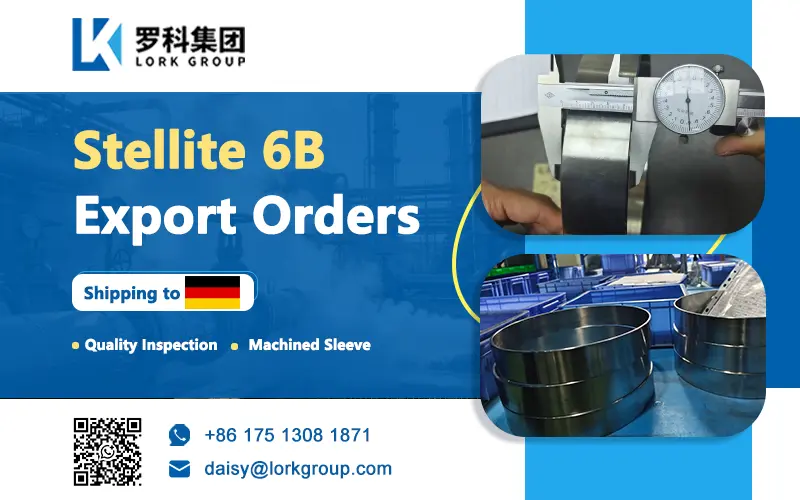
The Lork Group possesses extensive experience in processing cobalt-based alloys and maintains a comprehensive quality control system. The Stellite 6B bushings exported in this shipment—measuring 9 cm in width and 36 cm in diameter—are high-precision components. Delivery takes place only after the products have passed inspection; this process reflects our unwavering commitment to quality and is key to earning the trust of our German clients.
Lork Group Stellite 6B machined bushings exported to Germany

As an international group with 15 years of experience in specialty alloy supply chain management, Lork Group offers product selection consultation and supply services for the full range of Elgiloy, Pyromet, Elinvar, and Ni-Span-C 902 alloys. Please feel free to contact Lork Group’s sales and technical teams for the latest price quotes, material technical data sheets, or supplier coordination support.
Supplier of Elgiloy Pyromet Elinvar and Ni-Span-C 902 high-elasticity alloys
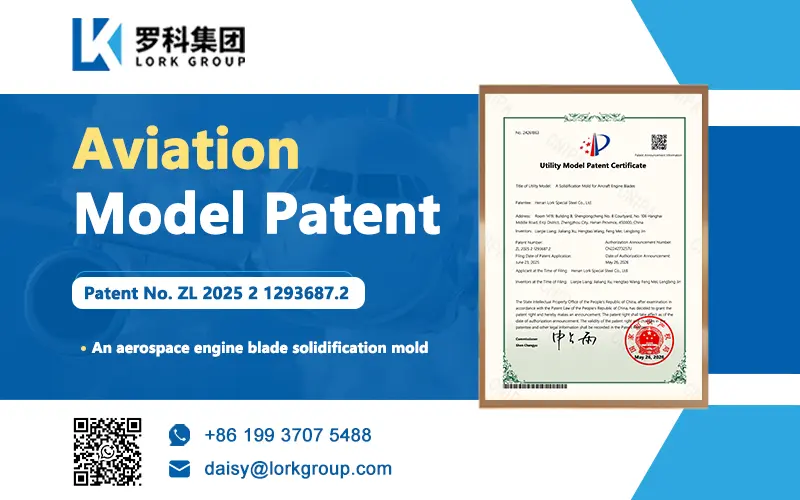
Patent No. ZL 2025 2 1293687.2 focuses on the precision casting of aero-engine blades, demonstrating the Group's sustained innovation capabilities in the fields of specialty steels and precision forming technologies.
Lork Group Granted National Utility Model Patent for an Aviation Engine Blade Solidification Mold
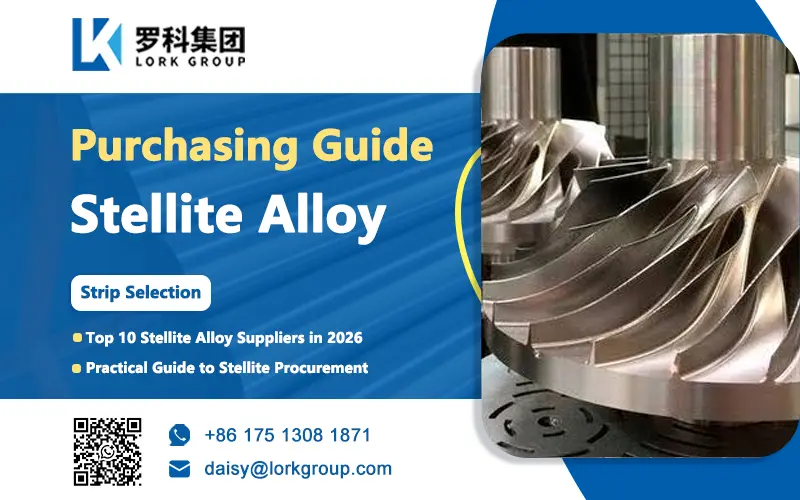
If you are unsure whether to use Stellite 6, 12, or 21 for your current project, simply send us a description of the operating conditions, and Lork Group engineers will provide a free "grade recommendation." Click the button below to submit details regarding operating temperature, corrosive media, and impact conditions, and we will respond within 24 hours.
Top 10 Suppliers of Stellite Alloy Materials for 2026