
How Does Stainless Steel Resist Corrosion
2024-07-24
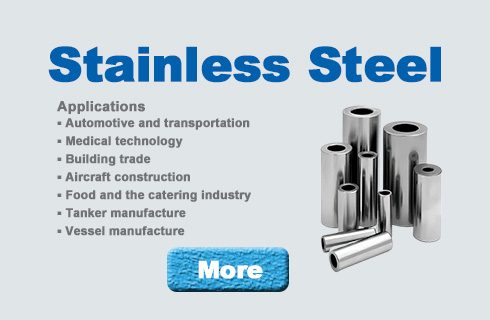
What is Stainless Steel?
Stainless steel is a type of alloyed steel that contains at least 10.5% chromium, making it highly resistant to corrosion. The added chromium makes it an ideal material for a wide range of applications, from cookware to medical equipment. Its unique properties make it a popular choice for consumers and businesses alike. It is important to note that there are also different grades of stainless steel, each with its own set of properties.
What Are the Types of Stainless Steel?
Thousands of different grades of stainless steel have been formulated, but they can be categorized into four distinct groups:
Austenitic Stainless Steels: This group contains at least 16% chromium and 6% nickel (the basic grade 304 is 18% chromium, 8% nickel). It is widely used in chemical plants and food processing equipment because it will not readily corrode, rust, or stain after contact with water.
Ferritic Stainless Steels: This group contains chromium (usually between 11 and 27%) and little or no nickel. They are less corrosion-resistant than the austenitic grades but are more iron-like and exhibit better mechanical properties at elevated temperatures.
Martensitic Stainless Steels: This group contains chromium (between 14 and 18%) and moderate levels of carbon (usually between 0.2% and 1.2%). They can be hardened and tempered like carbon steel.
Duplex Stainless Steels: This group contains chromium (between 18 and 28%) and nickel (between 3.5% and 5.5%). They have better corrosion resistance than the austenitic grades and, because of their lower carbon content, are less susceptible to embrittlement than the martensitic grades.
How Does Stainless Steel Resist Corrosion?
While various stainless steel grades might differ in their metallurgic composition and alloying or manufacturing processes, one trait they all share is a passivation layer. This layer of chromium oxide forms when the surface of the metal is exposed to oxygen.
The layer is too thin to observe directly and under most circumstances remains clear. This allows the finished texture of a stainless steel product to show through and provides a variety of appearance options from high gloss to matte.
Impervious to water, the passivation layer is self-generating and serves to protect the metal. While it might discolor under extreme temperatures, it’s still working. However, stainless steel is not invincible. It’s still susceptible to corrosion under the right situations.
If you’re planning to use stainless steel, consider exposure to the following to gauge general corrosion risks.
Acids
Stainless steel is generally resistant to acidic corrosion. However, exact resistance levels will depend on the steel in use, concentration, and types of acid, and environmental temperature.
For example:
Grades 316 and 317 offer resistance to phosphoric acid at most concentrations and sulfuric acid at concentrations below 10 percent.
Grade 904 offers resistance to high concentrations of sulfuric acid.
Hydrochloric acid is an exception to the general acid resistance of stainless steel and should be avoided.
Bases
Stainless steel offers strong resistance to weak bases in both high concentrations and high-temperature environments. However, stronger bases will cause cracking or etching corrosion. Particular care must be taken with chloride solutions such as sodium hypochlorite.
Organics
Resistance to organics differs. In general, 300-series steels perform best with these solutions. However, exact recommendations vary based on environmental factors such as temperature and oxygen availability.
If you’re planning to use stainless steel to store organics, consulting a professional, such as Lork Group, can help to both highlight concerns and identify options to create a safe, long-lasting stainless steel solution.
Lork Group stocks Stainless steel in a range of sizes. Stainless steel Material of alloy can be supplied in random lengths, cut to order or machined to customer's specifications. We provide tailored solutions that meet specific material specifications, To buy or learn more about stainless steel contact us now, we will be in touch shortly.
How to choose stainless steel material in shipbuilding
Monel 400 Application Processing Guide
Related Article
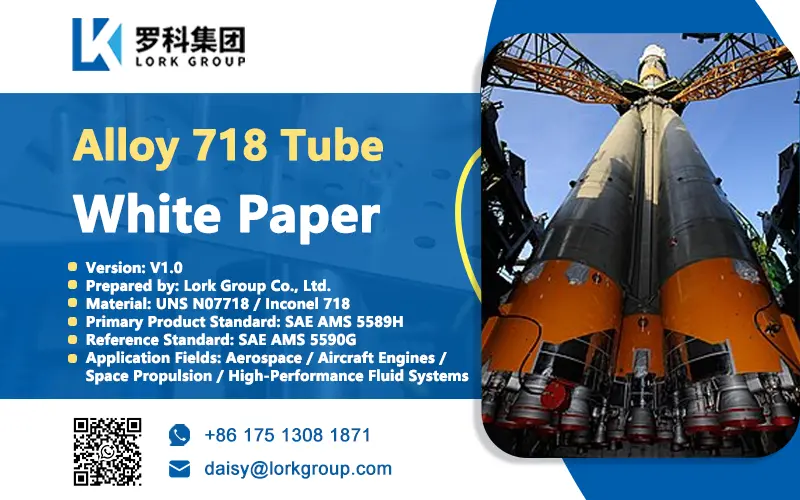
Can you determine whether Alloy 718 is suitable for specific applications—such as fluid piping in aero-engines, structural components in aircraft, or systems in aerospace—and specify the requirements for procurement and quality acceptance?
LORK GROUP Inconel 718 Seamless Tubing Aerospace Practical Technical White Paper
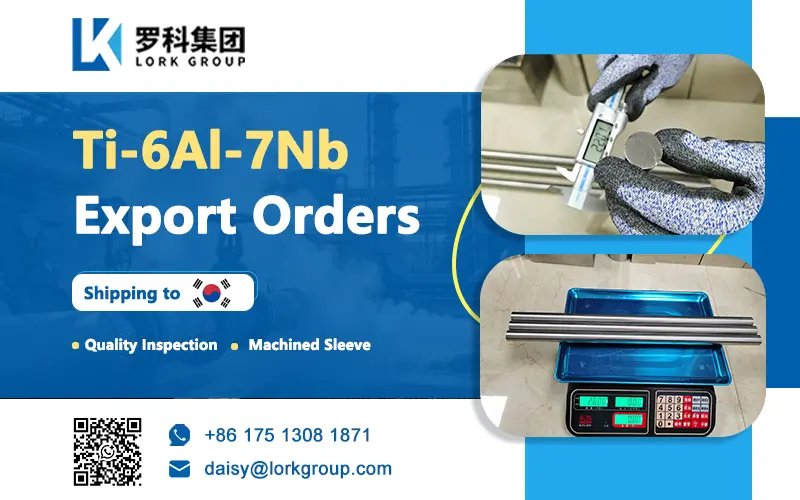
Lork Group has delivered Ti-6Al-7Nb rods to a South Korean client. These medical-grade rods are manufactured in accordance with the ASTM F1295 standard, and the company offers both sample-based trial production and volume supply.
Shipment Record Ti-6Al-7Nb Titanium Alloy Rods Exported to South Korea Lork Group
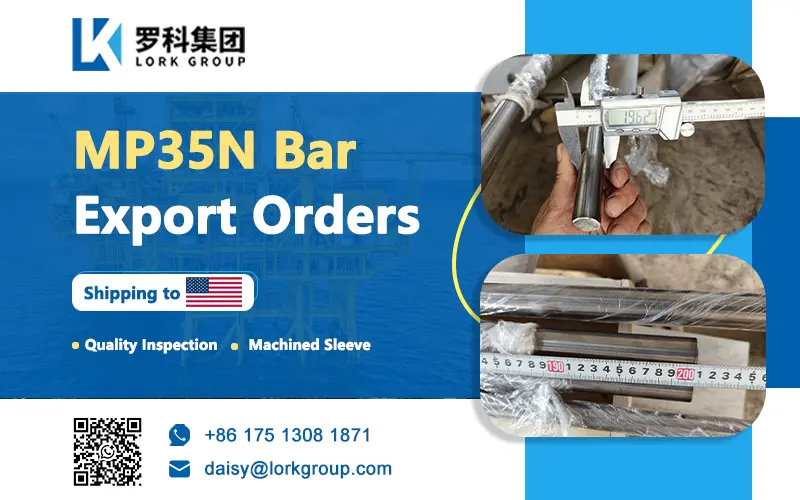
Lork Group has successfully completed the shipment of an order for MP35N cobalt-based alloy rods to a U.S. customer. The initial delivery consisted of four MP35N alloy rod samples, accompanied by a third-party inspection report from SGS confirming that all tested parameters met specifications. These materials, destined for the United States, will be used to manufacture critical components—specifically high-pressure sealing and suspension systems—for deep-sea oil and gas extraction equipment.
Shipment records of MP35N cobalt rods and SGS test reports exported to Lork Group in the United States
A comparison of Inconel alloy standards for sheet, strip, and plate: which grade—600, 601, 625, or 718—suits your operating conditions? While AMS and ASTM standards for the same grade may specify similar chemical compositions, AMS standards typically impose stricter additional requirements regarding grain size (ASTM E112), non-destructive testing (ultrasonic/penetrant), and traceability.
Guide to Selecting Inconel Sheet, Strip, and Plate: A Comprehensive Analysis of Mainstream Grades, Standards, and Applications for 2026