Shipment Record Ti-6Al-7Nb Titanium Alloy Rods Exported to South Korea Lork Group
The Signal Behind a “Small” Order
In terms of volume, this is a typical sample order. But sample orders are often more telling than batch orders - customers need to verify whether the materials are "right" before officially placing a large order. Korean customers choose Lork Group to purchase Ti-6Al-7Nb samples. Behind this is triple confirmation of material grade, supply capability and technical response.
Product Information: Ti-6Al-7Nb Titanium Alloy Rods
| Item | Content |
| Grade | Ti-6Al-7Nb (corresponds to Chinese grade TC20; UNS R56700) |
| Specifications | Diameter 22 mm × Length 50 mm |
| Quantity | 4 units |
| Executive Standard | ASTM F1295 / ISO 5832-11 (Medical Grade) |
| Supply Condition | Annealed, turned/ground surface |
Lork Group’s delivery logic: even sample orders are processed according to bulk-order standards.
Our quality inspection process is safeguarded by a dual-stage system comprising both initial and secondary inspections. The preliminary inspection for every shipment encompasses five fundamental checks: specifications, quantity, tolerances, surface quality, and packaging. For example:
Dimensional Re-inspection: Diameters (22mm) are verified to meet h8/h9 tolerances, and bars are cut to a precise length of 50mm.
Surface Inspection: Surfaces are checked to ensure they are free of oxide scale and scratches; the turned finish is guaranteed to meet the requirements for subsequent machining.
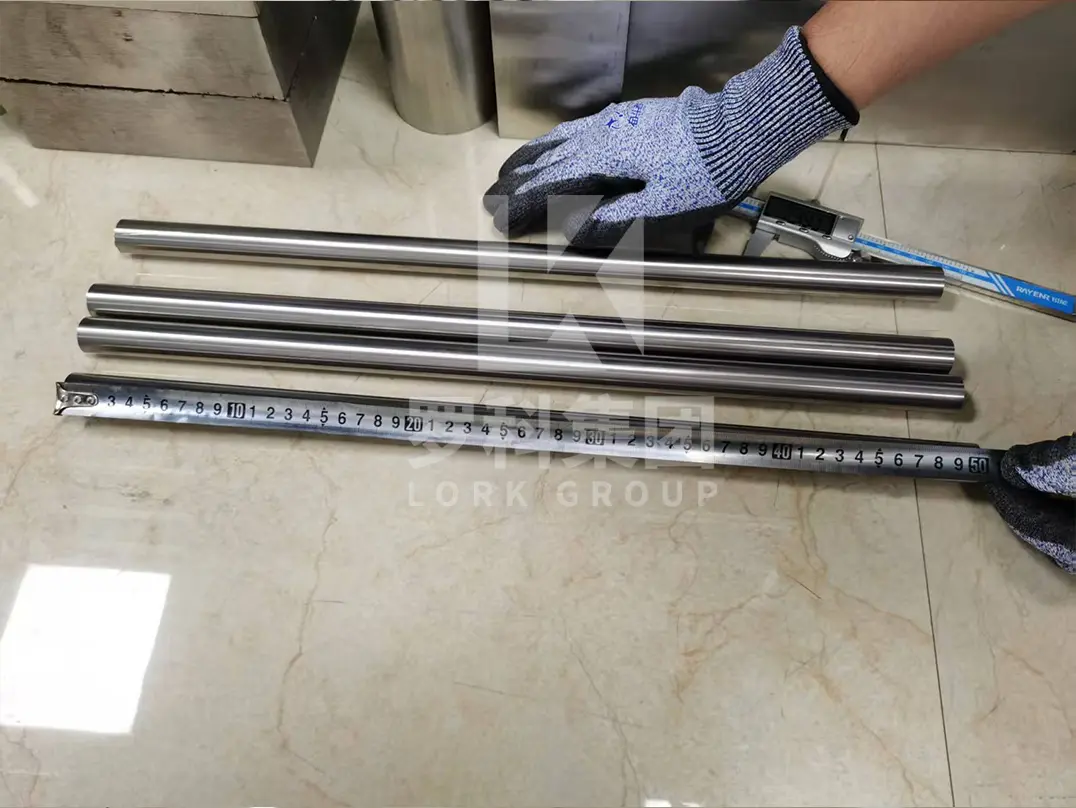
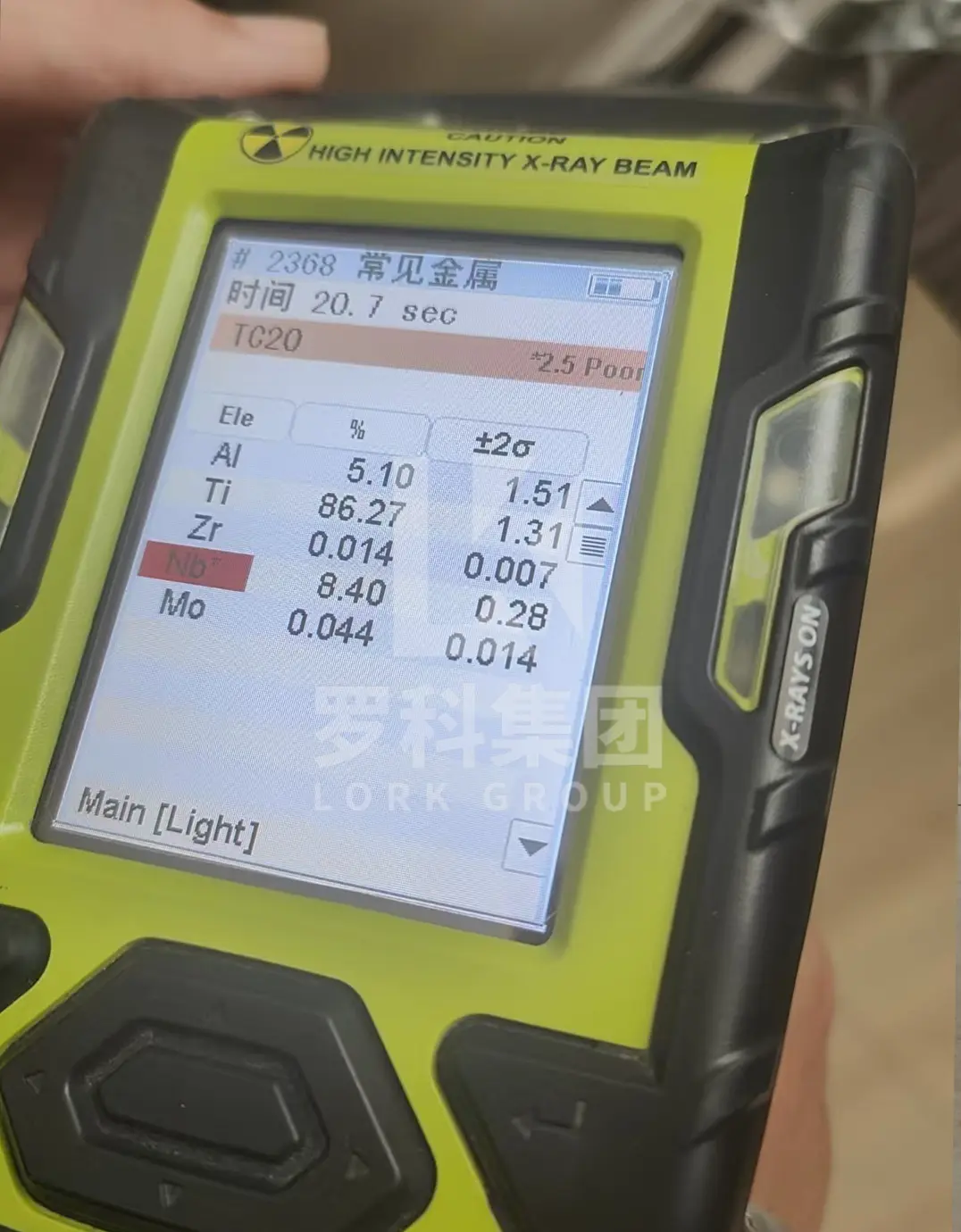
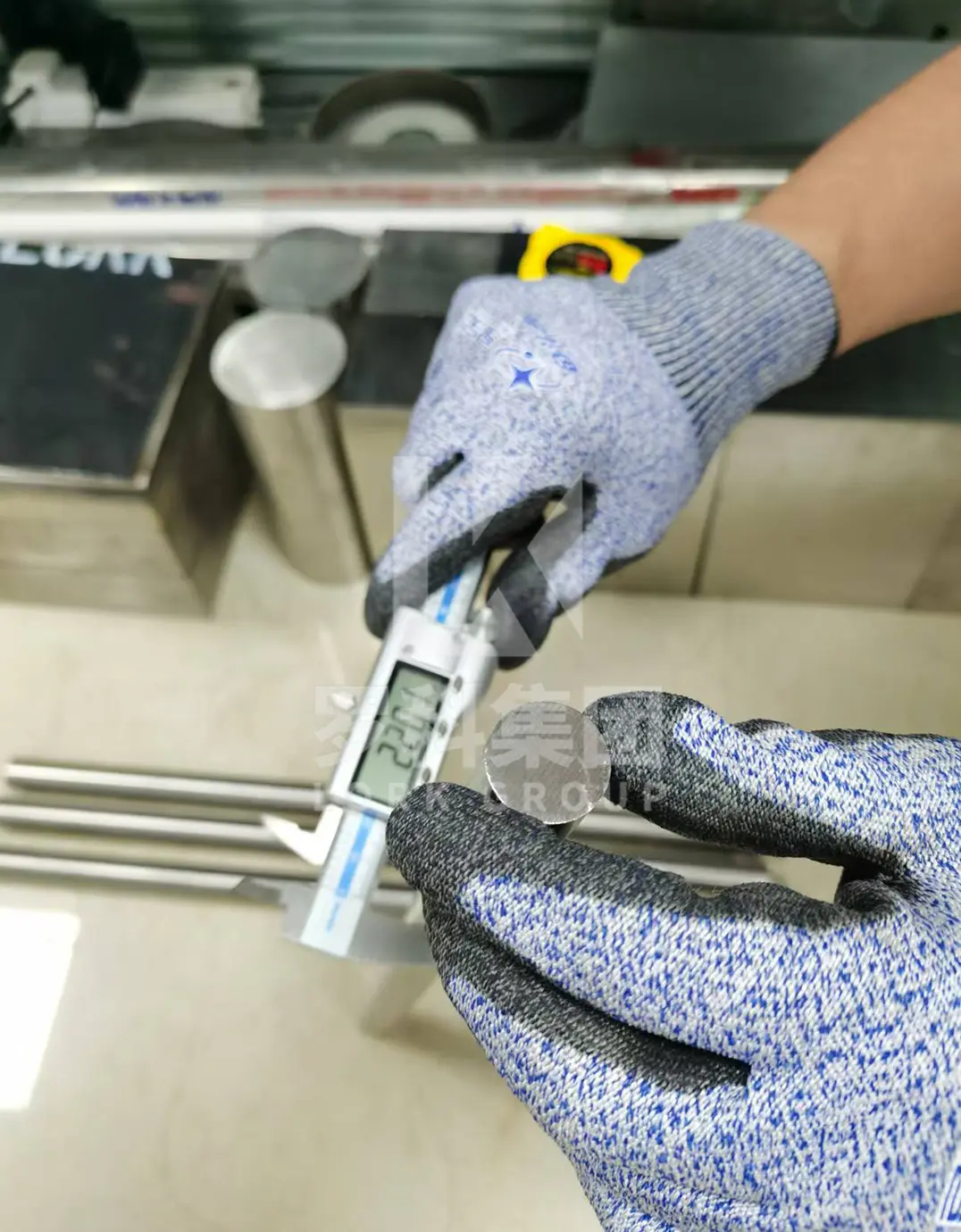
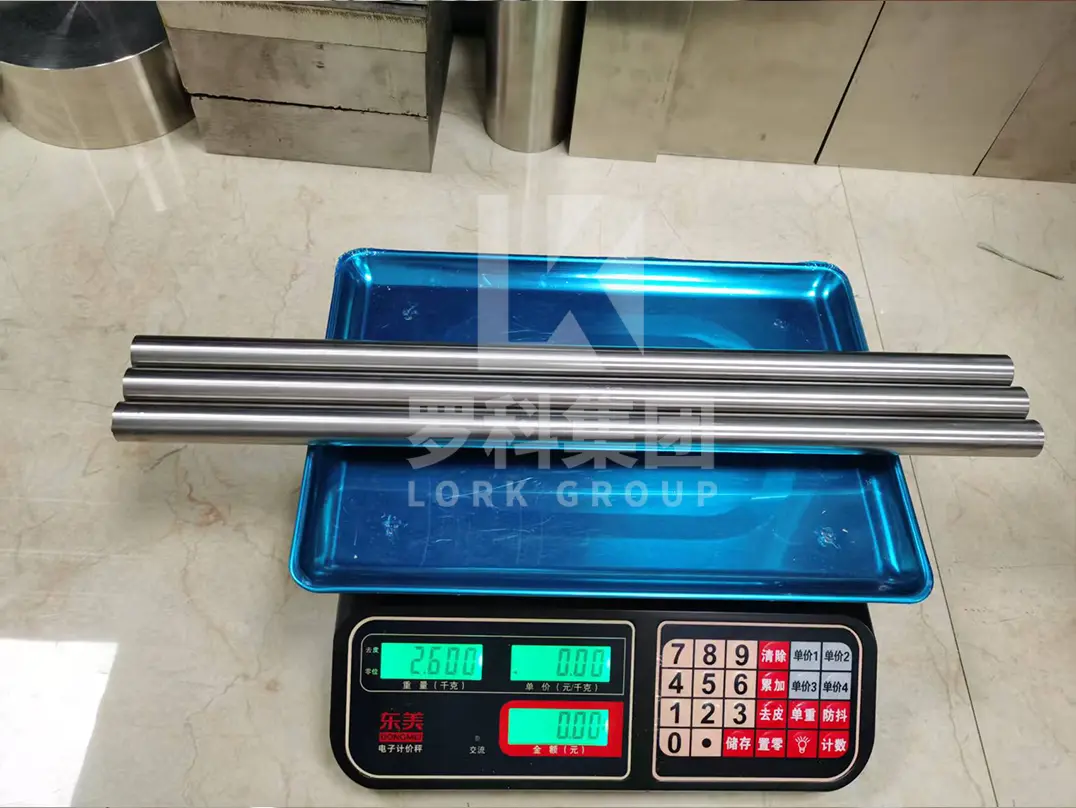
Source Verification: Bars in an annealed state—compliant with ASTM F1295 / ISO 5832-11 standards—are procured from qualified suppliers, with original mill test reports (MTRs) provided.
Documentation: A Certified Mill Test Report (CMTR) is included with the shipment, detailing chemical composition, mechanical properties (tensile strength ≥900 MPa, yield strength ≥800 MPa, and elongation ≥10%), and a declaration of conformity to the relevant standards.
A sample order is never treated as a casual or "haphazard" shipment. Whether the South Korean client proceeds to place a bulk order will depend entirely on the machining performance and test results of these four bars.
View more order details.
To protect client privacy, some information is provided for reference only.
Medical Use - Prototyping of Orthopedic Implant Components
The annealed Ti-6Al-7Nb rods, measuring 22 mm in diameter and 50 mm in length, are intended for the client’s use in prototype validation and trial machining of medical implants.
The primary application for Ti-6Al-7Nb is in surgical implants. It is the material of choice for components such as artificial hip stems, knee joint parts, spinal fixation systems, bone plates and screws, and dental implants. A South Korean client requested four short rods as samples to conduct the following evaluations:
- Verifying machinability: Ti-6Al-7Nb has low thermal conductivity and a tendency to adhere to cutting tools; therefore, machining parameters must be adjusted based on the specific material batch. The samples are used for trial turning and milling to assess tool wear and surface quality.
- Prototyping: The material is machined into small implant components—such as bone screw blanks or miniature connectors—to verify dimensions and surface finish.
- Inspection and certification: When switching material suppliers, some South Korean medical device manufacturers require samples to be machined into test specimens for third-party verification of biocompatibility or mechanical properties.
In addition to the aforementioned trial production of orthopedic implant components, Ti-6Al-7Nb rods are also an ideal material for dental or precision medical device components.
With an elastic modulus of approximately 105–115 GPa—higher than that of bone but lower than that of stainless steel—Ti-6Al-7Nb is well-suited for applications such as dental implants and precision surgical instruments. The 22 mm diameter rods are appropriate for machining into blanks for dental implant abutments or small, precision shaft-like components.
The 50 mm length is a key specification. While this length is insufficient for producing long shafts or large forgings, it is perfectly adequate for machining several small components for first-article inspection. This material can also be procured for prototyping or validation purposes.
Lork Group's Procurement Tips for Ti-6Al-7Nb
Clarify the required standard grade. Ti-6Al-7Nb comes in both medical-grade (ASTM F1295 / ISO 5832-11) and industrial-grade versions. Medical-grade material imposes stricter controls on interstitial elements (O, N, H) and inclusions. If the final product is intended for medical device registration, you must specify the applicable standard on your purchase order.
Do not simply adopt the machining parameters used for Ti-6Al-4V. Although the two alloys have similar properties, niobium’s effect on stabilizing the β-phase differs from that of vanadium, leading to variations in work-hardening tendencies and chip formation during cutting. It is recommended to conduct trial cuts on small samples first to determine the optimal cutting speed and feed rate.
Shipment records of MP35N cobalt rods and SGS test reports exported to Lork Group in the United States
Related Article