
Monel 400 Application Processing Guide
2024-07-24

Monel 400 Description
Monel 400 (also known as Phyweld 400 and Nicorros LC), is a nickel-copper alloy that is known for its excellent corrosion resistance in a wide range of environments. Monel 400 composed of approximately 63-70% nickel and 28-34% copper, along with small amounts of iron, manganese, carbon, and silicon. It possesses a single-phase structure, forming a solid solution of nickel and copper. Monel 400 material exhibits significant strength, corrosion resistance, ductility, and thermal conductivity.
Such properties make Monel 400 valuable to many industries. Some typical uses of Monel 400 include chemical processing equipment, hydrocarbon processing facilities, marine engineering components, and heat exchangers. Its corrosion resistance makes it suitable for environments where it’s exposed to seawater, alkaline solutions, and organic, sulfuric, hydrofluoric, or phosphoric acids. Additionally, its excellent thermal conductivity makes it an attractive choice for heat-transfer applications.
Corrosion Resistance
Monel 400 exhibits resistance to corrosion by many reducing media. It is also generally more resistant to attackby oxidizing media than higher copper alloys.
This versatility makes alloy 400 suitable for service in a variety of environments.
Monel 400 is widely used in marine applications. While Monel 400 products exhibit very low corrosion rates in flowing seawater, stagnant conditions have been shown to induce crevice and pitting corrosion. Monel 400 is also resistant to stress corrosion cracking and pitting in most fresh and industrial waters.
Monel 400 Applications
Monel 400 can be readily joined and fabricated. By proper control of the amount of hot or cold work and by the selection of appropriate thermal treatments, finished fabrications can be produced to a rather wide range of mechanical properties. Including as:
- Feed-water and steam-generator tubing.
- Brine heaters and seawater scrubbers.
- Sulfuric acid and hydrofluoric acid alkylation plants.
- Pickling bath heating coils.
- Transfer piping from oil refinery crude columns.
- Uranium refining and nuclear fuel production.
- Manufacturing of perchloroethylene and chlorinated plastics.
- Monoethanolamine (MEA) reboiling tube.
- Propeller and pump shafts.
Heating and Pickling
Thermal Treatments
The material will remain bright and free from discoloration when heated and cooled in a reducing atmosphere or quenched in an alcohol-water solution. Rate of cooling will have no significant effect. MONEL alloy 400 will form an adherent oxide film if allowed to cool in air after heating.
Both cold-worked and hot-worked MONEL alloy 400 requires thermal treatment to develop the optimum combination of strength and ductility and to minimize distortion during subsequent machining.
Stress equalizing of cold-worked material causes an increase in the yield strength at 0.00% offset without marked effects on other properties. Stress equalizing is done by holding for about 3 hr at a temperature of 575°F. Stress relieving will reduce stresses without producing a recrystallized grain structure. This treatment is recommended to obtain minimum “walking” or distortion after metal removal. Heating for 1 to 2 hr at 1000° to 1050°F will relieve strains in either hot or cold-worked products. Stress relief (1000°-1200°F/1 hr, followed by slow cooling) is strongly recommended as a precaution against stresscorrosion cracking in certain environments. Stress relieving slightly decreases tensile strength, yield strength, and hardness and slightly increases elongation.
Annealing can completely soften work-hardened material. Time and temperature required depend on the amount of previous cold work. In general, MONEL alloy 400 is annealed by the open heating method by holding at 1600° to 1800°F for 2-10 min, whereas box annealing is done most satisfactory at 1400° to 1500°F for 1-3 hr at temperature.
The effects of heating on properties of cold-drawn and hot-rolled material are compared . In these tests, the cold-drawn rod developed an annealed temper after 3 hr at temperature at 1300°F, and the hot-rolled plate, after 3 hr at about 1470°F.
They may be used as guides for establishing procedures for specific applications. Grain growth occurs when material is heated in the upper portion of the annealing temperature range.
Pickling
Pickling can produce bright, clean surfaces on Monel 400.
Fabricating
Monel 400 is typically produced through a process known as alloying. It's important to note that specific manufacturing processes and techniques may vary among different manufacturers, but it always follows a few general steps:
- Melting: The primary raw materials (nickel and copper) are melted in a furnace at high temperatures.
- Alloying: Once the materials are molten, they are thoroughly mixed to ensure a homogeneous blend of nickel and copper. Alloying elements such as iron, manganese, carbon, and silicon are added in precise amounts at this point to achieve the required composition of Monel 400.
- Casting: The molten alloy is then cast into forms such as ingots or billets. This step allows the alloy to solidify and take on a specific shape which will later be processed into the desired final product.
- Forming: The cast alloy is then subjected to various forming processes, such as hot or cold rolling, forging, or extrusion. These processes shape the alloy into the desired forms, such as sheets, bars, plates, rods, or wires.
- Heat Treatment: After forming, the Monel 400 alloy may need to be annealed or tempered. These heat treatments optimize the material's mechanical properties, including its strength, hardness, and ductility.
- Finishing: The final step involves surface finishing. That may require cutting, machining, surface treatment, and quality inspections to ensure that the Monel 400 products meet the desired specifications and quality standards.
MONEL alloy 400 is readily fabricated by standard processes. Hot Forming. With respect to its resistance to hot deformation, MONEL alloy 400 is softer than many steels. It can, therefore, be hot-formed into almost any shape. The use of proper temperature during hot forming is important. The range of hot-forming temperatures is 1200°F to 2150°F. For heavy reductions, recommended metal temperature is 1700° to 2150°F. Light reductions may be taken down to 1200°F. Working at the lower temperatures produces higher mechanical properties and smaller grain size.
Prolonged soaking at hot-working temperatures is detrimental. If a delay occurs during processing, the furnace should be cut back to 1900°F and not brought to temperature until operations are resumed. In no case should the alloy be heated above 2150°F; permanent damage may result.
Heavy forging should not be carried out so rapidly that the metal becomes overheated from working. The use of an optical pyrometer is recommended.
The content appearing on this webpage is for informational purposes only.
Lork Group stocks this alloy in a range of sizes. Monel 400 Material of alloy can be supplied in random lengths, cut to order or machined to customer's specifications. Machining includes drilling, turning, tapping, threading, CNC shapes.We provide tailored solutions that meet specific material specifications, To buy or learn more about Monel alloy contact us now, we will be in touch shortly.
How Does Stainless Steel Resist Corrosion
What are the commonly used types of stainless steel in the pharmaceutical industry?
Related Article
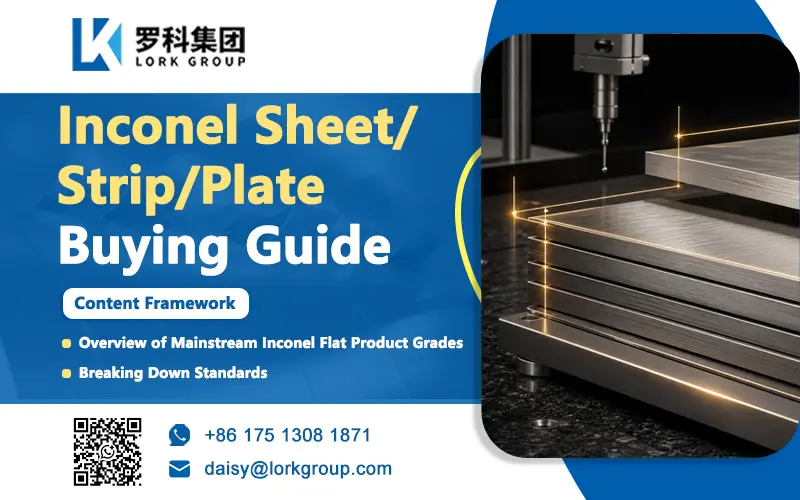
A comparison of Inconel alloy standards for sheet, strip, and plate: which grade—600, 601, 625, or 718—suits your operating conditions? While AMS and ASTM standards for the same grade may specify similar chemical compositions, AMS standards typically impose stricter additional requirements regarding grain size (ASTM E112), non-destructive testing (ultrasonic/penetrant), and traceability.
Guide to Selecting Inconel Sheet, Strip, and Plate: A Comprehensive Analysis of Mainstream Grades, Standards, and Applications for 2026

The Lork Group specializes in providing stress shielding solutions for users of titanium alloy orthopedic implants. Our materials include ASTM F1713 titanium rods, Ti-13Nb-13Zr titanium alloy, and other ASTM F1713 titanium products.
Lork Group's Medical Titanium Alloy Implants Solve the Challenge of Stress Shielding
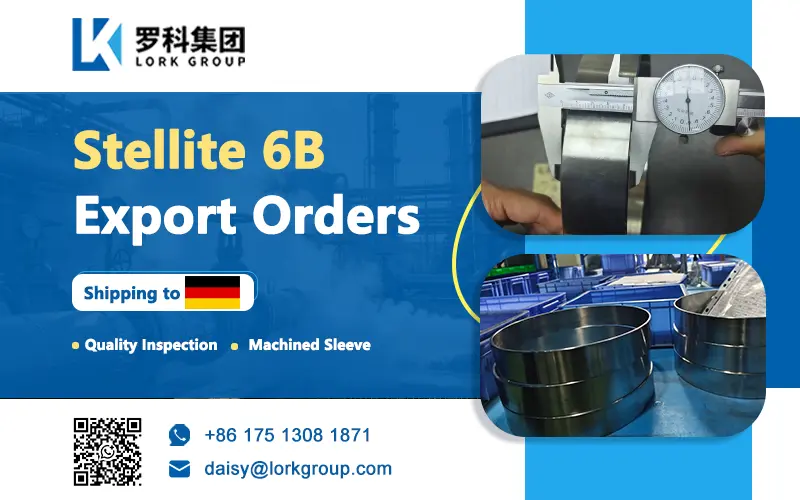
The Lork Group possesses extensive experience in processing cobalt-based alloys and maintains a comprehensive quality control system. The Stellite 6B bushings exported in this shipment—measuring 9 cm in width and 36 cm in diameter—are high-precision components. Delivery takes place only after the products have passed inspection; this process reflects our unwavering commitment to quality and is key to earning the trust of our German clients.
Lork Group Stellite 6B machined bushings exported to Germany

As an international group with 15 years of experience in specialty alloy supply chain management, Lork Group offers product selection consultation and supply services for the full range of Elgiloy, Pyromet, Elinvar, and Ni-Span-C 902 alloys. Please feel free to contact Lork Group’s sales and technical teams for the latest price quotes, material technical data sheets, or supplier coordination support.
Supplier of Elgiloy Pyromet Elinvar and Ni-Span-C 902 high-elasticity alloys