
4 Types of Rhenium Alloys That are Widely Used
2025-01-07
Rhenium is a silvery-white rare high melting point metal that is hard, wear-resistant, and corrosion-resistant. Except for tungsten and carbon, among the elements, rhenium has the highest melting point, which is 3453 K. Its density is exceeded only by osmium, iridium, and platinum. Rhenium has the highest modulus of elasticity among the refractory metals. A ductile-to-brittle transition temperature does not exist in pure rhenium. Rhenium is stable in air, insoluble in hydrochloric acid, and does not interact with hydrogen and nitrogen. Because of the high price of rhenium, the application of rhenium-containing alloys is mostly used. In this article, we will introduce 4 types of rhenium alloys that are widely used in aerospace, electronics, petrochemical, and other fields.
1. Platinum-rhenium Alloy
Platinum-rhenium alloy is a binary alloy based on platinum and added with rhenium. There are two kinds of platinum-rhenium alloys: PtRe8 and PtRel4. PtRe8 is a high-temperature thermocouple material, which can be used with rhodium for an instantaneous temperature of 1800 ° C and platinum at 1600 ° C. And PtRel4 alloy can be used as electrical contact material.
2. Platinum-tungsten-rhenium Alloy
Platinum-tungsten-rhenium alloy is a platinum-based ternary alloy containing tungsten and rhenium. A small amount of rhenium can improve the resistivity and tensile strength, and reduce the temperature coefficient of resistance. Platinum-tungsten-rhenium alloy can be used as resistance strain material, which can be used at temperatures above 800.
3. Tungsten-rhenium Alloy
The tungsten-rhenium alloy is a solid solution-strengthened alloy based on tungsten and added with rhenium. The rhenium content (mass fraction,%) in tungsten-rhenium alloys is usually 3, 5, 10, 25, and 26. Tungsten-rhenium alloy is divided into low-content W-Re alloy (Re≤5%) and high-content W-Re alloy (Re≥15%).
The Properties of Tungsten-rhenium Alloys
Tungsten-rhenium alloy has a series of excellent properties, such as high melting point, high strength, high hardness, high plasticity, high recrystallization temperature, high resistivity, high thermoelectric potential value, low vapor pressure, and so on.

The Applications of Tungsten-rhenium Alloys
Tungsten and rhenium are refractory metals, and they are widely used in high-temperature fields. But they also have shortcomings. For example, pure tungsten is brittle and the recrystallization temperature is very low; pure rhenium has poor processing performance and is expensive. Therefore, their application range is greatly restricted.
However, the tungsten-rhenium alloy made of tungsten and rhenium overcomes the shortcomings of pure tungsten and pure rhenium and has many excellent properties. Therefore, it has been widely used in electronic technology, thermal control, modern nuclear technology and space navigation technology, temperature measurement, instrumentation, electrical appliances, and other cutting-edge science and technology departments.
Especially thermocouple made of tungsten-rhenium alloy wire has high thermoelectric potential and sensitivity and has a wide temperature measurement range, fast reaction speed, good corrosion resistance, and is good thermal sensing material in the field of temperature measurement. It is the general trend to replace platinum-rhodium thermocouples with tungsten-rhenium thermocouples.
4. Molybdenum-rhenium Alloy
The molybdenum rhenium alloy is based on molybdenum, with 2% to 5% rhenium added. The addition of rhenium to molybdenum can improve the plasticity and strength of molybdenum. The molybdenum-rhenium alloy can be prepared by powder metallurgy.
The Applications of Molybdenum-rhenium Alloys
Molybdenum-rhenium alloys can be used as a high-speed rotating X-ray tube target, microwave communication long-life grid, space reactor core heating tube, high-temperature furnace heating element, high-temperature thermocouple, etc.
The room temperature tensile strength, ductility, and resistivity of the molybdenum-rhenium alloy increase with the increase of rhenium content. Generally, Mo-5% Re and Mo-41% Re are used as thermocouple wires and structural materials in aerospace. Mo-50% Re is used as a high-temperature structural material.
Lork Group is a leading manufacturer & supplier of refractory metals in the world. We offer customers high-quality refractory metal products such as tungsten, molybdenum, tantalum, rhenium, titanium, and zirconium at a very affordable price.
Cold Welding Principles, Processes, Advantages and Applications
Inconel 751 is an age hardenable nickel-chromium-iron alloy
Related Article
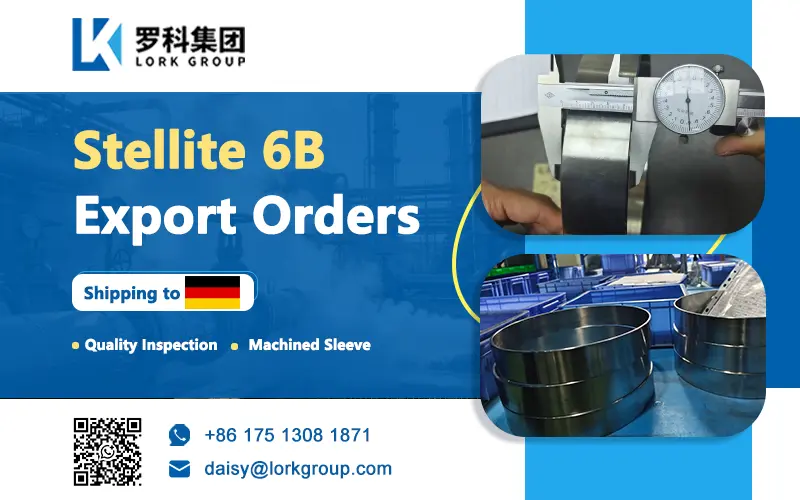
The Lork Group possesses extensive experience in processing cobalt-based alloys and maintains a comprehensive quality control system. The Stellite 6B bushings exported in this shipment—measuring 9 cm in width and 36 cm in diameter—are high-precision components. Delivery takes place only after the products have passed inspection; this process reflects our unwavering commitment to quality and is key to earning the trust of our German clients.
Lork Group Stellite 6B machined bushings exported to Germany

As an international group with 15 years of experience in specialty alloy supply chain management, Lork Group offers product selection consultation and supply services for the full range of Elgiloy, Pyromet, Elinvar, and Ni-Span-C 902 alloys. Please feel free to contact Lork Group’s sales and technical teams for the latest price quotes, material technical data sheets, or supplier coordination support.
Supplier of Elgiloy Pyromet Elinvar and Ni-Span-C 902 high-elasticity alloys
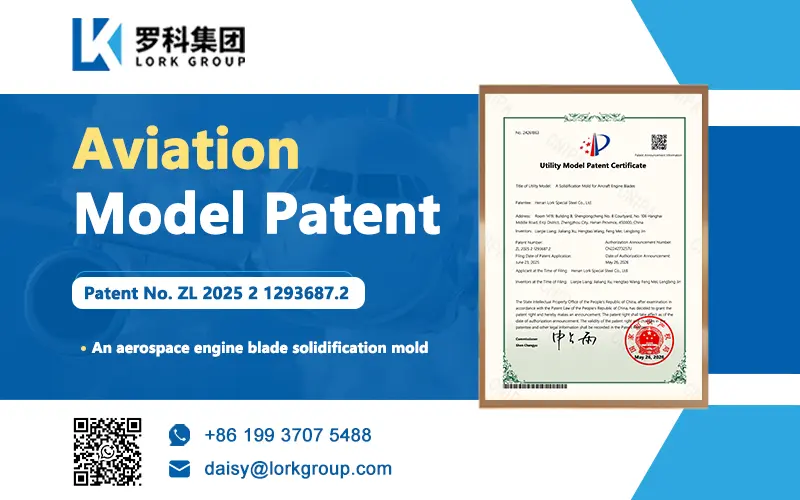
Patent No. ZL 2025 2 1293687.2 focuses on the precision casting of aero-engine blades, demonstrating the Group's sustained innovation capabilities in the fields of specialty steels and precision forming technologies.
Lork Group Granted National Utility Model Patent for an Aviation Engine Blade Solidification Mold
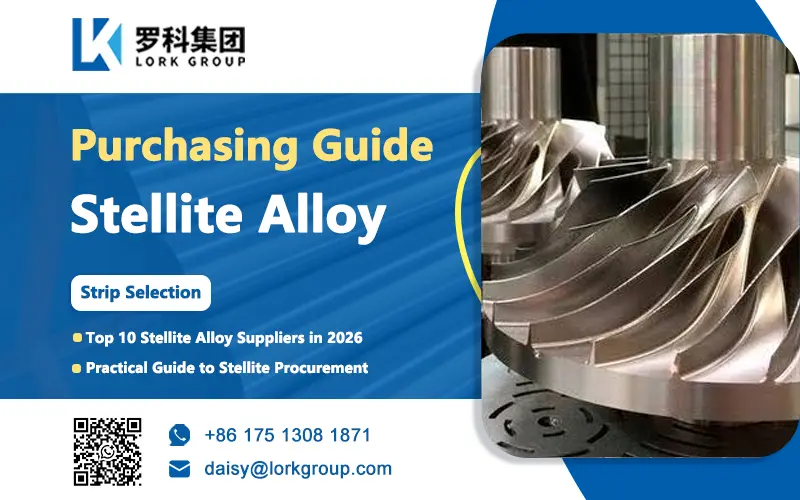
If you are unsure whether to use Stellite 6, 12, or 21 for your current project, simply send us a description of the operating conditions, and Lork Group engineers will provide a free "grade recommendation." Click the button below to submit details regarding operating temperature, corrosive media, and impact conditions, and we will respond within 24 hours.
Top 10 Suppliers of Stellite Alloy Materials for 2026