
316 Stainless Steel vs 304 Stainless Steel: Which is Better?
2024-09-25
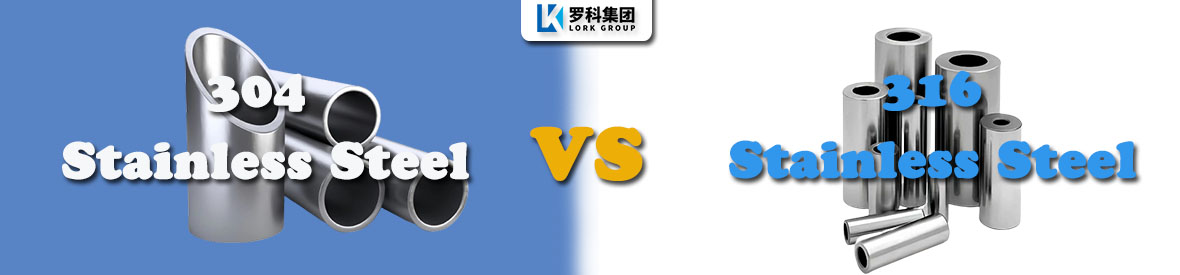
For laymen, it is easy to overlook the differences between different grades of stainless steel. However, for manufacturers, there may be significant differences between stainless steel alloys such as 304 grade stainless steel and 316 grade stainless steel.
Is 316 grade stainless steel worth the additional cost compared to 304 grade stainless steel alloy? The answer depends on your application and needs.
Firstly, what is 316 stainless steel? What is 304 stainless steel?
Grade 316 is a commonly used stainless steel alloy with a melting range of 1371 ° C-1399 ° C. As an austenitic stainless steel alloy, it has the characteristics of high strength, corrosion resistance, and high chromium and nickel content. The tensile strength of this alloy is 579 MPa, and the maximum operating temperature is about 800 ° C.
In addition, molybdenum is added to the formula of 316 grade alloy, which improves the alloy's resistance to acid, alkali, and chloride pitting corrosion.
304 grade stainless steel is another popular high-performance alloy, which is a durable material in terms of tensile strength, durability, corrosion resistance, and oxidation resistance. The melting point of 304 grade stainless steel is reached within the temperature range of 1399 ° C to 1454 ° C. However, the closer the 304 grade stainless steel is to its melting point, the greater the loss of its tensile strength.
304 grade stainless steel is particularly outstanding, with a tensile strength of up to 621 MPa. The maximum working temperature of 304 stainless steel alloy is about 870 ° C.
Next, compare the characteristics and application fields of 316 stainless steel and 304 stainless steel
Characteristics and Applications of 316 Stainless Steel
316 grade steel is second only to 304 grade stainless steel in terms of versatility. Due to its similar physical and mechanical properties to 304 grade, it is almost impossible to distinguish the difference between the two with the naked eye. The main difference lies in the material composition of grade 316:

Due to the increase in nickel content and the addition of molybdenum, the price of 316 grade stainless steel is slightly higher than that of 304 grade stainless steel. But the advantage of 316 grade stainless steel is its stronger corrosion resistance, especially to chlorides and chloride solutions. This makes 316 grade stainless steel particularly suitable for applications that come into contact with salt or other strong corrosive agents.
Some common applications of 316 grade steel include:
- Water Handling: Used in boilers, water heaters, and other water-handling equipment due to its corrosionresistance and durability.
- Marine Parts: Essential for boat rails, wire ropes, boat ladder's, and other marine components due to itsexceptional resistance to corrosion in saltwater environments.
- Medical Equipment: Utilized in hospitals and medical facilities for equipment requiring cleanliness
- durability, and corrosion resistance.
- Chemical Processing: In chemical processing industries, 316 stainless steel is favored for its resistance tocorrosive chemicals, making it suitable for equipment used in such environments.
Characteristics and Applications of 304 Stainless Steel
304 steel is one of the most commonly used grades of stainless steel, with excellent corrosion resistance due to its high chromium content. Its chemical composition includes:

Sometimes it also contains small amounts of carbon and manganese. These elements make it antioxidant, easy to clean and disinfect.
Some of the more common applications of 304 grade steel include:
- Food Preparation: Used in fryer's, food preparation tables, and other equipment due to its ability towithstand powerful cleaning chemicals and compliance with FDA regulations for food safety.
- Kitchen Equipment: Widely used in cookware, silverware, and kitchen appliances for its durability andresistance to corrosion.
- Architectural: Utilized in architectural applications such as siding, elevators, and bathroom stalls due to itsaesthetic appeal, durability, and resistance to environmental elements.
- Medical: In the medical industry, 304 stainless steel is used for trays, surgical tools, and equipmentrequiring high cleanliness standards and resistance to corrosion.
One disadvantage of 304 stainless steel is that it is prone to pitting corrosion, also known as localized corrosion, due to exposure to high chloride solutions or salt environments. Only 25 ppm of chloride will cause pitting corrosion to begin.
Although 304 stainless steel alloy has a higher melting point, 316 grade stainless steel has better resistance to chemicals and chlorides (such as salt) than 304 grade stainless steel. When it comes to applications involving chloride solutions or contact with salts, 316 grade stainless steel is considered superior.
Finally, let's compare the corrosion resistance performance
304 vs 316 Stainless Steel Corrosion Resistance
Grade 304 stainless steel is the most commonly ordered type globally
It provides the typical corrosion resistance, formability, strength, and easy maintenance that stainless steel is renowned for.
On the other hand, Grade 3 16 stainless steel, although less commonly ordered, boasts significantly superior corrosion resistance, especially against chlorides and acids, This makes it a preferred choice in environments where exposure to harsh chemicals or saltwater is a concern.
304 vs 316 Stainless Steel Heat Resistance
When comparing 304 stainless steel to 316 stainless steel in terms of heat resistance, it's important to note that both grades exhibit good resistance to oxidation under certain temperature conditions
304 Stainless Steel: Handles high heat well, but continuous use at temperatures between 425-860 'C (797-1580 °F)may lead to corrosion.
316 Stainless Steel: Performs best in temperatures above 843 °c (1550 °F) and below 454°C (850°F). It offers superior resistance to corrosion in high -temperature environments compared to 304 stainless steel
Stainless Steel 304 vs 316 StrengthStainless steel 304 and 316 are both exceptionally strong and durable materials, In terms of tensile strength,they are nearly identical, While 316 stainless steel has a slightly higher vield strength, the difference is minimalThrough cold working processes that harden the metal, both 304 and 316 stainless steel can achievesignificantly higher hardness and strength ratings.
316 vs 304 Stainless Steel: Which is Better?
Looking for the perfect stainless steel for your project? Lork Group is your trusted stainless steel supplier,offering expertise and quality to enhance the value, reliability, and performance of your designs. Our high-quality stainless steel is tailored to fit your product precisely, ensuring longevity and meeting customer expectations fordependability and functionality.
Hastelloy Alloy Applications for Pollution & Waste
What are the lightweight special metal materials for the Air Force?
Related Article
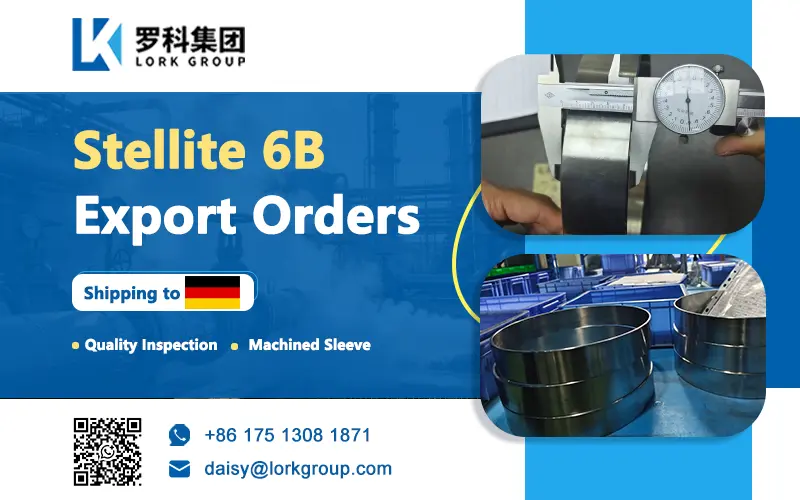
The Lork Group possesses extensive experience in processing cobalt-based alloys and maintains a comprehensive quality control system. The Stellite 6B bushings exported in this shipment—measuring 9 cm in width and 36 cm in diameter—are high-precision components. Delivery takes place only after the products have passed inspection; this process reflects our unwavering commitment to quality and is key to earning the trust of our German clients.
Lork Group Stellite 6B machined bushings exported to Germany

As an international group with 15 years of experience in specialty alloy supply chain management, Lork Group offers product selection consultation and supply services for the full range of Elgiloy, Pyromet, Elinvar, and Ni-Span-C 902 alloys. Please feel free to contact Lork Group’s sales and technical teams for the latest price quotes, material technical data sheets, or supplier coordination support.
Supplier of Elgiloy Pyromet Elinvar and Ni-Span-C 902 high-elasticity alloys
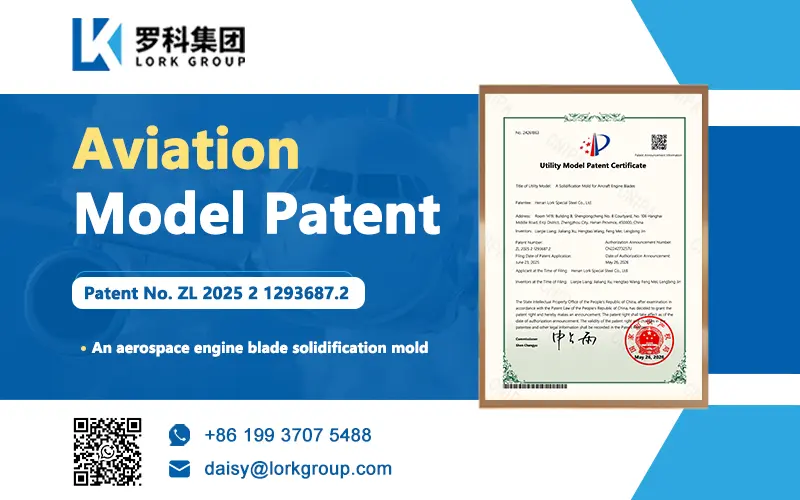
Patent No. ZL 2025 2 1293687.2 focuses on the precision casting of aero-engine blades, demonstrating the Group's sustained innovation capabilities in the fields of specialty steels and precision forming technologies.
Lork Group Granted National Utility Model Patent for an Aviation Engine Blade Solidification Mold
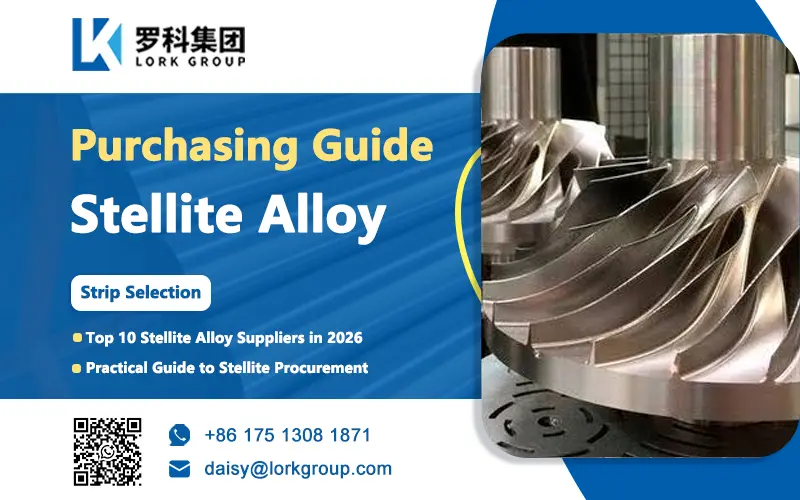
If you are unsure whether to use Stellite 6, 12, or 21 for your current project, simply send us a description of the operating conditions, and Lork Group engineers will provide a free "grade recommendation." Click the button below to submit details regarding operating temperature, corrosive media, and impact conditions, and we will respond within 24 hours.
Top 10 Suppliers of Stellite Alloy Materials for 2026