
Precipitation Hardening Stainless Steels – Applications, Properties, Fabrication Processes
2024-07-18
Precipitation hardening stainless steel creates a remarkable class of alloys that combines the advantageous properties of both martensitic and austenitic grades. These alloys undergo a specialized heat treatment process that significantly enhances their strength while preserving workability and ductility. One of the standout features is their ability to achieve tensile strengths ranging from 850 MPa to 1,700 MPa.
The high tensile strengths of precipitation hardening stainless steels come after a heat treatment process that leads to precipitation hardening of a martensitic or austenitic matrix. Hardening is achieved through the addition of one or more of the elements Copper, Aluminium, Titanium, Niobium, and Molybdenum.
Precipitation hardening involves a sequence of steps including: solution treatment to dissolve precipitates, rapid cooling to create a supersaturated solid solution, and aging to form finely dispersed precipitates. This results in increased strength, improved wear resistance, and heightened corrosion resistance. Precipitation-hardened stainless steels find extensive applications across diverse industries, from oil & gas to aerospace.
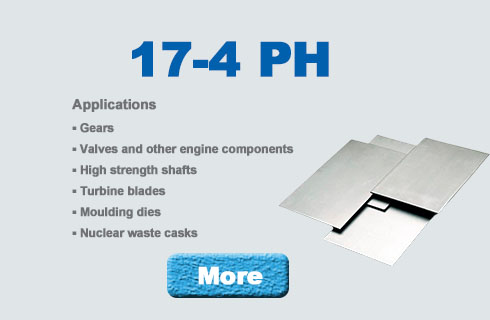
The most well known precipitation hardening steel is 17-4 PH. The name comes from the additions 17% Chromium and 4% Nickel. It also contains 4% Copper and 0.3% Niobium. 17-4 PH is also known as stainless steels grade 630.
Applications of precipitation hardening stainless steels
Due to the high strength of precipitation hardening stainless steels, most applications are in aerospace and other high-technology industries.
Applications include:
- Gears
- Valves and other engine components
- High strength shafts
- Turbine blades
- Moulding dies
- Nuclear waste casks
Properties of precipitation hardening stainless steels
Strength of precipitation hardening stainless steels
Yield strengths for precipitation-hardening stainless steels are 515 to 1415 MPa. Tensile strengths range from 860 to 1520 MPa. Elongations are 1 to 25%. Cold working before ageing can be used to facilitate even higher strengths.
Heat Treatment of precipitation hardening stainless steels
The key to the properties of precipitation hardening stainless steels lies in heat treatment.
After solution treatment or annealing of precipitation hardening stainless steels, a single low temperature “age hardening” stage is employed to achieve the required properties. As this treatment is carried out at a low temperature, no distortion occurs and there is only superficial discolouration. During the hardening process a slight decrease in size takes place. This shrinking is approximately 0.05% for condition H900 and 0.10% for H1150.
Corrosion Resistance of precipitation hardening stainless steels
Precipitation hardening stainless steels have moderate to good corrosion resistance in a range of environments. They have a better combination of strength and corrosion resistance than when compared with the heat treatable 400 series martensitic alloys. Corrosion resistance is similar to that found in grade 304 stainless steels.
In warm chloride environments, 17-4 PH is susceptible to pitting and crevice corrosion. When aged at 550°C or higher, 17-4 PH is highly resistant to stress corrosion cracking. Better stress corrosion cracking resistance comes with higher ageing temperatures.
Corrosion resistance is low in the solution treated (annealed) condition and it should not be used before heat treatment.
Heat Resistance of precipitation hardening stainless steels
17-4 PH has good oxidation resistance. In order to avoid reduction in mechanical properties, it should not be used over its precipitation hardening temperature. Prolonged exposure to 370-480°C should be avoided if ambient temperature toughness is critical.
Fabrication of precipitation hardening stainless steels
Fabrication of all stainless steels should be done only with tools dedicated to stainless steel materials or tooling and work surfaces must be thoroughly cleaned before use. These precautions are necessary to avoid cross contamination of stainless steels by easily corroded metals that may discolour the surface of the fabricated product.
Cold Working of precipitation hardening stainless steels
Cold forming such as rolling, bending and hydroforming can be performed on 17-4PH but only in the fully annealed condition. After cold working, stress corrosion resistance is improved by re-ageing at the precipitation hardening temperature.
Hot Working of precipitation hardening stainless steels
Hot working of 17-4 PH should be performed at 950°-1200°C. After hot working, full heat treatment is required. This involves annealing and cooling to room temperature or lower. Then the component needs to be precipitation hardened to achieve the required mechanical properties.
Machinability of precipitation hardening stainless steels
In the annealed condition, 17-4 PH has good machinability, similar to that of 304 stainless steels. After hardening heat treatment, machining is difficult but possible.
Carbide or high speed steel tools are normally used with standard lubrication. When strict tolerance limits are required, the dimensional changes due to heat treatment must be taken into account
Welding of precipitation hardening stainless steels
Precipitation hardening steels can be readily welded using procedures similar to those used for the 300 series of stainless steels.
Grade 17-4 PH can be successfully welded without preheating. Heat treating after welding can be used to give the weld metal the same properties as for the parent metal. The recommended grade of filler rods for welding 17-4 PH is 17-7 PH.
Lork Group is an supplier of industrial metals to the global aerospace, oil and gas, power generation, petrochemical, bio-medical, pharmaceutical, and other high tech manufacturing industries. Products of premium metal products including Duplex Stainless Steel,600 Series Stainless Steel and 300 Series Stainless Steel. We certify to most ASME, ASTM, AMS, and military specifications as well as most international standards certification.
The content appearing on this webpage is for informational purposes only.
Duplex Stainless Steels Selection Guidelines
Optimization of Heat Treatment Process for Monel K500 Alloy
Related Article
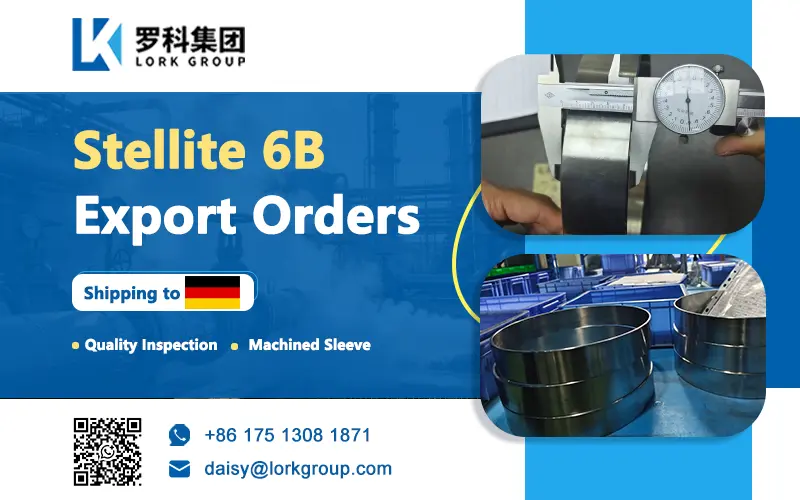
The Lork Group possesses extensive experience in processing cobalt-based alloys and maintains a comprehensive quality control system. The Stellite 6B bushings exported in this shipment—measuring 9 cm in width and 36 cm in diameter—are high-precision components. Delivery takes place only after the products have passed inspection; this process reflects our unwavering commitment to quality and is key to earning the trust of our German clients.
Lork Group Stellite 6B machined bushings exported to Germany

As an international group with 15 years of experience in specialty alloy supply chain management, Lork Group offers product selection consultation and supply services for the full range of Elgiloy, Pyromet, Elinvar, and Ni-Span-C 902 alloys. Please feel free to contact Lork Group’s sales and technical teams for the latest price quotes, material technical data sheets, or supplier coordination support.
Supplier of Elgiloy Pyromet Elinvar and Ni-Span-C 902 high-elasticity alloys
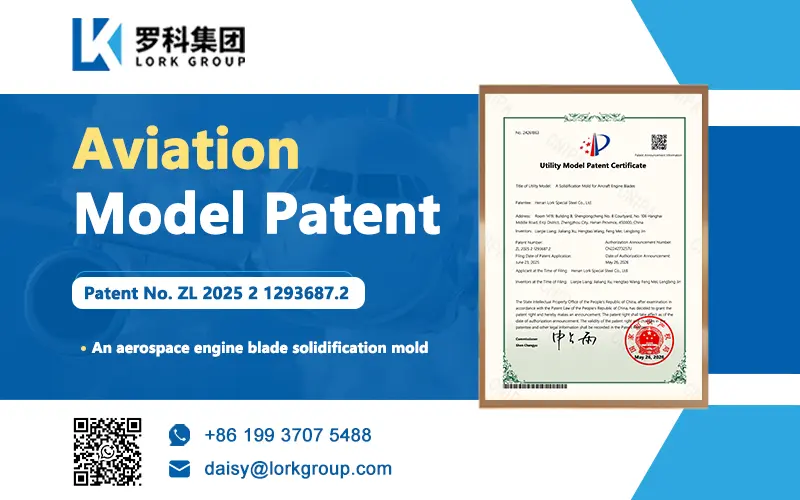
Patent No. ZL 2025 2 1293687.2 focuses on the precision casting of aero-engine blades, demonstrating the Group's sustained innovation capabilities in the fields of specialty steels and precision forming technologies.
Lork Group Granted National Utility Model Patent for an Aviation Engine Blade Solidification Mold
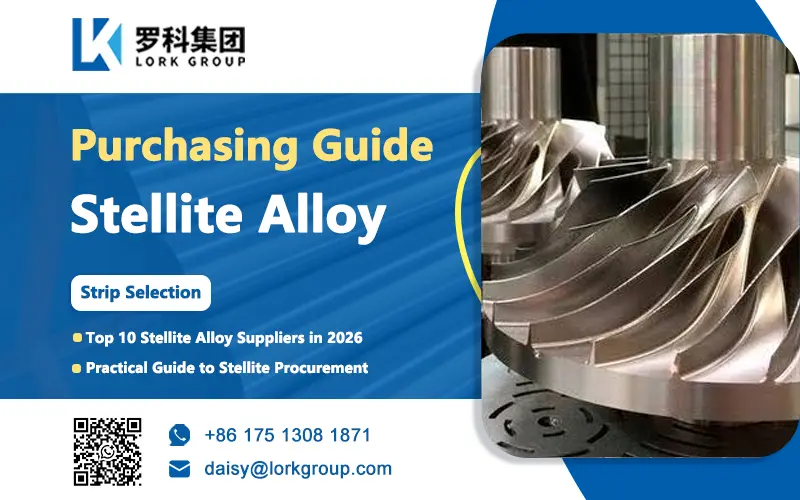
If you are unsure whether to use Stellite 6, 12, or 21 for your current project, simply send us a description of the operating conditions, and Lork Group engineers will provide a free "grade recommendation." Click the button below to submit details regarding operating temperature, corrosive media, and impact conditions, and we will respond within 24 hours.
Top 10 Suppliers of Stellite Alloy Materials for 2026