
What are the commonly used types of stainless steel in the pharmaceutical industry?
2024-07-23
Laboratory and Testing Equipment
Stainless steel plays a role in pharmaceutical processes almost from their start—including drug development's research and diagnostics phases.Typical items using stainless steel in a pharmaceutical laboratory include autoclaves, incubators, and analytical instruments.
Popular Types of Stainless Steel Used in the Pharmaceutical Industry
Like most industries, a few stainless steel grades make up most of the use in the pharmaceutical industry due to their availability, cost, and flexibility. However, some different types of stainless steel are popular in pharmaceutical environments as well.
Some of the Most Common Grades Used Include
316L Stainless Steel: Commonly used in pharmaceutical equipment and process piping due to its hygienic properties, this low carbon grade of stainless steel also offers exceptional resistance to pitting corrosion and crevice corrosion while remaining affordable and easily accessible.
304 Stainless Steel: As one of the most popular grades of stainless steel worldwide and across nearly all industries, this versatile grade increases corrosion resistance while remaining easy to fabricate with or weld. Typical uses include pharmaceutical equipment, storage tanks, and piping.
316Ti Stainless Steel: Thanks to the inclusion of titanium in this alloy, it offers improved resistance to intergranular corrosion and sensitization in extreme temperatures—such as those encountered when welding. It is commonly used in high-temperature applications, such as pharmaceutical reactors and process equipment.
904L Stainless Steel: This high alloy austenitic stainless steel contains molybdenum, nickel, and copper. Including copper means that the alloy provides excellent corrosion resistance in aggressive or acidic environments, including but not limited to resistance against sulfuric acid, acetic acid, formic acid, and phosphoric acid. This makes it ideal for pharmaceutical equipment and piping systems involving strong acids or chloride-neutral aggressive environments.
2205 Duplex Stainless Steel: This duplex stainless steel contains both austenitic and ferritic phases. The result is an alloy with excellent strength and corrosion resistance equally suited to moulding and high-stress applications. Common applications in pharmaceutical processes include reactors and pressure vessels.
As the list above shows, the various grades of stainless steel available make it possible to tailor alloy choices to meet specific needs.Regardless of the process, environment, or solution required, there’s a good chance a stainless alloy or part already exists to suit your needs.
Lork Group, a specialist in on-demand manufacturing, caters to your stainless steel requirements. We provide tailored solutions that meet specific material specifications, To buy or learn more about stainless steel contact us now, we will be in touch shortly.


Monel 400 Application Processing Guide
Choosing Monel or Stainless Steel: A Practical Guide
Related Article
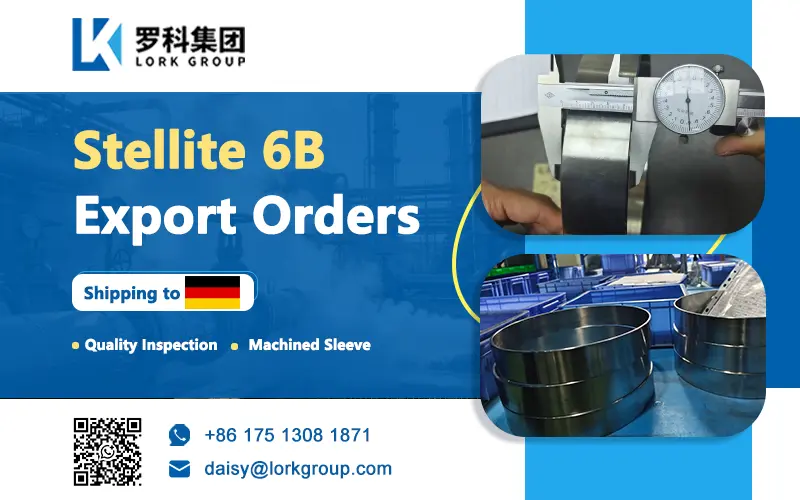
The Lork Group possesses extensive experience in processing cobalt-based alloys and maintains a comprehensive quality control system. The Stellite 6B bushings exported in this shipment—measuring 9 cm in width and 36 cm in diameter—are high-precision components. Delivery takes place only after the products have passed inspection; this process reflects our unwavering commitment to quality and is key to earning the trust of our German clients.
Lork Group Stellite 6B machined bushings exported to Germany

As an international group with 15 years of experience in specialty alloy supply chain management, Lork Group offers product selection consultation and supply services for the full range of Elgiloy, Pyromet, Elinvar, and Ni-Span-C 902 alloys. Please feel free to contact Lork Group’s sales and technical teams for the latest price quotes, material technical data sheets, or supplier coordination support.
Supplier of Elgiloy Pyromet Elinvar and Ni-Span-C 902 high-elasticity alloys
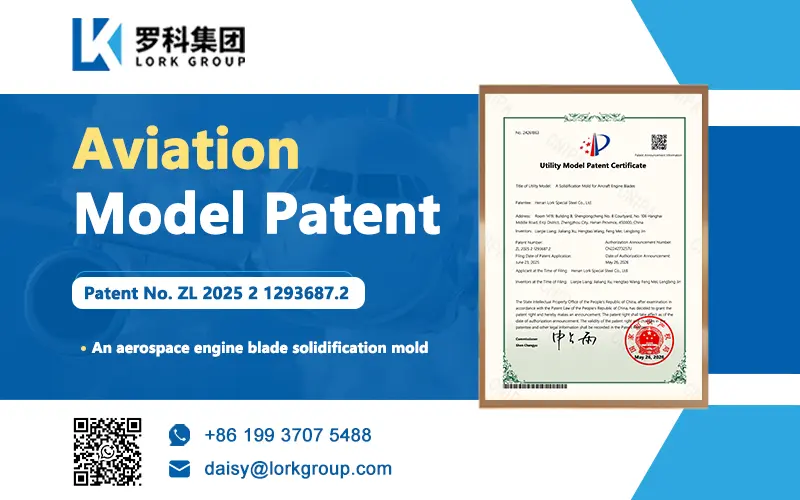
Patent No. ZL 2025 2 1293687.2 focuses on the precision casting of aero-engine blades, demonstrating the Group's sustained innovation capabilities in the fields of specialty steels and precision forming technologies.
Lork Group Granted National Utility Model Patent for an Aviation Engine Blade Solidification Mold
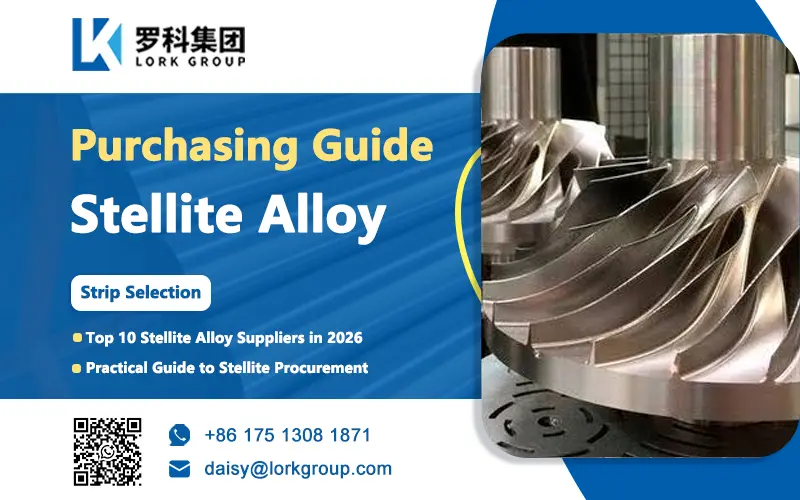
If you are unsure whether to use Stellite 6, 12, or 21 for your current project, simply send us a description of the operating conditions, and Lork Group engineers will provide a free "grade recommendation." Click the button below to submit details regarding operating temperature, corrosive media, and impact conditions, and we will respond within 24 hours.
Top 10 Suppliers of Stellite Alloy Materials for 2026