
AMS 5608 Standard Alloy 188: Chemical Composition, Mechanical Properties and Heat Treatment
2024-10-16

AMS 5608 is the Aerospace Material Specification (AMS) that governs the requirements for Alloy 188 in various forms, ensuring consistency and reliability in its performance across different applications. This standard provides detailed specifications for the chemical composition, mechanical properties, heat treatment, and testing procedures necessary to qualify Alloy 188 for aerospace and other high-performance applications.
Alloy 188, also known by its trade name Haynes 188 (UNS R30188) is a cobalt-nickel-chromium-tungsten alloy that combines excellent high-temperature strength with very good resistance to oxidizing environments up to 2000°F (1095°C) for prolonged exposures, and excellent resistance to sulfate deposit hot corrosion.
Alloy 188 represents a pinnacle in the development of high-temperature, nickel-based superalloys. Has found widespread use in industries such as aerospace, gas turbine engines, and industrial heating equipment. Its composition and properties make it a preferred material for applications requiring exceptional strength, oxidation resistance, and reliability at elevated temperatures.
Chemical Composition
AMS 5608 specifies the acceptable ranges of chemical elements in Alloy 188 to ensure consistent properties and performance. It mandates the percentages of nickel, chromium, cobalt, molybdenum, aluminum, titanium, and other trace elements that must be maintained within specified limits. This ensures that the alloy meets the required strength, oxidation resistance, and other mechanical properties crucial for its intended applications.
Alloy 188: Composition and Properties
Alloy 188 is primarily composed of nickel (Ni), chromium (Cr), cobalt (Co), and molybdenum (Mo). These elements form the base matrix of the alloy, providing it with high temperature strength and corrosion resistance. Specific composition ranges typically include:
- Nickel (Ni): Approximately 39-41%
- Chromium (Cr): Approximately 21-23%
- Cobalt (Co): Approximately 19-21%
- Molybdenum (Mo): Approximately 12-15%
In addition to these primary elements, Alloy 188 incorporates small amounts of aluminum (Al) and titanium (Ti). Aluminum enhances oxidation resistance by forming a protective oxide layer at high temperatures, while titanium contributes to the alloy's strength and stability under mechanical stress.
Mechanical Properties
AMS 5608 Standard outlines the minimum mechanical properties that Alloy 188 must exhibit after heat treatment. These properties include tensile strength, yield strength, elongation, and hardness, which are critical for determining the alloy's suitability for structural and high-temperature applications. Compliance with these mechanical requirements ensures that components made from Alloy 188 can withstand the stresses and temperatures encountered during operation.
Alloy 188 finds application in the following areas
- Aerospace industry
- Hot sections of engines in burner cans
- Commercial industrial applications
- Afterburner components
Heat Treatment
AMS 5608 details the heat treatment procedures necessary to achieve the desired microstructure and mechanical properties in Alloy 188. It specifies heating temperatures, holding times, and cooling rates during the heat treatment process to optimize the alloy's performance. Proper heat treatment is essential for controlling grain size, minimizing internal stresses, and enhancing the material's resistance to deformation and fatigue.
Testing and Quality Assurance
- To ensure conformity with AMS 5608, Alloy 188 undergoes rigorous testing and quality assurance measures. These include:
- Chemical Analysis: Verification of alloy composition to meet specified limits.
- Mechanical Testing: Evaluation of tensile strength, yield strength, elongation, and hardness.
- Microstructural Examination: Assessment of grain size and distribution to confirm proper heat treatment.
- Non-Destructive Testing: Techniques such as ultrasonic testing or radiographic inspection to detect internal defects or irregularities.
Certification and Compliance
Manufacturers of Alloy 188 components must provide certification demonstrating compliance with AMS 5608 requirements. This certification ensures that the material meets the stringent standards necessary for use in aerospace and other high-performance applications where reliability and safety are paramount.
Conclusion
Alloy 188, governed by AMS 5608, exemplifies the pinnacle of material science for high-temperature, nickel-based superalloys. Its composition, mechanical properties, thermal resistance, and compliance with aerospace standards make it indispensable in critical applications where reliability under extreme conditions is non-negotiable. As industries continue to push the boundaries of performance and efficiency, Alloy 188 remains at the forefront, ensuring robustness and longevity in the most demanding environments.
In summary, Alloy 188 and AMS 5608 embody the synergy of advanced metallurgy and stringent aerospace standards, setting benchmarks for performance, reliability, and innovation in high-temperature applications worldwide.
Understand AMS 5842 MP159 Alloy Bars:Definition, Application, Advantages
Hastelloy Alloy Applications for Pollution & Waste
Related Article

The Lork Group specializes in providing stress shielding solutions for users of titanium alloy orthopedic implants. Our materials include ASTM F1713 titanium rods, Ti-13Nb-13Zr titanium alloy, and other ASTM F1713 titanium products.
Lork Group's Medical Titanium Alloy Implants Solve the Challenge of Stress Shielding
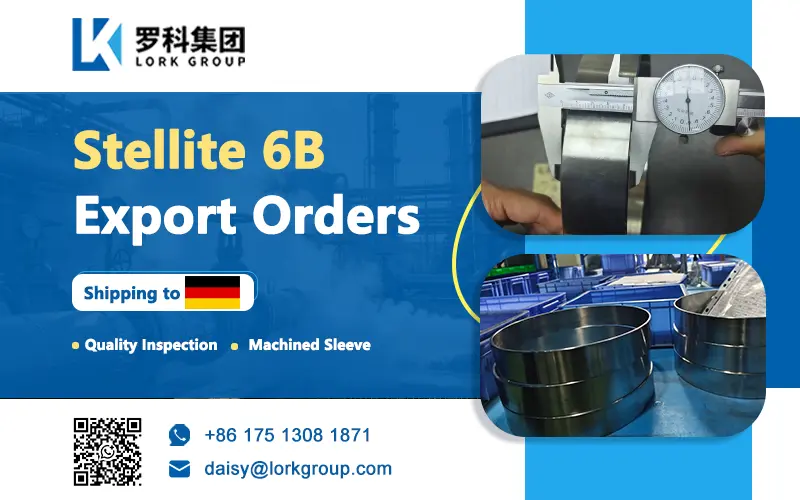
The Lork Group possesses extensive experience in processing cobalt-based alloys and maintains a comprehensive quality control system. The Stellite 6B bushings exported in this shipment—measuring 9 cm in width and 36 cm in diameter—are high-precision components. Delivery takes place only after the products have passed inspection; this process reflects our unwavering commitment to quality and is key to earning the trust of our German clients.
Lork Group Stellite 6B machined bushings exported to Germany

As an international group with 15 years of experience in specialty alloy supply chain management, Lork Group offers product selection consultation and supply services for the full range of Elgiloy, Pyromet, Elinvar, and Ni-Span-C 902 alloys. Please feel free to contact Lork Group’s sales and technical teams for the latest price quotes, material technical data sheets, or supplier coordination support.
Supplier of Elgiloy Pyromet Elinvar and Ni-Span-C 902 high-elasticity alloys
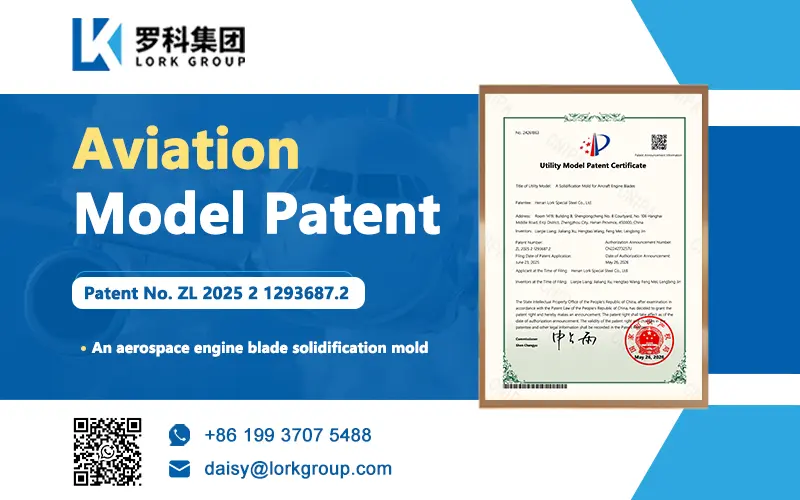
Patent No. ZL 2025 2 1293687.2 focuses on the precision casting of aero-engine blades, demonstrating the Group's sustained innovation capabilities in the fields of specialty steels and precision forming technologies.
Lork Group Granted National Utility Model Patent for an Aviation Engine Blade Solidification Mold