
What are the common heat treatment methods?
2025-03-31
Heat treatment plays a vital role in modern manufacturing and engineering, offering a versatile means to manipulate the properties of metals. Through careful control of the heating and cooling stages, it’s possible to enhance characteristics such as hardness, ductility, toughness, and heat conductivity, tailoring metals to meet specific requirements.
Despite the complexity and costs involved, the range of applications and advantages offered by this process make heat treatment a valuable tool in the metallurgical field. As advancements continue in this area, we can expect even more refined control over material properties, leading to new applications and innovations.
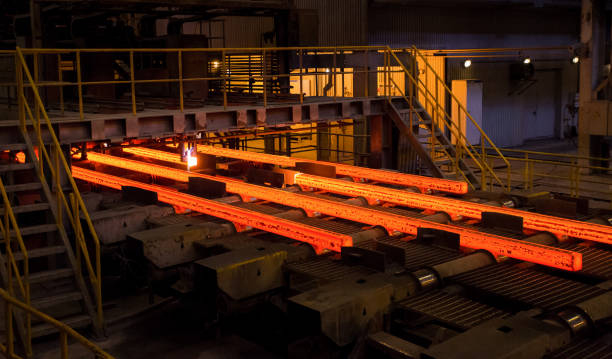
Why do we heat-treat metals?
The heat treatment process is integral to metallurgy and materials engineering. It aids in refining the structural properties of metals to make them suitable for diverse applications, from building construction to automotive and aerospace engineering. For instance, heat-treated steel is used in construction for its increased strength, while heat-treated aluminum is used in aircraft bodies for its low density and high resilience.
Moreover, heat treatment allows metals to be tailored to specific jobs. A metal’s ductility, for instance, can be enhanced for applications where it needs to be drawn into thin wires. Or, its hardness increased for uses that require resistance to wear.
The manipulation of metal properties through heat treatment offers extraordinary scope for customization. Thus, enabling engineers to match metals perfectly to their required roles.
Heat treatment is also employed to refine the microstructure of metals, enabling control over properties such as grain size and phase distribution. This opens up possibilities for advanced engineering applications where precision and performance are paramount. For example, in the semiconductor industry, heat treatment is used to control the properties of silicon wafers.
Similarly, in the medical field, heat-treated metals are used in a variety of implants and surgical instruments. Their enhanced properties ensure durability and safety. In essence, the breadth of heat treatment’s utility is a testament to its transformative power in metallurgy. From day-to-day items like cutlery and bicycle frames to complex machinery and infrastructure.
Common heat treatment methods
Numerous heat treatment methods exist, each with unique outcomes. Among the most common are:
- Annealing: This process involves heating the metal to a specific temperature, holding it there for a time, and then allowing it to cool slowly. The annealing process softens the metal, enhancing its ductility and reducing its hardness, making it easier to work with.
- Quenching: In this method, the metal is heated and then quickly cooled by immersing it in a liquid or gas. This abrupt cooling makes the metal harder and more brittle.
- Tempering: After quenching, metals are often too brittle for practical use. To alleviate this, they are tempered, which involves reheating to a temperature below the upper critical temperature and then cooling. This process reduces brittleness while retaining much of the hardness imparted by quenching.
- Normalizing: Here, the metal is heated above its upper critical temperature and then allowed to cool in the air. This refines the grain structure and homogenizes the chemical composition of the metal. Ultimately, making it more robust and resistant to impact.
In addition to these methods, there are specialized heat treatment techniques designed for specific applications:
- Case hardening: This process is used to create a hard, wear-resistant outer layer (or ‘case’) on a part while maintaining a tough, ductile interior. This is achieved by heating the metal in the presence of a carbon-rich environment.
- Therefore, allowing carbon atoms to diffuse onto the surface. After reaching a certain temperature, the part is quickly quenched, hardening the carbon-enriched surface.
- Precipitation hardening (also known as age hardening): This process is used on some types of alloys, particularly aluminum, nickel, and titanium alloys. The metal is heated to a relatively low, specific temperature and held there for a prolonged period. This causes fine particles to precipitate out of the alloy solution, which hinders dislocation movement and thereby strengthens the alloy.
- Induction hardening: This method uses electromagnetic induction to heat the metal’s surface, followed by rapid cooling or quenching. This technique hardens the surface of the part while leaving the core relatively soft and tough. Thus, providing an excellent combination of strength and durability.
Each of these methods is tailored to specific metals and desired properties. This demonstrates the incredible versatility of heat treatment processes in metallurgy.
What metals can be heat-treated?
Almost all types of metals and alloys can undergo heat treatment. This includes ferrous metals (containing iron), like steel and cast iron, and non-ferrous metals like aluminum, copper, and nickel. Each type of metal has its own unique heat treating requirements based on its specific properties. These include melting point, heat conductivity, and phase transformation characteristics.
Steel, a common construction and manufacturing material, often undergoes heat treatment to enhance its hardness, yield strength, and toughness. The numerous types of steel, each with different carbon content and alloying elements, respond differently to heat treatment. Therefore, a broad spectrum of mechanical properties can be achieved.
On the other hand, non-ferrous metals such as aluminum and copper can also be heat-treated. Though the process differs from that for ferrous metals. For instance, certain aluminum alloys can undergo precipitation hardening to improve their strength. This will make them suitable for applications like aircraft parts or automotive components.
Other metals, like titanium and nickel, used in high-performance applications such as jet engines and medical implants, often undergo complex heat treatment regimes to achieve the desired balance of properties. The widespread applicability of heat treating across various metals underscores its crucial role in modern industry and engineering.
Heat treatment factors & considerations
Executing a successful heat treatment process necessitates careful attention to a myriad of factors. Each plays a critical role in the process’s effectiveness. Paramount among these considerations are the type of metal being treated, its original structure, the desired mechanical properties, and the chosen heat treatment method.
Since each metal responds uniquely to heat, guided by its inherent thermal properties, a thorough comprehension of both the material’s attributes and the heat treatment process becomes indispensable.
Key among these thermal properties is the upper critical temperature—a pivotal threshold at which the metal’s structure starts to transform. Surpassing this temperature may compromise the integrity of the metal, underscoring the need for precise temperature control. Additionally, the rates of heating and cooling must be meticulously regulated to stave off thermal stresses and potential distortion. The metal’s heat conductivity plays a decisive role in determining these rates.
The environmental conditions within which heat treatment unfolds also warrant careful consideration. Some processes necessitate specific atmospheres—be it a vacuum, an inert gas, or a carbon-rich environment—to manage oxidation or catalyze desired chemical changes. Equally consequential is the choice of cooling medium—air, oil, or water—since it influences the cooling rate and, by extension, the metal’s final properties.
The dimensions and geometry of the metal piece also impact the heat treating process. Larger or intricately shaped parts may demand prolonged heating durations to ensure a uniform temperature throughout the material and might be more prone to distortion during the cooling phase.
Lastly, the importance of safety considerations cannot be overstated. The handling of metals at high temperatures and the operation of potentially hazardous equipment necessitate rigorous adherence to safety protocols, safeguarding both personnel and equipment.
Applications of Nitinol Tubing in Vascular Interventional Medical Devices
Understanding Inconel 825-Pricing and Stock Specifications
Related Article
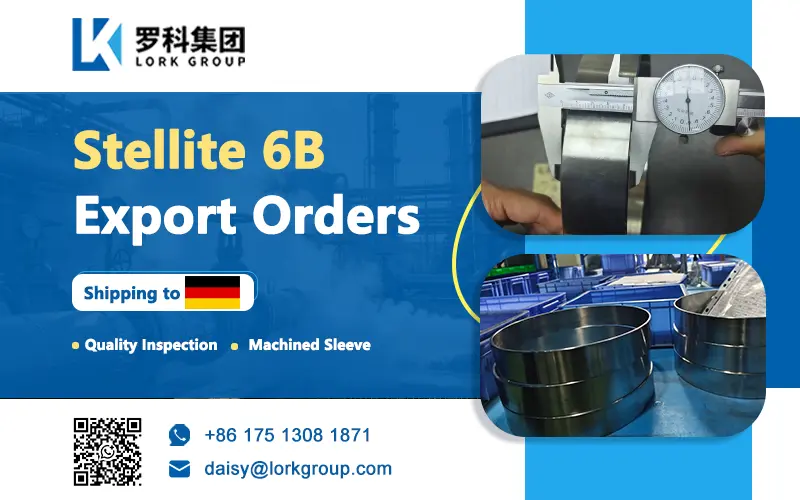
The Lork Group possesses extensive experience in processing cobalt-based alloys and maintains a comprehensive quality control system. The Stellite 6B bushings exported in this shipment—measuring 9 cm in width and 36 cm in diameter—are high-precision components. Delivery takes place only after the products have passed inspection; this process reflects our unwavering commitment to quality and is key to earning the trust of our German clients.
Lork Group Stellite 6B machined bushings exported to Germany

As an international group with 15 years of experience in specialty alloy supply chain management, Lork Group offers product selection consultation and supply services for the full range of Elgiloy, Pyromet, Elinvar, and Ni-Span-C 902 alloys. Please feel free to contact Lork Group’s sales and technical teams for the latest price quotes, material technical data sheets, or supplier coordination support.
Supplier of Elgiloy Pyromet Elinvar and Ni-Span-C 902 high-elasticity alloys
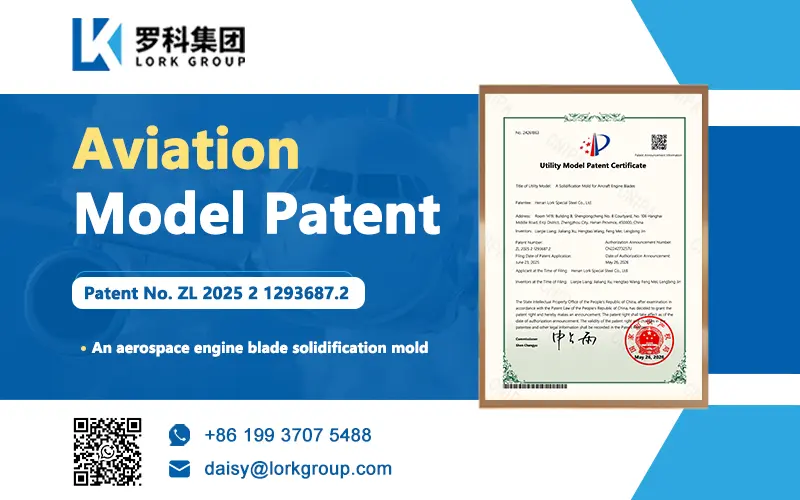
Patent No. ZL 2025 2 1293687.2 focuses on the precision casting of aero-engine blades, demonstrating the Group's sustained innovation capabilities in the fields of specialty steels and precision forming technologies.
Lork Group Granted National Utility Model Patent for an Aviation Engine Blade Solidification Mold
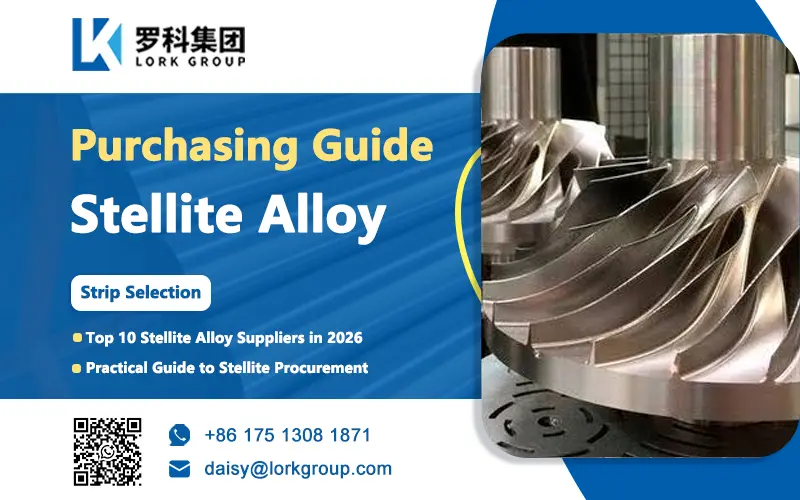
If you are unsure whether to use Stellite 6, 12, or 21 for your current project, simply send us a description of the operating conditions, and Lork Group engineers will provide a free "grade recommendation." Click the button below to submit details regarding operating temperature, corrosive media, and impact conditions, and we will respond within 24 hours.
Top 10 Suppliers of Stellite Alloy Materials for 2026