
"Biometal" Medical Grade Titanium Alloy-Lork Group
2025-09-19

What is Medical Grade Titanium Alloy?
A high-standard material production and certification system based on extremely pure chemical composition, precisely controlled mechanical properties, and proven biocompatibility.
This ensures that our implanted metal devices function safely and reliably for extended periods without causing harm to the human body. Therefore, when you choose medical titanium alloy, you're
choosing more than just the metal itself; you're also choosing the rigorous quality and safety assurance system behind it.
Main Medical Titanium Alloy Types and Grades Supplyed by Lork Group
Precision alloys are a general term for eight types of metal materials with specialized physical properties, including soft magnetic alloys, permanent magnetic alloys, elastic alloys, expansion alloys,
thermo-bimetallic alloys, resistance alloys, electrothermal alloys, and shape memory alloys. These materials are used in the manufacture of electronic and electrical components and precision
instruments and meters.
Lork Group's popular medical-grade titanium alloys are primarily categorized into the following categories, corresponding to internationally recognized standard grades:
| Type | Common Grades (ASTM Standards) | Features and Applications |
| Industrially Pure Titanium | Gr1, Gr2, Gr3, Gr4 (ASTM F67) | Strength increases with grade. Gr2 is the most commonly used, offering excellent overall performance and is used in dental implants, bone plates, craniomaxillofacial prostheses, and other applications. |
| (α+β) Alloy | Ti-6Al-4V ELI (ASTM F136) | The "Gold Standard." The most widely used medical titanium alloy, used in load-bearing components such as artificial joints, spinal fixation, and dental implants. |
| (α+β) Alloy | Ti-6Al-7Nb (ASTM F1295) | Using non-toxic niobium (Nb) instead of vanadium (V) offers improved biocompatibility and is suitable for similar load-bearing components. |
| β-Type Alloy | Ti-12Mo-6Zr-2Fe (TMZF, ASTM F1813) Ti-15Mo (ASTM F2066) Ti-13Nb-13Zr (ASTM F1713) |
This material offers an extremely low elastic modulus, closer to that of human bone, effectively reducing the stress shielding effect. This material is currently a hot research topic. |


Why choose titanium alloy as medical material?
The main advantages, reasons and comparison of titanium alloys with other materials as medical grade materials are shown in the following table:
| Features | Excellent Performance | Reasons for Selection | Comparison with Other Materials |
| Biocompatibility | Extremely inert, non-toxic and harmless: It quickly forms a dense, stable titanium oxide passivation film in the human body fluid environment, which is extremely difficult to corrode and dissolve. It releases almost no metal ions and will not cause toxic side effects, allergic reactions or inflammation. | This is the primary premise. The implant must be "accepted" by the body, rather than being viewed as a "foreign body" to be attacked and rejected. This avoids immune rejection and tissue necrosis. | Superior to stainless steel and cobalt-chromium alloy (the latter may precipitate nickel, cobalt, and chromium ions, causing allergic or toxic reactions in a small number of people). |
| Mechanical Properties | High Specific Strength: Its strength approaches that of high-strength stainless steel, yet its density (~4.5 g/cm³) is only 60% of that of steel. Low Elastic Modulus: While its elastic modulus (~110 GPa) is higher than that of human bone (10-30 GPa), it is much closer and significantly lower than stainless steel (~200 GPa) and cobalt-chromium alloy (~230 GPa). | Lightweight: Reduces patient burden and improves comfort. Reduces Stress Shielding: Its modulus more closely matches that of bone, enabling more even load transfer from the implant to the bone, preventing bone from becoming porous and resorbing due to lack of mechanical stimulation, significantly extending implant life. | Its strength exceeds that of pure titanium and PEEK polymer; its modulus compatibility is superior to that of steel and cobalt-chromium alloy. |
| Corrosion Resistance | Extremely Excellent: Highly resistant to pitting, crevice, and electrochemical corrosion in chloride environments (such as body fluids and blood). | This ensures long-term, stable operation of implants in the complex and harsh human environment without corrosion damage, maintaining their structural integrity and mechanical properties. This prevents tissue infection and implant failure caused by corrosion products. | Much superior to stainless steel; comparable to or better than cobalt-chromium alloys. |
| Machinability | Difficult but manageable: While challenges include poor thermal conductivity and tool sticking, high-precision machining can be achieved through optimized tooling, parameters, and cooling techniques (such as minimal lubrication). Additive manufacturing (3D printing) is particularly well-suited for the production of complex, porous, and customized implants. | It can produce implants with complex shapes, precise dimensions, and smooth surfaces (such as acetabular cups and intervertebral fusion cages). The porous structure facilitates bone cell ingrowth (osseointegration), enabling biofixation. | Machinability is higher than that of stainless steel and cobalt-chromium alloys, but the flexibility of molding (3D printing) far exceeds that of all traditional metal materials. |
| Clinical Advantages | MRI Compatibility: Non-magnetic, no impact on postoperative MRI scans. Long-Term Service Reliability: Clinical practice has proven its exceptionally long service life, with artificial joints typically lasting over 20 years. | This significantly facilitates postoperative diagnosis and rehabilitation. It reduces the need for secondary revision surgeries due to implant failure, reducing patient pain and medical costs. | MRI compatibility surpasses stainless steel (some types are magnetic); its service life is comparable to that of cobalt-chromium alloy. |
A Selection Guide for Researchers and Purchasers of Medical Titanium Alloys
Qualified medical-grade titanium alloys must possess extremely high biosafety and biocompatibility. The selection of raw materials, especially their chemical composition, is extremely stringent
(control of the content of alloying elements and interstitial elements (O, N, H, C) is extremely stringent, especially for ELI (Extremely Low Interstitial) grades).
At the same time, purity requirements are extremely high, with strict control of harmful impurities to ensure non-toxicity while also ensuring mechanical properties meet low elastic modulus standards.
The production process of medical-grade titanium alloys typically involves multiple melting steps in a vacuum consumable arc furnace (VAR) to ensure uniform and pure composition.
For many years, the Lork Group has adhered to material traceability, a mandatory requirement for our medical-grade titanium alloys. This requires full traceability from raw materials to final product.
Lork Group : This is not a wrong choice!
Key Concept: ELI (Extra Low Interstitial)
This is a key term for medical titanium alloys. It refers to alloys in which the content of interstitial elements such as oxygen, nitrogen, carbon, and hydrogen is controlled to extremely low levels. This significantly improves the alloy's fracture toughness and
This is a key term for medical titanium alloys. It refers to alloys in which the content of interstitial elements such as oxygen, nitrogen, carbon, and hydrogen is controlled to extremely low levels. This significantly improves the alloy's fracture toughness and
fatigue resistance, making it more suitable for enduring long-term cyclic loading in the human body. For example, Ti-6Al-4V ELI (ASTM F136) is the most well-known medical ELI-grade alloy.
How to choose 1j22 VS 1j50 soft magnetic alloy?
Buyer's Guide to 8 Precision Alloys - Lork Group
Related Article
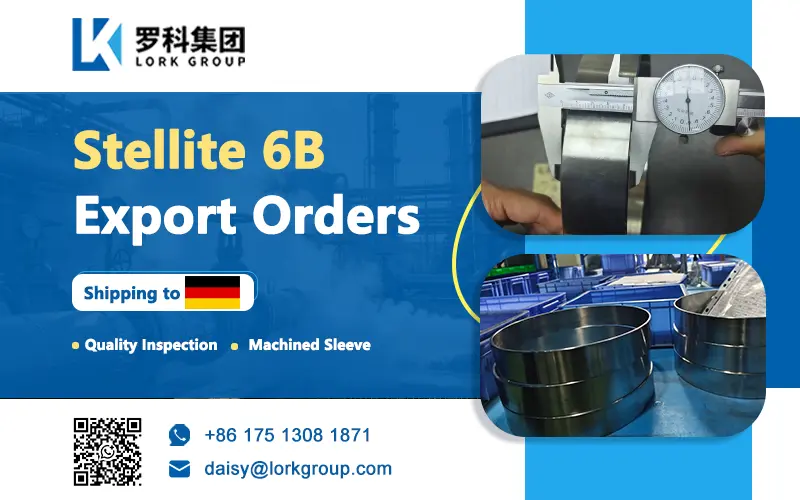
The Lork Group possesses extensive experience in processing cobalt-based alloys and maintains a comprehensive quality control system. The Stellite 6B bushings exported in this shipment—measuring 9 cm in width and 36 cm in diameter—are high-precision components. Delivery takes place only after the products have passed inspection; this process reflects our unwavering commitment to quality and is key to earning the trust of our German clients.
Lork Group Stellite 6B machined bushings exported to Germany

As an international group with 15 years of experience in specialty alloy supply chain management, Lork Group offers product selection consultation and supply services for the full range of Elgiloy, Pyromet, Elinvar, and Ni-Span-C 902 alloys. Please feel free to contact Lork Group’s sales and technical teams for the latest price quotes, material technical data sheets, or supplier coordination support.
Supplier of Elgiloy Pyromet Elinvar and Ni-Span-C 902 high-elasticity alloys
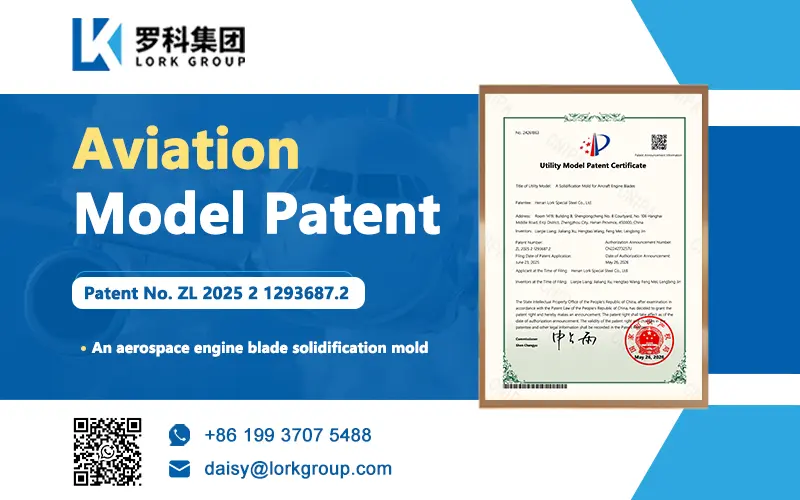
Patent No. ZL 2025 2 1293687.2 focuses on the precision casting of aero-engine blades, demonstrating the Group's sustained innovation capabilities in the fields of specialty steels and precision forming technologies.
Lork Group Granted National Utility Model Patent for an Aviation Engine Blade Solidification Mold
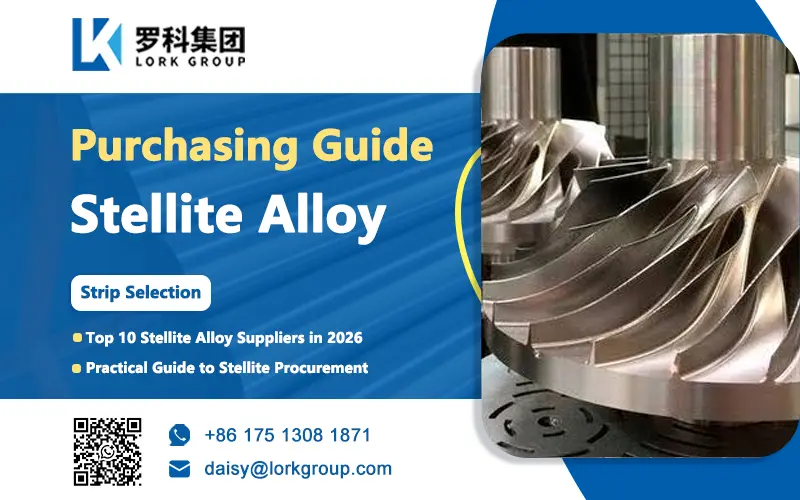
If you are unsure whether to use Stellite 6, 12, or 21 for your current project, simply send us a description of the operating conditions, and Lork Group engineers will provide a free "grade recommendation." Click the button below to submit details regarding operating temperature, corrosive media, and impact conditions, and we will respond within 24 hours.
Top 10 Suppliers of Stellite Alloy Materials for 2026