
Spot Welding Principles, Processes, Advantages and Applications
2025-01-14
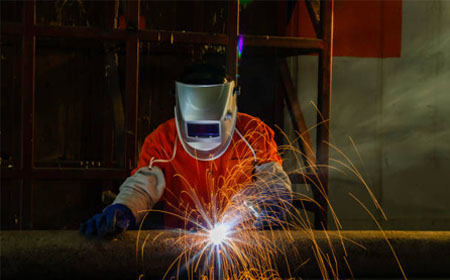
Spot welding is a welding process that involves joining two or more metal sheets or components by applying pressure and electrical current to create a series of overlapping spot welds. This process is widely used for joining sheet metal components in automotive, aerospace, appliance, and construction industries, where high-speed and high-volume production is required.
Principles of Spot Welding
The principles of spot welding are based on the resistance heating of the metal surfaces at the interface, followed by the application of pressure to create a weld nugget. When an electrical current is passed through the metal sheets at the desired welding location, the resistance at the interface generates heat, causing the metal to melt and fuse. The application of pressure then creates a solid-state bond between the metal sheets, resulting in a spot weld with high strength and reliability.
Process of Spot Welding
The process of spot welding involves several key steps to create a series of overlapping spot welds between the metal sheets:
- Clamping: The metal sheets to be joined are clamped between the electrodes of a spot welding machine, ensuring proper alignment and contact at the desired welding location.
- Application of Electrical Current: An electrical current is passed through the metal sheets at the desired welding location, generating resistance heating and causing the metal to melt and fuse.
- Formation of Weld Nugget: The application of pressure creates a weld nugget at the interface of the metal sheets, resulting in a solid-state bond between the overlapping surfaces.
- Cooling and Solidification: The weld nugget is allowed to cool and solidify, creating a spot weld with high strength and reliability.
Advantages of Spot Welding
Spot welding offers several distinct advantages over other welding techniques, including the following:
- High-Speed and High-Volume Production: Spot welding is a high-speed process that allows for the rapid production of spot welds in high-volume manufacturing environments, such as automotive assembly lines and appliance manufacturing facilities.
- Strong and Reliable Joints: Spot welding creates spot welds with high strength, ductility, and fatigue resistance, making it suitable for joining sheet metal components in structural and load-bearing applications.
- Minimal Heat Affected Zone: Spot welding minimizes the heat input and the size of the heat-affected zone, reducing the risk of distortion and residual stresses in the welded components.
- Cost-Effective and Efficient: Spot welding is a cost-effective and efficient welding process, offering high productivity and low production costs for joining sheet metal components.
- Automation and Control: Spot welding can be easily automated and controlled using robotic systems and programmable welding machines, allowing for precise and consistent spot welds in high-volume production.
Applications of Spot Welding
Spot welding is used in a variety of applications across different industries, including:
- Automotive: Spot welding is widely used in the automotive industry for joining sheet metal components in vehicle body assemblies, such as body panels, frames, and structural components.
- Appliance Manufacturing: Spot welding is employed in the manufacturing of household appliances, such as refrigerators, washing machines, and ovens, for joining sheet metal enclosures and structural components.
- Aerospace: Spot welding is used in the aerospace industry for joining sheet metal components in aircraft structures, such as fuselage panels, wing assemblies, and interior components.
- Construction: Spot welding is utilized in the construction industry for joining sheet metal components in building structures, such as roofing panels, wall assemblies, and structural elements.
- Consumer Goods: Spot welding is employed in the production of consumer goods, such as furniture, cabinets, and enclosures, for joining sheet metal components in various applications.
Differences Between Cold Welding and Spot Welding
While both cold welding and spot welding are used for joining metal components, they differ in their principles, processes, and applications. The following are the key differences between cold welding and spot welding:
- Principles: Cold welding relies on the application of pressure to create a solid-state bond between clean metal surfaces at room temperature, while spot welding involves the resistance heating and fusion of metal surfaces at the interface to create a series of overlapping spot welds.
- Process: Cold welding does not involve the application of heat or melting, while spot welding relies on the application of electrical current to generate resistance heating and create spot welds.
- Applications: Cold welding is commonly used for joining clean, flat metal surfaces with high ductility and low oxide content, while spot welding is widely used for joining sheet metal components in high-speed and high-volume production environments.
- Joint Strength: Cold welding creates a solid-state bond between metal surfaces, resulting in a joint with high strength and reliability, while spot welding creates spot welds with high strength, ductility, and fatigue resistance.
- Production Environment: Cold welding is suitable for low-temperature and clean-room environments, while spot welding is ideal for high-speed and high-volume production environments.
Conclusion
Cold welding and spot welding are two distinct welding techniques with unique principles, processes, and applications. Cold welding relies on the application of pressure to create a solid-state bond between clean metal surfaces at room temperature, while spot welding involves the resistance heating and fusion of metal surfaces at the interface to create a series of overlapping spot welds. Both welding techniques offer advantages for specific applications, and their selection depends on the requirements of the manufacturing process, the properties of the metal components, and the desired joint characteristics. By understanding the differences between cold welding and spot welding, engineers and manufacturers can make informed decisions regarding the selection of the most suitable welding technique for their specific applications and production requirements.
Lork Group is metal material manufacturer and exporter in China
The experts at Lork Group are ready to help you choose the most suitable type of Metal for your .
We have built a reputation as a trusted partner for quality materials, distributing numerous grades of stainless steel,nickel alloy,Precision Alloy andhard-to-find metals. Our raw metal bars, rings, plates, pipes, and tubing are available from stock.
To learn more about the Lork Group metal difference and our material offerings stainless steel and super alloy, contact us or request a quote today.
What is Molybdenum Alloy?
Cold Welding Principles, Processes, Advantages and Applications
Related Article

The Lork Group specializes in providing stress shielding solutions for users of titanium alloy orthopedic implants. Our materials include ASTM F1713 titanium rods, Ti-13Nb-13Zr titanium alloy, and other ASTM F1713 titanium products.
Lork Group's Medical Titanium Alloy Implants Solve the Challenge of Stress Shielding
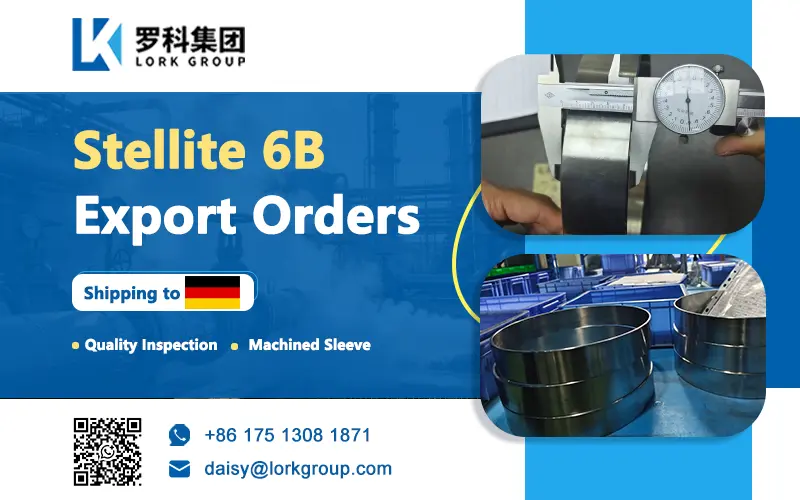
The Lork Group possesses extensive experience in processing cobalt-based alloys and maintains a comprehensive quality control system. The Stellite 6B bushings exported in this shipment—measuring 9 cm in width and 36 cm in diameter—are high-precision components. Delivery takes place only after the products have passed inspection; this process reflects our unwavering commitment to quality and is key to earning the trust of our German clients.
Lork Group Stellite 6B machined bushings exported to Germany

As an international group with 15 years of experience in specialty alloy supply chain management, Lork Group offers product selection consultation and supply services for the full range of Elgiloy, Pyromet, Elinvar, and Ni-Span-C 902 alloys. Please feel free to contact Lork Group’s sales and technical teams for the latest price quotes, material technical data sheets, or supplier coordination support.
Supplier of Elgiloy Pyromet Elinvar and Ni-Span-C 902 high-elasticity alloys
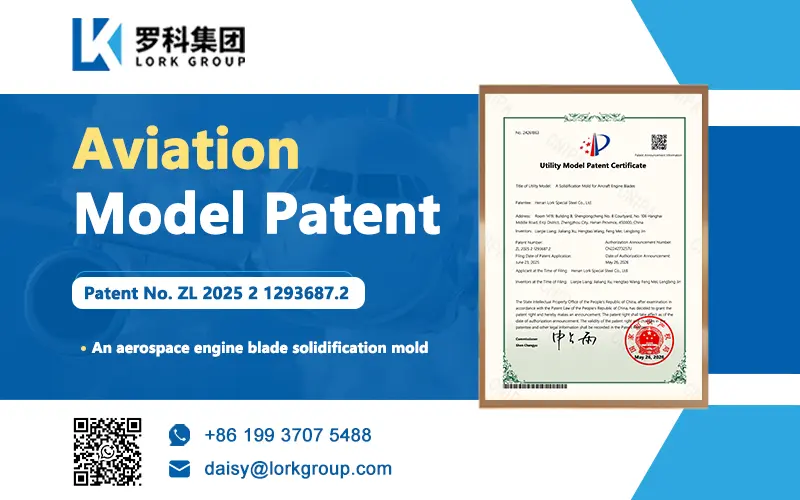
Patent No. ZL 2025 2 1293687.2 focuses on the precision casting of aero-engine blades, demonstrating the Group's sustained innovation capabilities in the fields of specialty steels and precision forming technologies.
Lork Group Granted National Utility Model Patent for an Aviation Engine Blade Solidification Mold