
Buyer's Guide to 8 Precision Alloys - Lork Group
author: A material research buyer with 15 years of experience in the Lork Group laboratory
2025-09-08
What are precision alloys?
The term "precision alloy" originates from the Russian "Прецизионные сплавы." China began using this term in the 1950s. Japan calls it "electromagnetic alloy," while the United States, the United Kingdom, and other countries refer to it as "magnetic alloy," though the scope of materials covered varies.
Precision alloys specifically refer to alloys that possess specialized physical properties (such as magnetic, thermal, electrical, and elastic) rather than purely mechanical properties.
Introduction to 8 Precision Alloys
Precision alloys are a general term for eight types of metal materials with specialized physical properties, including soft magnetic alloys, permanent magnetic alloys, elastic alloys, expansion alloys, thermo-bimetallic alloys, resistance alloys, electrothermal alloys, and shape memory alloys. These materials are used in the manufacture of electronic and electrical components and precision instruments and meters.
Main classification and representatives of the 8 kinds of precision alloys
| Classification | Core Features | Typical alloy series/grades | Brief description of main features | Classic application scenarios |
| Soft magnetic alloy | Highly efficient magnetic conductivity, easy magnetization and demagnetization | 1J series (such as 1J50, 1J79) | High permeability, low coercivity, and low hysteresis loss | Transformer cores, magnetic shields, current transformers, and high-frequency electromagnetic components |
| Permanent magnet alloys | Provide a stable and long-lasting magnetic field | 2J series (such as 2J4, 2J10) | High coercivity, high remanence, and high magnetic energy product | Used in permanent magnet motors, speakers, magnetic separators, and instrument cores |
| Elastic alloys | High elasticity, high strength, and fatigue resistance | 3J series (such as 3J1, 3J21, and 3J53) | High elastic limit, low hysteresis, fatigue resistance, and corrosion resistance | Precision instrument springs, diaphragms, bellows, springs, and sensor components |
| Expansion Alloys | Controlled Thermal Expansion Behavior | 4J Series (e.g., 4J29 (Kovar), 4J36 (Invar), 4J42) | Specific Thermal Expansion Coefficients (low expansion or glass/ceramic matching) | Electron Tube Cores, Glass-to-Metal Seals, Precision Measuring Scales, Microwave Cavities |
| Thermocouples | Heat-sensitive, converting thermal energy into mechanical energy | 5J series (e.g., 5J11, 5J18, 5J23) | Composed of two layers of alloys with different expansion coefficients, they bend when heated. | Used in temperature controllers, current overload protectors, and temperature indicators |
| Resistance Alloys | Provide stable and precise resistance | 6J series (such as 6J20 (manganese copper) and 6J10 (constantan) | High resistivity, low temperature coefficient of resistance (TCR), and excellent stability | Suitable for precision resistors, shunts, strain gauges, and standard resistors for measuring instruments |
| Electrothermal Alloys | Electric energy to heat energy conversion | Nickel-chromium (Ni-Cr) alloys (such as Cr20Ni80) | High resistivity, high melting point, excellent oxidation resistance | Electric furnaces, heaters, heating elements, industrial furnace wire |
| Other functional alloys | Special physical properties | Shape memory alloys (such as Nitinol), catalyst alloys, low melting point alloys, etc | Shape memory effect, catalytic properties, specific melting points, etc | Medical devices, aerospace, chemical reactors, and fuses |
Lork Group precision alloy


Buyer's Guide: How to Choose Precision Alloys?
Selecting precision alloys is a systematic process requiring comprehensive considerations:
Core Requirements: First, clarify the physical function you need the alloy to achieve (magnetic conductivity, constant elasticity, temperature measurement, stable resistance?).
Key Performance Parameters: Identify core performance indicators, such as permeability and loss for magnetic core materials, elastic modulus and fatigue strength for elastic components, and resistivity and temperature coefficient for resistor materials.
Operating Environment: Consider the operating environment (temperature, corrosive media, vibration, electromagnetic environment) in which the alloy will operate. This will determine the requirements for corrosion resistance, temperature stability, and reliability.
Processability and Cost: Evaluate whether the alloy's forming, cutting, heat treatment, and welding properties meet manufacturing process requirements, and balance performance with cost.
Summary
In short, precision alloys are the unsung heroes of modern industry, particularly in high-tech fields like electronics, aerospace, instrumentation, and energy technology. While unseen, they are the cornerstone of the performance of numerous high-end devices and precision components.
If you have a specific application in mind (for example, looking for a suitable elastic material for a sensor or selecting an expansion alloy for a specialized sealing process), providing more details to Daisy@lorkgroup.com will help you receive a more precise recommendation.
"Biometal" Medical Grade Titanium Alloy-Lork Group
What is the difference between Incoloy 825 and 925?
Related Article
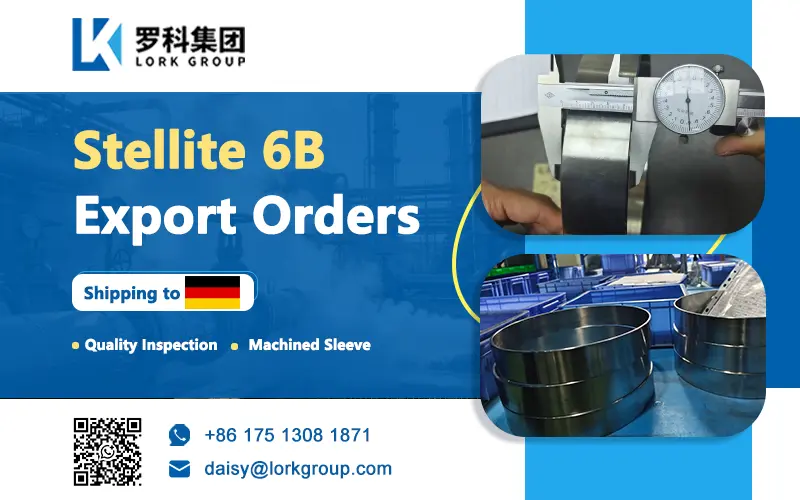
The Lork Group possesses extensive experience in processing cobalt-based alloys and maintains a comprehensive quality control system. The Stellite 6B bushings exported in this shipment—measuring 9 cm in width and 36 cm in diameter—are high-precision components. Delivery takes place only after the products have passed inspection; this process reflects our unwavering commitment to quality and is key to earning the trust of our German clients.
Lork Group Stellite 6B machined bushings exported to Germany

As an international group with 15 years of experience in specialty alloy supply chain management, Lork Group offers product selection consultation and supply services for the full range of Elgiloy, Pyromet, Elinvar, and Ni-Span-C 902 alloys. Please feel free to contact Lork Group’s sales and technical teams for the latest price quotes, material technical data sheets, or supplier coordination support.
Supplier of Elgiloy Pyromet Elinvar and Ni-Span-C 902 high-elasticity alloys
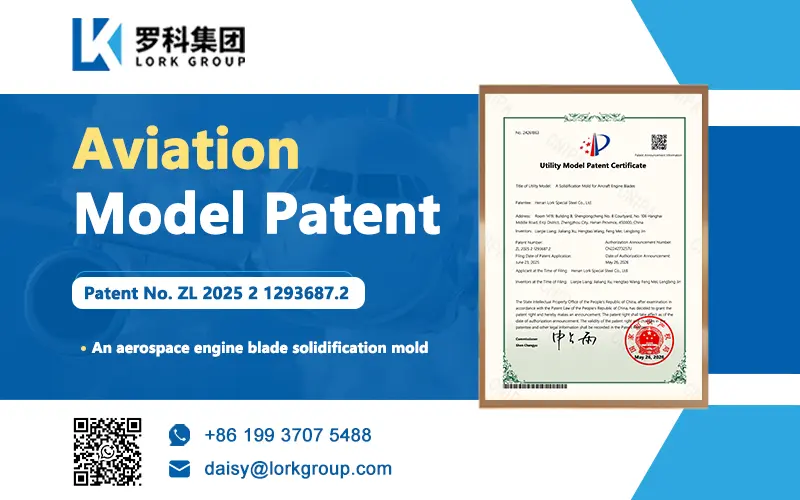
Patent No. ZL 2025 2 1293687.2 focuses on the precision casting of aero-engine blades, demonstrating the Group's sustained innovation capabilities in the fields of specialty steels and precision forming technologies.
Lork Group Granted National Utility Model Patent for an Aviation Engine Blade Solidification Mold
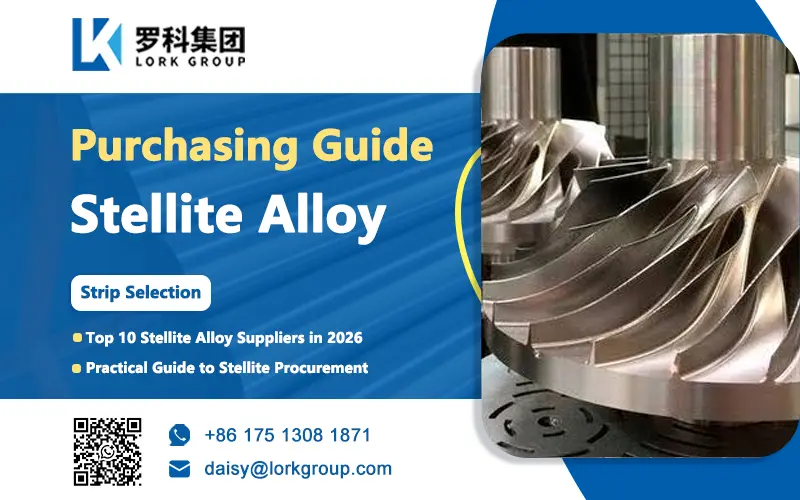
If you are unsure whether to use Stellite 6, 12, or 21 for your current project, simply send us a description of the operating conditions, and Lork Group engineers will provide a free "grade recommendation." Click the button below to submit details regarding operating temperature, corrosive media, and impact conditions, and we will respond within 24 hours.
Top 10 Suppliers of Stellite Alloy Materials for 2026