
Select high-temperature alloys based on their composition, characteristics, and applications
2024-09-11

High temperature alloys broadly refer to those materials which provide strength, environmental resistance and stability within the 500°F (260°C) to 2200°F (1205°C) temperature range. They have been used generally in the presence of combustion from heat sources such as turbine engines, reciprocating engines, power plants, furnaces and pollution control equipment.
If your need custom alloy components that can function in high temperatures, then you should know that there are specific metals that suit your needs particularly well.
If your business works with alloys in hot environments, choosing the right alloys for a high-temperature service can be confusing. Experts from Lork Group help you solve these confusions. After all, there’s no such thing as uniformity when it comes to working in extreme temperatures.
Every alloy has properties that make it react differently to other alloys when subjected to prolonged periods of heat.
Therefore, it is vital that you check the technical data, which describes the properties of the alloy, before deciding if it is ‘best fit’ for the specific operating environment.
The alloy you require will depend on the function it will serve. Therefore, it is critical that designers understand and document expected operating conditions.
In the following sections, we will go over Nickel and Stainless steel of the high-temperature metals, outlining their components, properties, and uses. Armed with this information, you will be in a better position to decide which one of these high temperature alloys is the right solution for you.
Stainless Steel
Stainless steel is an alloy that is composed of three different metals: iron, chromium, and nickel. A special heat-treating process is used to combine these three elements to form stainless steel.
This process can be summarized as follows:
- Melting
- Tuning/Stirring
- Forming
- Heat Treating
- Cutting/Shaping/Finishing
Of its many properties, two of stainless steel’s most popular engineering features are its corrosion resistance and eco-friendliness. Stainless steel is often referred to as “green material” since it can be recycled an infinite number of times. As for its heat-resistant properties, stainless steel’s melting point falls anywhere between 1400 to 1530 °C (2550 to 2790 °F).
The reason the melting point is an average and not an exact number is due to the variable amounts of mixed elements that are combined to form different stainless steel grades.
The three elements that stainless steel is made from all have different melting points:
iron (1535 °C—2795°F)
chromium (1890 °C—3434 °F)
nickel (1453 °C—2647 °F)
Depending on how much of either of the three elements are used will affect its final melting point to a lesser or higher degree. However, the melting points will almost always fall between the averages that were previously mentioned. Stainless steel has widespread use in many applications due to its desirable manufacturing and engineering properties.
These include:
Corrosion Resistance
High-Temperature Resistance
Low-Temperature Resistance
High Tensile Strength
Durability (under high heat and harsh conditions)
Easy Fabrication & Formability
Low Maintenance
Attractive Appearance
Eco-Friendly (unlimited recyclability)
It does not need to be painted, treated, or coated once it is put into use, and its low-maintenance requirements are among its most sought-after qualities.
As a result, stainless steel is very popular, especially for the following applications:
- Buildings (exterior cladding, countertops, handrails, backsplashes)
- Bridges
- Kitchen Knives
- Refrigerators & Freezers (finish material)
- Dishwashers (finish material)
- Food Storage Units
- Oil, Gas, & Chemical Components (tanks, pipes, pumps, valves)
- Sewage Plants
- Desalination Plants
- Ship Propellers
- Power Components (nuclear, geothermal, solar, hydro, wind)
- Turbines (steam, gas)
Stainless steel’s high melting point and high tensile strength increase a product’s stress resistance, structural load, and life cycle.
Nickel
Like many of the other heat-resistant metals on this list, nickel is a silvery-white transition metal known for its high melting point (1455°C—2651°F) and corrosion resistance.
Nickel’s high corrosion resistance makes it useful for plating and coating other metals, as well as for the creation of alloys like stainless steel.
Nickel’s high melting point is a direct result of the attraction of its positive and negative ions (protons and electrons) which form a strong bond that can hold together even under tremendous pressure and heat.
Since nickel is a naturally-occurring metal that is found abundantly in earth deposits, it is not created through any process but extracted from rock formations (ultramafic and igneous mafic) located mostly in tropical climates.
Nickel alloys, on the other hand, are formed by combining nickel with other metals like aluminum, titanium, iron, copper, and chromium through a simple heat treatment process.
These alloys are then used to manufacture a variety of products in different industries.
There are approximately 3,000 nickel-based alloys in use today.
The common properties exhibited by all variations of nickel alloys include:
- Strength
- Toughness
- Soft Magnetic Properties
- Corrosion Resistance
- Heat Resistance
- Easy Fabrication (good weldability)
As was mentioned earlier, nickel-based alloys are used for many applications within different industries and while the list is quite extensive.
It can be condensed down to the following:
- Electric Ovens
- Toasters
- Transformers
- Inductors
- Armor Plating
- Boat Propellor Shafts
- Turbine Blades
- Steel Plating
- Stainless Steel Alloys
- Corrosion-Resistant Alloys
- Batteries (nickel cadmium, nickel-metal hydride)
- Coins (US five-cent piece)
- Magnetic Amplifiers
- Magnetic Shields
- Storage Devices
- Spark Plugs
- Automobile Electrodes
Nickel is highly resistant to oxidation even in extremely hot temperatures and can prevent electrical corrosion.
As a result, it is a great choice for the creation of heat and corrosion-resistant alloys that are needed to fortify applications working in corrosive and hot environments.
Quite often the operating temperature is the first, and in some cases, the only data point that many people look at when making their choice of alloy. This is the wrong thing to do.
Heat resisting alloys should NOT be selected on the basis of maximum operating temperature alone, there are many other things to take into consideration. These include:
- The mechanical properties of the alloy at a specific temperature.
- The alloy’s resistance to oxidation.
- The alloy’s resistance to hot corrosion.
- The metallurgical stability of the material.
Lork Group is an supplier of industrial metals to the global aerospace, oil and gas, power generation, petrochemical, bio-medical, pharmaceutical, and other high tech manufacturing industries. Products of premium metal products including Inconel alloys,Incoloy alloys,Monel alloys,Haynes alloys,Hastelloy alloy,stainless steelandother superalloy. We certify to most ASME, ASTM, AMS, and military specifications as well as most international standards certification.
The most common alloy material used for surgical instruments
Marine engineering Hastelloy C22 Chlorination system
Related Article
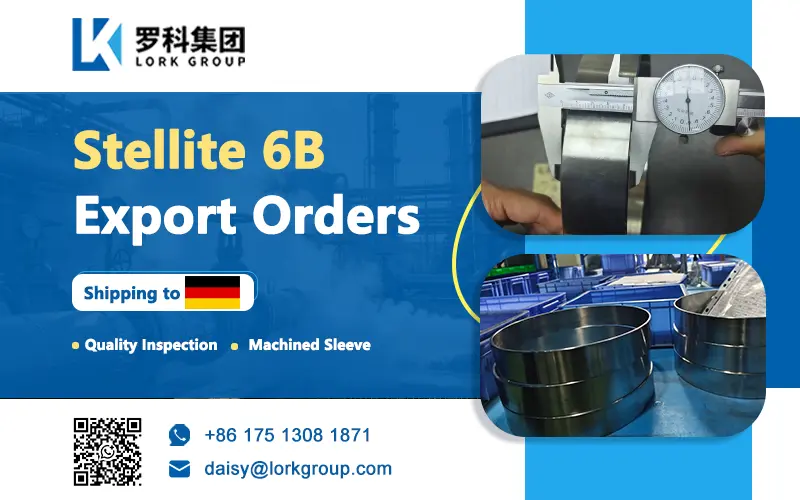
The Lork Group possesses extensive experience in processing cobalt-based alloys and maintains a comprehensive quality control system. The Stellite 6B bushings exported in this shipment—measuring 9 cm in width and 36 cm in diameter—are high-precision components. Delivery takes place only after the products have passed inspection; this process reflects our unwavering commitment to quality and is key to earning the trust of our German clients.
Lork Group Stellite 6B machined bushings exported to Germany

As an international group with 15 years of experience in specialty alloy supply chain management, Lork Group offers product selection consultation and supply services for the full range of Elgiloy, Pyromet, Elinvar, and Ni-Span-C 902 alloys. Please feel free to contact Lork Group’s sales and technical teams for the latest price quotes, material technical data sheets, or supplier coordination support.
Supplier of Elgiloy Pyromet Elinvar and Ni-Span-C 902 high-elasticity alloys
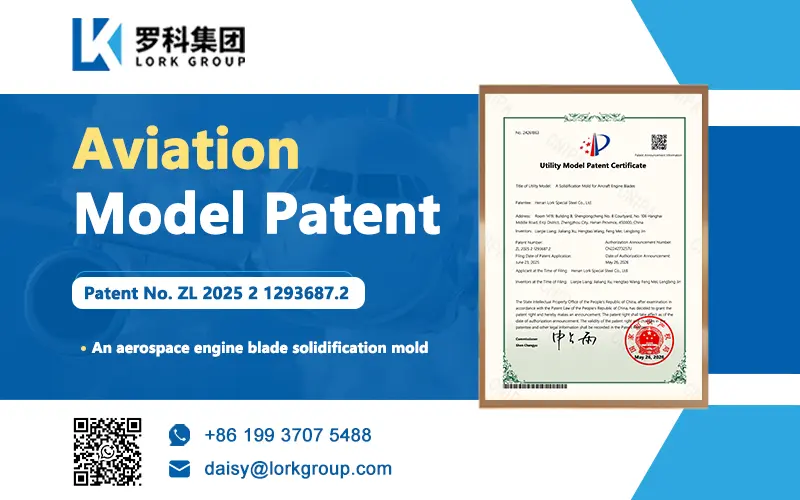
Patent No. ZL 2025 2 1293687.2 focuses on the precision casting of aero-engine blades, demonstrating the Group's sustained innovation capabilities in the fields of specialty steels and precision forming technologies.
Lork Group Granted National Utility Model Patent for an Aviation Engine Blade Solidification Mold
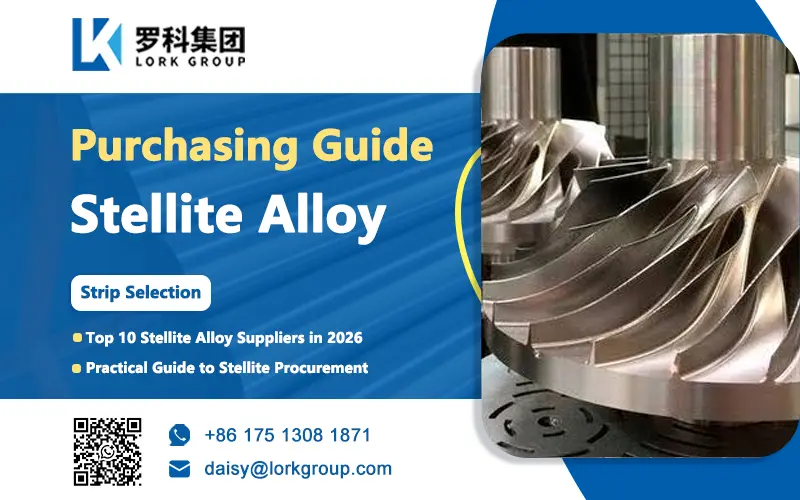
If you are unsure whether to use Stellite 6, 12, or 21 for your current project, simply send us a description of the operating conditions, and Lork Group engineers will provide a free "grade recommendation." Click the button below to submit details regarding operating temperature, corrosive media, and impact conditions, and we will respond within 24 hours.
Top 10 Suppliers of Stellite Alloy Materials for 2026