
Understand AMS 5842 MP159 Alloy Bars:Definition, Application, Advantages
2024-10-21
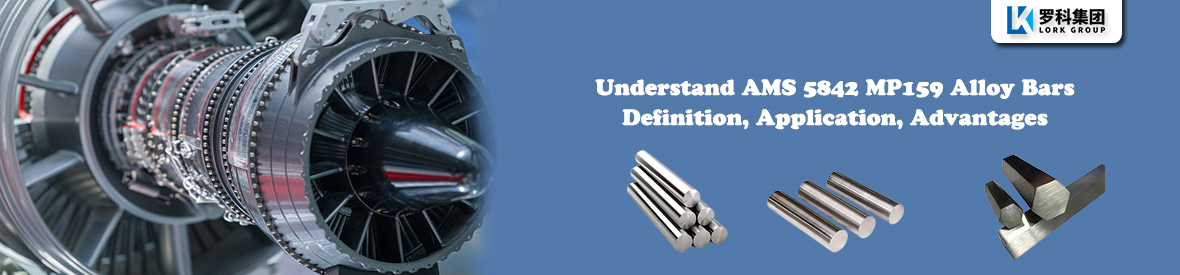
MP159 is a Nickel-Cobalt based multiphase alloy. This combination of properties enables ultra high strength, toughness, good ductility and excellent corrosion resistance.
AMS 5842 is a critical Aerospace Material Specification (AMS) that defines the requirements for MP159 Alloy. This specification ensures that MP159 meets stringent standards necessary for applications in aerospace and other high-performance industries, emphasizing reliability, durability, and performance under extreme conditions.
Through work strengthening and aging MP159 alloy exhibits ultimate tensile strength levels in excess of 1830 MPa. MP159 is used in many different industries from use in prosthetic devices, jet engine components, fasteners, marine applications to petroleum industry applications.
MP159 Alloy Product Form
AMS 5841 Bar (Solution Heat Treated)
Solution Heat Treat: 1900°F - 1925°F / 4-8 hours + Water Quench
AMS 5842 Bar (Solution Heat Treated and Work Strengthened)
Solution Heat Treat: 1900°F - 1925°F / 4-8 hours + Water Quench
Followed by work strengthened / strain hardening
AMS 5843 Bar (Solution Heat Treated, Work Strengthened and Aged)
Solution Heat Treat: 1900°F - 1925°F / 4-8 hours + Water Quench
Followed by work strengthened / strain hardening
Followed by ageing: 1200-1250°F 4-4.5 hours + Air Cool.
MP159 Alloy Chemical Composition
AMS 5842 specifies precise limits for the chemical composition of MP159, which typically includes:
- Nickel (Ni): Approximately 11.0-12.5%
- Chromium (Cr): Approximately 14.0-15.0%
- Cobalt (Co): Approximately 11.0-12.5%
- Molybdenum (Mo): Approximately 1.5-2.0%
- Titanium (Ti): Approximately 3.0-4.0%
- Aluminum (Al): Approximately 0.15-0.35%
- Carbon (C): Maximum 0.05%
These elements are carefully balanced to ensure MP159 exhibits the necessary combination of strength, toughness, corrosion resistance, and thermal stability after precipitation hardening. The controlled composition also facilitates compatibility with aerospace manufacturing processes and enhances the alloy’s performance in demanding operational environments.
MP159 Alloy Mechanical Properties
AMS 5842 specifies minimum mechanical property requirements for MP159 after undergoing specified heat treatments. These properties include:
- Tensile Strength: Typically greater than 1,380 MPa (200 ksi)
- Yield Strength: Typically greater than 1,210 MPa (175 ksi)
- Elongation: Minimum 10%
- Hardness: Typically in the range of 38-44 HRC
These properties ensure that MP159 can withstand high mechanical stresses and retain its integrity under varying temperature conditions encountered in aerospace applications. The alloy’s high strength-to-weight ratio makes it suitable for critical components such as turbine discs, shafts, and fasteners.
Heat Treatment
The heat treatment processes outlined in AMS 5842 are crucial for achieving the desired mechanical properties and microstructure in MP159. Precipitation hardening involves heating the alloy to a specified temperature range, holding it at that temperature to allow the formation of precipitates, and then rapidly cooling it to maintain the desired properties. Proper heat treatment ensures uniformity in material properties across different production batches, enhancing consistency and reliability in performance.
Usage and Applications
MP159, certified under AMS 5842, finds extensive use in aerospace and other high-performance industries where reliability, durability, and performance under extreme conditions are paramount. Key applications include:
- Aerospace: Components such as turbine discs, shafts, and fasteners in aircraft engines where lightweight materials with high strength and corrosion resistance are essential.
- Industrial: Applications requiring materials capable of withstanding aggressive environments, high mechanical stresses, and elevated temperatures, such as pump shafts, valves, and tooling.
Testing and Quality Assurance
To comply with AMS 5842, MP159 undergoes rigorous testing and quality assurance procedures. These include chemical analysis to verify composition, mechanical testing to evaluate tensile strength, yield strength, and hardness, as well as microstructural examination to assess grain size and distribution. Non-destructive testing methods such as ultrasonic testing and radiographic inspection are also employed to detect internal defects or inconsistencies that could affect performance.
Certification and Compliance
Manufacturers provide certification demonstrating compliance with AMS 5842, ensuring that MP159 meets all specified requirements for chemical composition, mechanical properties, heat treatment, and quality control measures. This certification confirms the alloy’s suitability for use in critical aerospace applications, where adherence to stringent standards is essential for ensuring safety and operational efficiency.
Conclusion
AMS 5842 plays a pivotal role in defining and maintaining the high standards required for MP159 in aerospace and other high-performance industries. By specifying stringent requirements for chemical composition, mechanical properties, heat treatment, and testing procedures, AMS 5842 ensures that MP159 alloys consistently deliver the necessary performance characteristics. As technology advances and demands for stronger, more durable materials increase, AMS 5842 remains instrumental in driving innovation and ensuring the reliability and safety of materials used in critical applications worldwide.
AMS 5872 Standard: Nimonic 263 for High-Performance Applications
AMS 5608 Standard Alloy 188: Chemical Composition, Mechanical Properties and Heat Treatment
Related Article
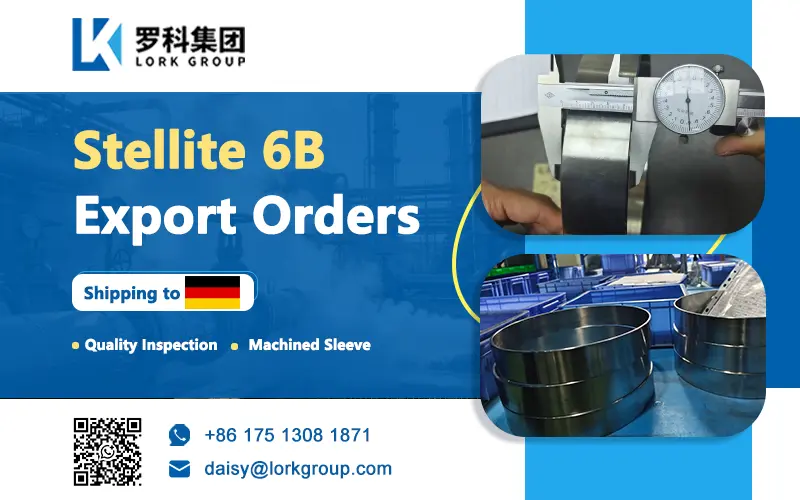
The Lork Group possesses extensive experience in processing cobalt-based alloys and maintains a comprehensive quality control system. The Stellite 6B bushings exported in this shipment—measuring 9 cm in width and 36 cm in diameter—are high-precision components. Delivery takes place only after the products have passed inspection; this process reflects our unwavering commitment to quality and is key to earning the trust of our German clients.
Lork Group Stellite 6B machined bushings exported to Germany

As an international group with 15 years of experience in specialty alloy supply chain management, Lork Group offers product selection consultation and supply services for the full range of Elgiloy, Pyromet, Elinvar, and Ni-Span-C 902 alloys. Please feel free to contact Lork Group’s sales and technical teams for the latest price quotes, material technical data sheets, or supplier coordination support.
Supplier of Elgiloy Pyromet Elinvar and Ni-Span-C 902 high-elasticity alloys
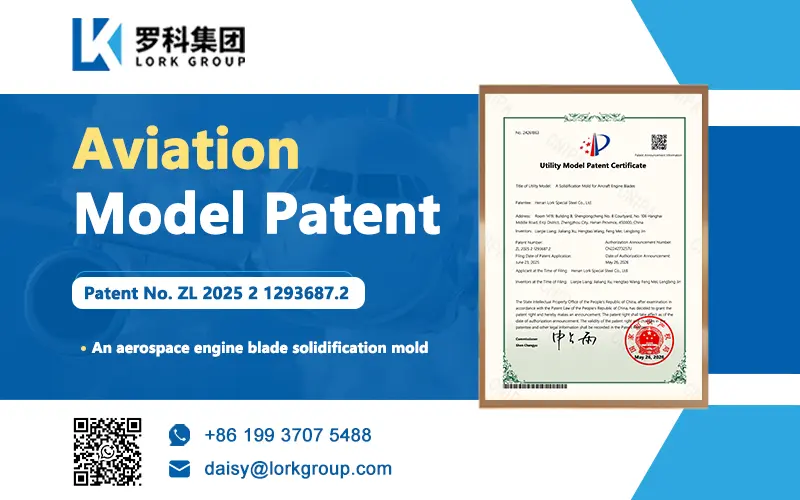
Patent No. ZL 2025 2 1293687.2 focuses on the precision casting of aero-engine blades, demonstrating the Group's sustained innovation capabilities in the fields of specialty steels and precision forming technologies.
Lork Group Granted National Utility Model Patent for an Aviation Engine Blade Solidification Mold
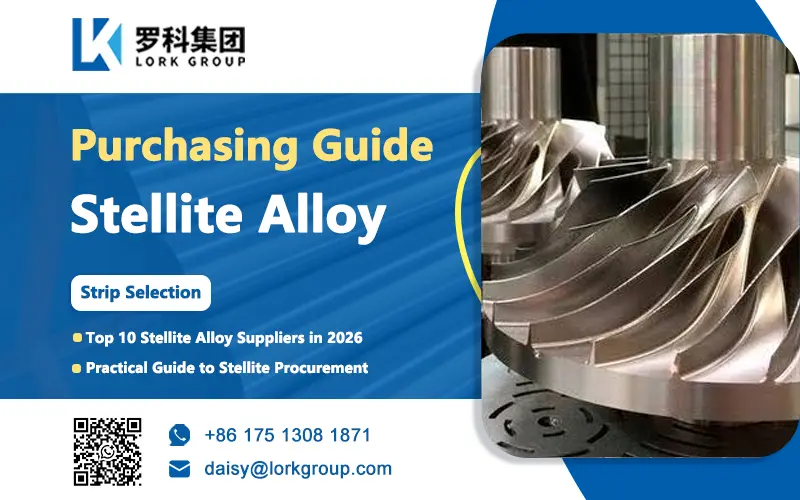
If you are unsure whether to use Stellite 6, 12, or 21 for your current project, simply send us a description of the operating conditions, and Lork Group engineers will provide a free "grade recommendation." Click the button below to submit details regarding operating temperature, corrosive media, and impact conditions, and we will respond within 24 hours.
Top 10 Suppliers of Stellite Alloy Materials for 2026