
Duplex Stainless Steels Selection Guidelines
2024-07-22
Duplex stainless steels are a type of stainless steel that combine the beneficial properties of austenitic and ferritic stainless steels.The name "duplex" originates from the dual-phase microstructure of these materials, comprised of approximately equal parts austenite and ferrite.
Duplex stainless steels were developed to overcome some limitations of traditional stainless steel grades, such as the popular 304 and 316 types. Compared to these conventional stainless steels, duplex stainless steels exhibit superior mechanical properties—especially regarding strength and toughness.
They also have improved resistance to stress corrosion cracking, a common issue with standard austenitic stainless steels when used in certain aggressive environments—this means improved reliability and higher overall quality compared to conventional austenitic stainless steel grades.
The enhanced corrosion resistance of duplex steels is primarily due to their higher chromium, molybdenum, and nitrogen content.
Furthermore, duplex stainless steels offer better price stability as they have lower nickel content than austenitic grades, making them less sensitive to market fluctuations in nickel prices.
Common Duplex Stainless Steel Grades
The ideal ratio of ferrite to austenite depends on desired mechanical properties, corrosion resistance requirements, and service conditions. Different duplex stainless steel grades will offer different ratios to provide an option for nearly any use case or environment.
Let's look at some of the most popular grades and see how they handle various corrosive situations:
Duplex Stainless Steels 2205 (UNS S32205/S31803)
This grade is known for good general corrosion resistance, offering superior performance to 316L in most environments.Its high chromium, molybdenum, and nitrogen content resist pitting, crevice, and general corrosion.However,it's unsuitable for applications requiring extended exposure to temperatures above 300°C due to precipitation of brittle microstructures.But, the increased availability of duplex alloys with PREN above 40 have created a wealth of opportunities for use in the industries that previously relied on more expensive options—or more in-depth maintenance and replacement routines.
Duplex Stainless Steels 2205 Typical applications include:
Chemical processing, transport, and storage: Grade 2205 is used in pressure vessels, tanks, piping, and heat exchangers in the chemical industry.
Oil and gas exploration and processing: It is suitable for offshore platforms, pipelines, and equipment exposed to corrosive environments in the oil and gas industry.
Desalination plants: Grade 2205 is used in seawater desalination plants due to its resistance to chloride corrosion.
Marine applications: It is utilized in shipbuilding, offshore structures, and marine equipment.
Pulp and paper industry: Grade 2205 is used in pulp and paper production equipment, where corrosion resistance is crucial.
Duplex Stainless Steels 2507 (UNS S32750)
This super duplex grade has very high pitting and crevice corrosion resistance thanks to its high molybdenum and chromium content. It offers high strength but can also undergo embrittlement if exposed to high temperatures for an extended time. Grade 2507 duplex stainless steel is frequently used in extreme environments like desalination plants, seawater systems, and petrochemical industries.
Duplex Stainless Steels 2507 Typical applications include:
Chemical processing equipment: Grade 2507 is suitable for equipment used in producing and handling chemicals, acids, and solvents.
Oil and gas industry: It is used in offshore platforms, subsea equipment, and pipelines due to its resistance to corrosion in seawater and harsh environments.
Desalination plants: The alloy's corrosion resistance makes it suitable for use in desalination plants where it comes into contact with chloride-rich seawater.
Pulp and paper industry: Grade 2507 is used in equipment such as digesters, bleach washers, and evaporators due to its resistance to corrosive chemicals used in the papermaking process.
Duplex Stainless Steels LDX 2101 (UNS S32101)
As a lean duplex stainless steel, LDX 2101 offers good general corrosion resistance, superior to 304 but not as good as 316. It's characterized by high strength and good resistance to stress corrosion cracking. It's less expensive because it uses less nickel and molybdenum but can be harder to source depending on market conditions.
Duplex Stainless Steels LDX 2101 Common applications include:
Chemical processing: LDX 2101's corrosion resistance makes it suitable for equipment and components used in chemical processing plants.
Oil and gas industry: LDX 2101 can be used in offshore platforms, pipelines, and other equipment exposed to corrosive environments in the oil and gas industry.
Desalination plants: LDX 2101's resistance to corrosion and chloride stress-corrosion cracking makes it suitable for desalination plants where seawater is processed.
Food processing: LDX 2101's corrosion resistance and good machinability make it suitable for food processing and storage equipment.
Construction: LDX 2101 can be used in structural applications requiring corrosion resistance, such as bridges and buildings.
Duplex Stainless Steels 2304 (UNS S32304)
Another lean duplex, 2304 offers corrosion resistance similar to 316L but with higher strength. However, it's susceptible to pitting corrosion in chloride-rich environments. It's often used in construction, architecture, and in the pulp and paper industry.
Duplex Stainless Steels 2304 Some ideal specific applications include:
Chemical Processing: The construction of chemical tankers, cargo tanks, and storage tanks due to grade 2304's corrosion resistance properties.
Oil and gas industry: Offshore platforms, pipelines, and subsea equipment in the oil and gas industry.
Pulp and paper industry: Heat exchangers, digesters and bleach towers, recovery boilers, piping systems, and other equipment.
Construction: Architectural structures and components, including facades, beams, columns, trusses, handrails, decorative elements, roofing, and cladding.
The content appearing on this webpage is for informational purposes only.
Selecting the correct grade of duplex stainless steel is crucial for optimal performance.
Lork Group – a leading supplier of Duplex Stainless Steel
Lork Group is an supplier in the supply of Duplex Stainless Steel and other high quality specialist engineering alloys.
To buy or learn more about Duplex Stainless Steel contact us now, we will be in touch shortly.


Choosing Monel or Stainless Steel: A Practical Guide
Precipitation Hardening Stainless Steels – Applications, Properties, Fabrication Processes
Related Article
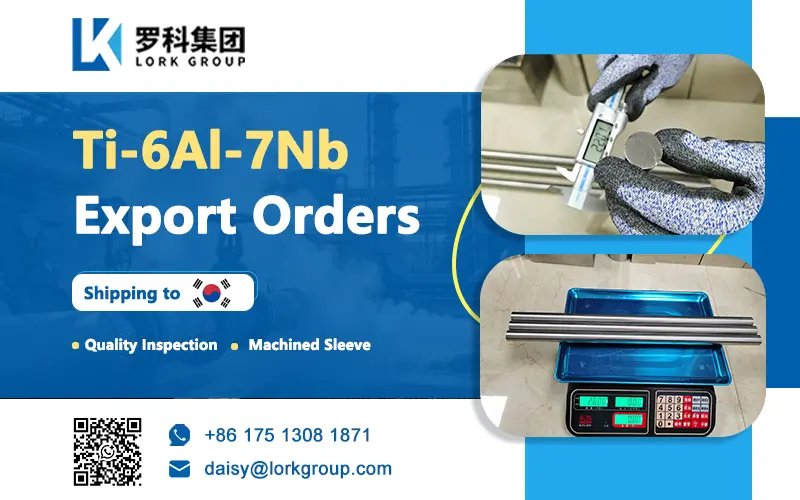
Lork Group has delivered Ti-6Al-7Nb rods to a South Korean client. These medical-grade rods are manufactured in accordance with the ASTM F1295 standard, and the company offers both sample-based trial production and volume supply.
Shipment Record Ti-6Al-7Nb Titanium Alloy Rods Exported to South Korea Lork Group
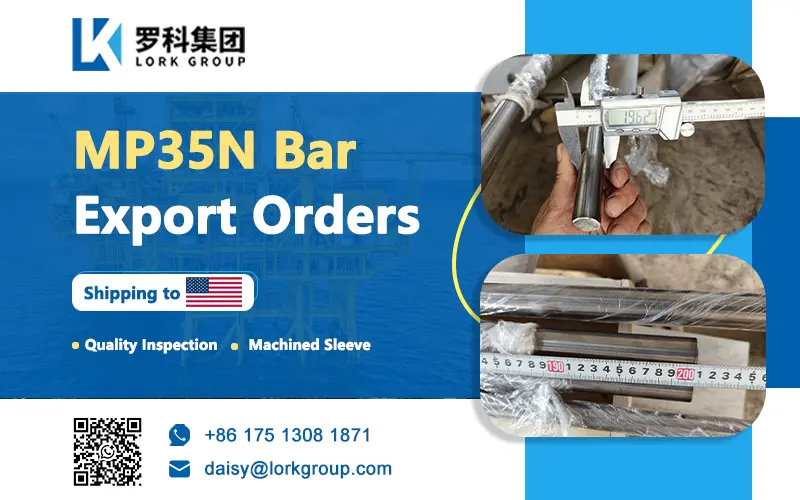
Lork Group has successfully completed the shipment of an order for MP35N cobalt-based alloy rods to a U.S. customer. The initial delivery consisted of four MP35N alloy rod samples, accompanied by a third-party inspection report from SGS confirming that all tested parameters met specifications. These materials, destined for the United States, will be used to manufacture critical components—specifically high-pressure sealing and suspension systems—for deep-sea oil and gas extraction equipment.
Shipment records of MP35N cobalt rods and SGS test reports exported to Lork Group in the United States
A comparison of Inconel alloy standards for sheet, strip, and plate: which grade—600, 601, 625, or 718—suits your operating conditions? While AMS and ASTM standards for the same grade may specify similar chemical compositions, AMS standards typically impose stricter additional requirements regarding grain size (ASTM E112), non-destructive testing (ultrasonic/penetrant), and traceability.
Guide to Selecting Inconel Sheet, Strip, and Plate: A Comprehensive Analysis of Mainstream Grades, Standards, and Applications for 2026

The Lork Group specializes in providing stress shielding solutions for users of titanium alloy orthopedic implants. Our materials include ASTM F1713 titanium rods, Ti-13Nb-13Zr titanium alloy, and other ASTM F1713 titanium products.
Lork Group's Medical Titanium Alloy Implants Solve the Challenge of Stress Shielding