
How to choose stainless steel material in shipbuilding
2024-07-25

First, the performance and application of stainless steel
Stainless steel material has the characteristics of strong corrosion resistance, high mechanical strength, light weight, etc., and is widely used in various projects. In the shipbuilding industry, stainless steel materials are often used in the manufacture of hull structures, pipes, propellers, motors and other parts. It can also be used to design structural and decorative elements such as pipes, handrails, handles, handrails, floors, drain grates, etc.
Second, the advantages and applicability of stainless steel
The advantage of stainless steel is its good corrosion resistance. In the Marine environment, the REDOX potential of water is higher than that of land, and the corrosion effect on steel is also stronger. If the ordinary steel material is used, it is easy to rust in a humid environment and lose its mechanical properties. Stainless steel materials can effectively resist the erosion of seawater, sea fog, sea salt and other corrosive substances. In addition, stainless steel materials also have good mechanical and physical properties, can withstand the Marine environment of high pressure, high temperature and other changes.
Third, the type and choice of stainless steel materials
According to the needs of different uses, stainless steel materials have a variety of different grades. When choosing stainless steel materials, it is necessary to consider the operability, cost and requirements for material properties in the manufacturing process, combined with the characteristics of different grades to choose the appropriate stainless steel materials.
- Large ships began to use 06Cr17Ni12Mo2(316) austenitic stainless steel, 06Cr25Ni5Mo2 duplex stainless steel and 07Cr17Ni7AI precipitation hardening stainless steel to manufacture propellers;
- Ship engine exhaust system is made of 06Cr17Ni12Mo2 austenitic stainless steel;
- The turbine blades are made of 05Cr17Ni4Cu4Nb precipitation hardening stainless steel;
- The non-magnetic engine is made of Cr-Ni austenitic stainless steel;
- The kitchen equipment is made of 06Cr19Nil0 (304) austenitic stainless steel and 06Cr17 steel;
- The hulls of transportation food, chemical tankers and refrigerated ships are made of 06Crl 8Ni9 austenitic stainless steel and 06Cr17 steel;
- The LNG carrier is made of Cr-Ni austenitic stainless steel with good low temperature performance;
- The minesweeper submarine is made of 022Cr2INi17Mo2N and 022Cr22Ni13Mo3N duplex stainless steel;
- Made of 022Cr22Ni13Mo2N duplex stainless steel for marine shafts and heat exchangers;
- The patrol boat propeller, propulsion shaft, rudder, etc. are made of 06Cr25Ni6Mo3CuN duplex stainless steel.
Stainless steel materials have important application value in shipbuilding, and can cope with the harsh conditions in the Marine environment. When using stainless steel materials, it is necessary to consider the performance of the material, choose the right grade and control costs.
Lork Group stocks Stainless steel in a range of sizes. Stainless steel Material of alloy can be supplied in random lengths, cut to order or machined to customer's specifications. We provide tailored solutions that meet specific material specifications, To buy or learn more about stainless steel contact us now, we will be in touch shortly.
316 stainless steel applications in chemical processing
How Does Stainless Steel Resist Corrosion?
Related Article
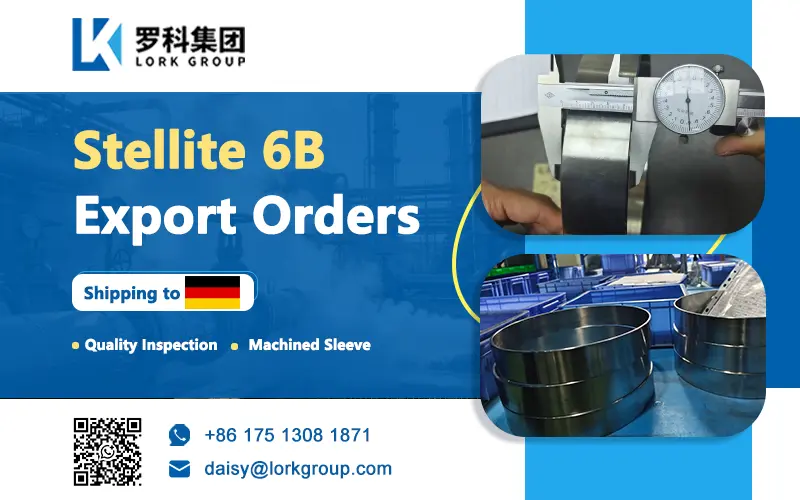
The Lork Group possesses extensive experience in processing cobalt-based alloys and maintains a comprehensive quality control system. The Stellite 6B bushings exported in this shipment—measuring 9 cm in width and 36 cm in diameter—are high-precision components. Delivery takes place only after the products have passed inspection; this process reflects our unwavering commitment to quality and is key to earning the trust of our German clients.
Lork Group Stellite 6B machined bushings exported to Germany

As an international group with 15 years of experience in specialty alloy supply chain management, Lork Group offers product selection consultation and supply services for the full range of Elgiloy, Pyromet, Elinvar, and Ni-Span-C 902 alloys. Please feel free to contact Lork Group’s sales and technical teams for the latest price quotes, material technical data sheets, or supplier coordination support.
Supplier of Elgiloy Pyromet Elinvar and Ni-Span-C 902 high-elasticity alloys
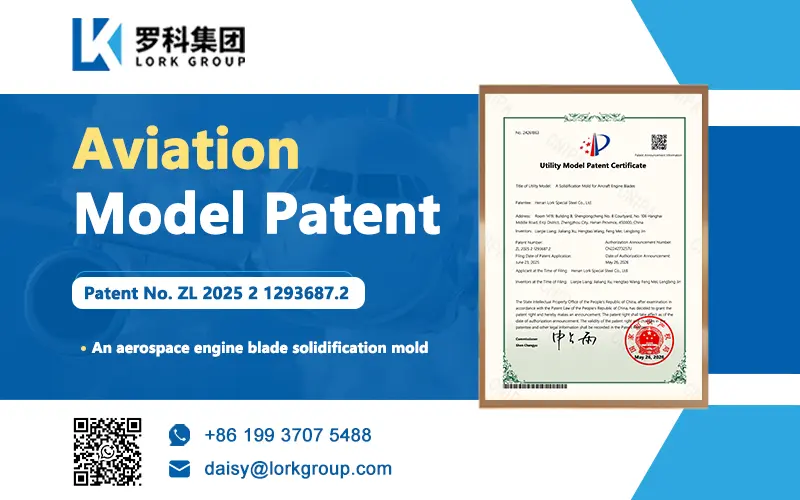
Patent No. ZL 2025 2 1293687.2 focuses on the precision casting of aero-engine blades, demonstrating the Group's sustained innovation capabilities in the fields of specialty steels and precision forming technologies.
Lork Group Granted National Utility Model Patent for an Aviation Engine Blade Solidification Mold
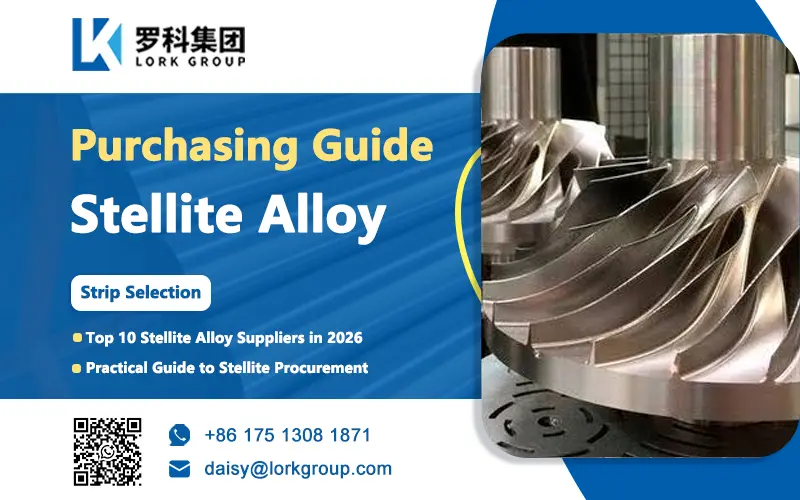
If you are unsure whether to use Stellite 6, 12, or 21 for your current project, simply send us a description of the operating conditions, and Lork Group engineers will provide a free "grade recommendation." Click the button below to submit details regarding operating temperature, corrosive media, and impact conditions, and we will respond within 24 hours.
Top 10 Suppliers of Stellite Alloy Materials for 2026