
NIMONIC Alloys-Extreme High-Temperature and Corrosive Applications
2026-05-18
Introduction
Under extreme operating conditions exceeding 800°C, ordinary steels rapidly soften, oxidize, and lose their load-bearing capacity. In contrast, the NIMONIC series of nickel-based superalloys—thanks to their unique compositional design and microstructure—have emerged as the "steel warriors" of the aerospace, energy, and petrochemical sectors. Today, approaching the subject from the practical perspective of material selection, we will discuss how to effectively utilize NIMONIC alloys in these "hellish" environments.
Three Major Material Selection Challenges in Hot Corrosion Environments
In high-temperature corrosive environments—such as those involving gas turbine blades or chemical cracking furnace tubes—engineers typically face three core challenges:
- Withstanding both extreme heat and corrosion is essential: neither high-temperature strength alone nor corrosion resistance in isolation is sufficient—the material must possess both attributes simultaneously.
- The operating temperature range dictates the material's destiny: the requirements for alloys at 800°C versus 900°C differ vastly; selecting the wrong grade—even by a single level—can potentially reduce the component's service life tenfold.
- The Hidden Hurdles of Processing and Welding: Certain high-performance NIMONIC alloys (such as Grade 105) are exceptionally difficult to machine and are virtually unweldable; consequently, the method of joining must be meticulously planned during the design phase.
Comparative Analysis of Core NIMONIC Grades
Different grades have their distinct "optimal service ranges":
| Alloy Grade | Applicable Temperature | Key Advantages | Main Limitations | Cost-Performance Positioning |
|---|---|---|---|---|
| ≤815℃ | A classic, versatile choice with excellent oxidation resistance and a mature manufacturing process. | A classic, versatile choice with excellent oxidation resistance and a mature manufacturing process. Absolute strength is lower than that of the 90/105 variants. |
★★★★★ (Highest Rating) | |
| ≤920℃ | Balances high-temperature strength with corrosion resistance | Processing difficulty exceeds that of 80A | ★★★★ | |
| 700-950℃ | Possesses excellent ultimate creep strength, making it suitable for heavy-load applications. | Extremely difficult to machine, non-weldable, and high-cost. | ★★★ (Essential for specific scenarios) | |
| 800-1100℃ | Excellent weldability; good resistance to high-temperature salt corrosion. | Strength is below 105. | ★★★★ (Preferred choice for welded assemblies) |


Select Materials Based on Context
| Typical Operating Conditions | Recommended Grade | Key Rationale |
|---|---|---|
| Turbine Blades, High-Temperature Bolts (>850°C, High Stress, Simple Geometry) | Nimonic 105 | At this stage, creep resistance is the primary priority; otherwise, the blades would elongate and deform. However, the components must be weld-free. |
| Gas Turbine Hot Section, Sulfur/Salt-containing Atmosphere (Predominantly High-Temperature Corrosion; Moderate Stress) | Nimonic 81 or 91 | When welding and assembly are required, they are a safer choice. Haynes 282 may also be considered. |
| Steam Turbine Fasteners, Exhaust Valves (<800°C, requiring high comprehensive performance) | Nimonic 80A | The undisputed champion in value for money—mature and reliable. It meets the requirements of the vast majority of industrial high-temperature applications below 800°C. |
Supplementary "Bag of Tricks" for Material Selection
In addition to consulting the temperature-to-grade reference chart, there are two practical tips worth noting:
● Pay attention to the Ti/Al ratio: Research indicates that in high-temperature salt corrosion environments, alloys with a Ti/Al ratio greater than 1 are more effective at forming a dense, protective oxide film. When selecting materials, it is advisable to compare the data sheets.
● Prioritize AMS Standards: Aerospace Material Specifications (e.g., AMS 5676) impose stricter requirements regarding cleanliness and performance margins than do general ASTM standards. When used for critical aerospace equipment, this provides an additional layer of assurance.
There is no "best," only what is most suitable.
When selecting a NIMONIC alloy, there is no such thing as a "universal grade." For applications below 800°C, Nimonic 80A is the preferred choice; for high-stress environments exceeding 850°C, Nimonic 105 is the definitive solution; and for applications requiring both weldability and corrosion resistance, Nimonic 81 or 91 should be your focus.
If you are currently facing a specific challenge regarding alloy selection for high-temperature corrosive environments—such as determining the exact operating temperature, assessing the presence of sulfur or chlorine in the medium, or verifying whether the component requires welding—we invite you to leave a comment or contact our engineers. We would be happy to collaborate with you to identify the most suitable solution.
(The content of this article is based on publicly available data and accumulated engineering experience; however, specific alloy selections should always be validated against the final operating conditions.)
Lork Steels: Specializing in High-Performance Alloy Supply
If you require a more detailed data sheet regarding the properties of NIMONIC alloys, or would like to request a quotation, please visit our Product Center directly or consult with one of our online engineers.
Operations & Marketing Department | Director of Operations
Email: dasiy@lorkgroup.com
WhatsApp: +86 175 1308 1871
WhatsApp: +86 175 1308 1871
17-7PH vs 17-4PH - How to Choose Stainless Steel Strip
Lork Group Awarded DCI ISO 13485 Certification
Related Article
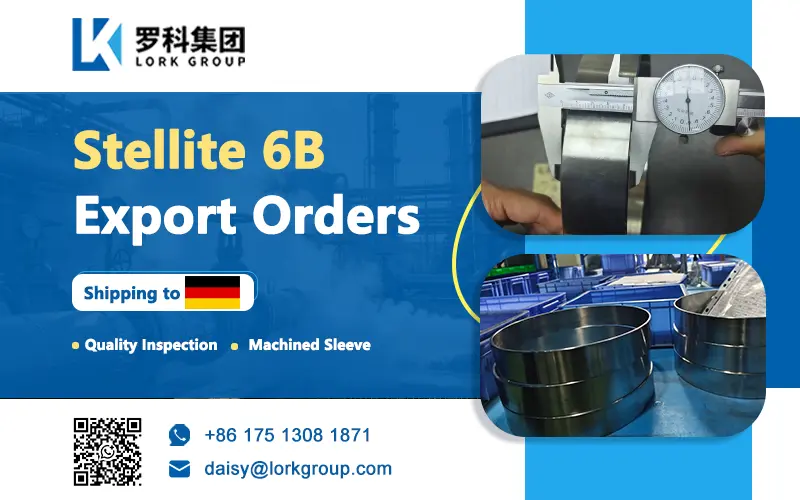
The Lork Group possesses extensive experience in processing cobalt-based alloys and maintains a comprehensive quality control system. The Stellite 6B bushings exported in this shipment—measuring 9 cm in width and 36 cm in diameter—are high-precision components. Delivery takes place only after the products have passed inspection; this process reflects our unwavering commitment to quality and is key to earning the trust of our German clients.
Lork Group Stellite 6B machined bushings exported to Germany

As an international group with 15 years of experience in specialty alloy supply chain management, Lork Group offers product selection consultation and supply services for the full range of Elgiloy, Pyromet, Elinvar, and Ni-Span-C 902 alloys. Please feel free to contact Lork Group’s sales and technical teams for the latest price quotes, material technical data sheets, or supplier coordination support.
Supplier of Elgiloy Pyromet Elinvar and Ni-Span-C 902 high-elasticity alloys
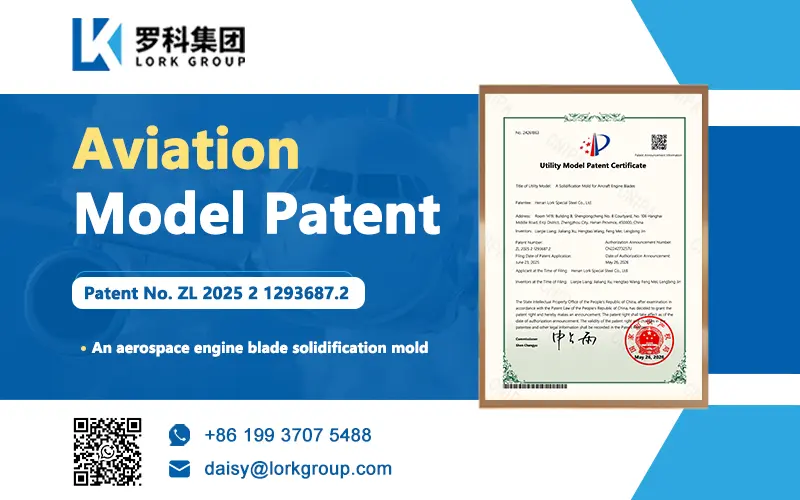
Patent No. ZL 2025 2 1293687.2 focuses on the precision casting of aero-engine blades, demonstrating the Group's sustained innovation capabilities in the fields of specialty steels and precision forming technologies.
Lork Group Granted National Utility Model Patent for an Aviation Engine Blade Solidification Mold
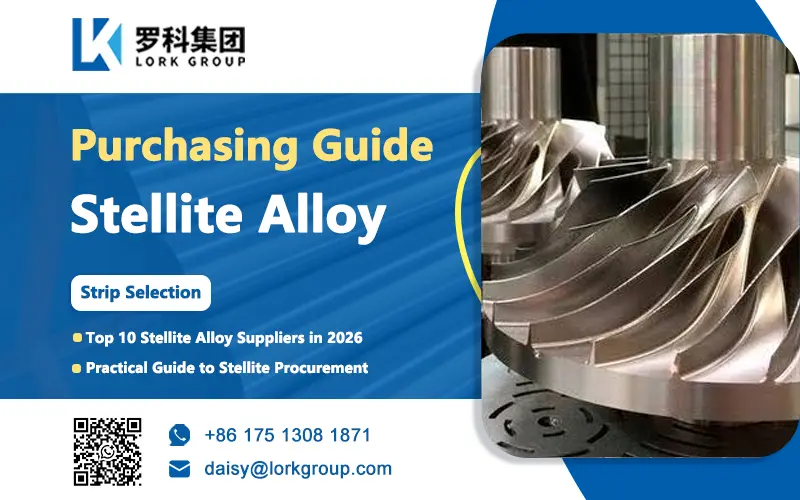
If you are unsure whether to use Stellite 6, 12, or 21 for your current project, simply send us a description of the operating conditions, and Lork Group engineers will provide a free "grade recommendation." Click the button below to submit details regarding operating temperature, corrosive media, and impact conditions, and we will respond within 24 hours.
Top 10 Suppliers of Stellite Alloy Materials for 2026