
Optimization of Heat Treatment Process for Monel K500 Alloy
2024-07-17
The Monel K500 alloy is widely used in various industries due to its excellent corrosion resistance and high strength-to-weight ratio. However, optimizing its heat treatment process is crucial to maximize its potential.
Heat Treatment Process:
The annealing process is essential for softening the alloy post-working and dissolving age-hardening particles. Softening can be achieved at temperatures ranging from 1400-1600°F; however, for optimal results, heating at 1800°F for hot-finished products and 1900°F for cold-drawn products is recommended. To prevent excessive grain growth, heating times should be minimized at elevated temperatures.
Age-Hardening Procedures:
Three distinct age-hardening procedures are recommended based on the initial hardness level of the alloy:
1. Soft materials (140-180 Brinell, 75-90 RB): Heating for 16 hours at 1100-1125°F, followed by furnace cooling at a rate of 15-25°F per hour to 900°F. This procedure is suitable for forged and quenched or annealed forgings, annealed or hot-rolled rods, and large cold-drawn rods.
2. Moderately cold-worked materials (175-250 Brinell, 8-25 RB): Heating for 8 hours or more at 1100-1125°F, followed by cooling to 900°F at a rate not exceeding 15-25°F per hour. This procedure is suitable for cold-drawn rods, half-hard strip, cold-upset pieces, and intermediate-temper wire.
3. Fully cold-worked materials (260-325 Brinell, 25-35 Rc): Heating for 6 hours or more at 980-1000°F, followed by cooling to 900°F at a rate not exceeding 15-25°F per hour. This procedure is suitable for spring-temper strip, spring wire, or heavily cold-worked pieces.
Cooling Rate:
The cooling rate plays a critical role in determining the alloy's properties. Generally, slower cooling rates lead to better aging responses and increased softness. However, a delay in quenching or a slow quench can cause precipitation of age-hardening particles, reducing the alloy's performance.
Pilot Testing:
To optimize the heat treatment process, pilot testing is recommended. This involves replicating the cross section of the material to be hardened and conducting trials
Lork Group stocks this alloy in a range of sizes. Monel k500 Material of alloy can be supplied in random lengths, cut to order or machined to customer's specifications. Machining includes drilling, turning, tapping, threading, CNC shapes.

Precipitation Hardening Stainless Steels – Applications, Properties, Fabrication Processes
What applications can the Incoloy 800 nickel alloy be used for?
Related Article
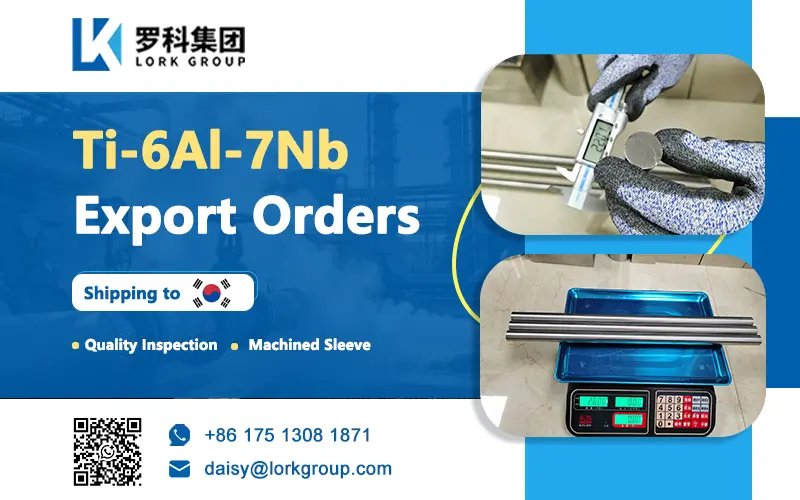
Lork Group has delivered Ti-6Al-7Nb rods to a South Korean client. These medical-grade rods are manufactured in accordance with the ASTM F1295 standard, and the company offers both sample-based trial production and volume supply.
Shipment Record Ti-6Al-7Nb Titanium Alloy Rods Exported to South Korea Lork Group
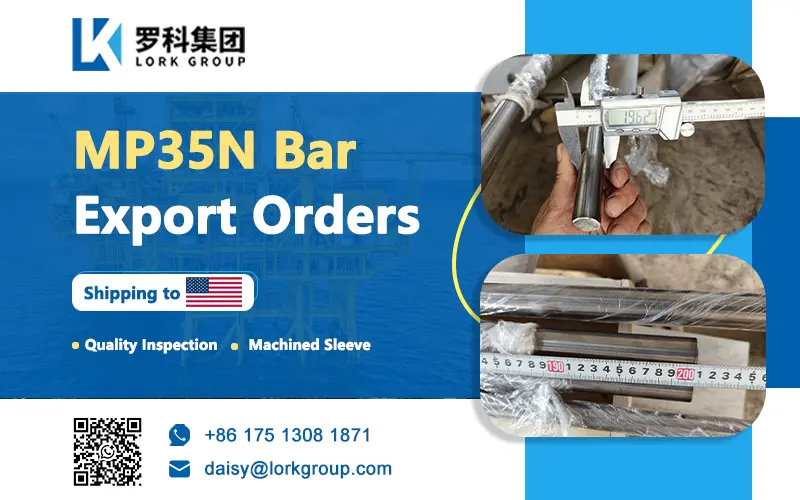
Lork Group has successfully completed the shipment of an order for MP35N cobalt-based alloy rods to a U.S. customer. The initial delivery consisted of four MP35N alloy rod samples, accompanied by a third-party inspection report from SGS confirming that all tested parameters met specifications. These materials, destined for the United States, will be used to manufacture critical components—specifically high-pressure sealing and suspension systems—for deep-sea oil and gas extraction equipment.
Shipment records of MP35N cobalt rods and SGS test reports exported to Lork Group in the United States
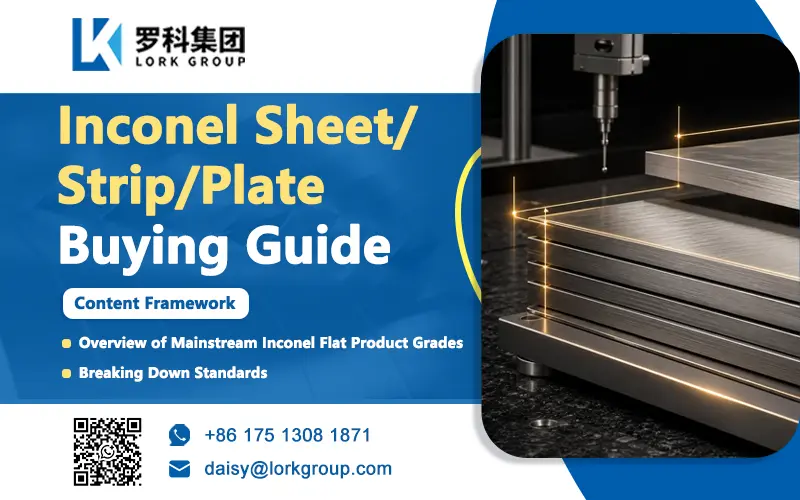
A comparison of Inconel alloy standards for sheet, strip, and plate: which grade—600, 601, 625, or 718—suits your operating conditions? While AMS and ASTM standards for the same grade may specify similar chemical compositions, AMS standards typically impose stricter additional requirements regarding grain size (ASTM E112), non-destructive testing (ultrasonic/penetrant), and traceability.
Guide to Selecting Inconel Sheet, Strip, and Plate: A Comprehensive Analysis of Mainstream Grades, Standards, and Applications for 2026

The Lork Group specializes in providing stress shielding solutions for users of titanium alloy orthopedic implants. Our materials include ASTM F1713 titanium rods, Ti-13Nb-13Zr titanium alloy, and other ASTM F1713 titanium products.
Lork Group's Medical Titanium Alloy Implants Solve the Challenge of Stress Shielding