
Reactor Grades of Zirconium Alloys
2024-11-25
Zirconium is a silvery-white transition metal with a very low thermal neutron absorption cross-section, high hardness, good ductility, and corrosion resistance. Zirconium alloy is a solid solution of zirconium or other metals. The main use of zirconium alloys is in the field of nuclear technology, such as fuel rods in nuclear reactors. Beyond the basics above, what else should we know about zirconium alloys? In this article, we will take a close look at zirconium alloys.
Zirconium is a commercially available refractory metal with excellent corrosion resistance, good mechanical properties, very low thermal neutron cross section, and can be manufactured using standard fabrication techniques.
The various zirconium alloy grades used in water-cooled nuclear reactors are also available for nuclear waste disposal components. Reactor grade designates that the material has low hafnium content suitable for nuclear service. The hafnium is typically 0.010% maximum.
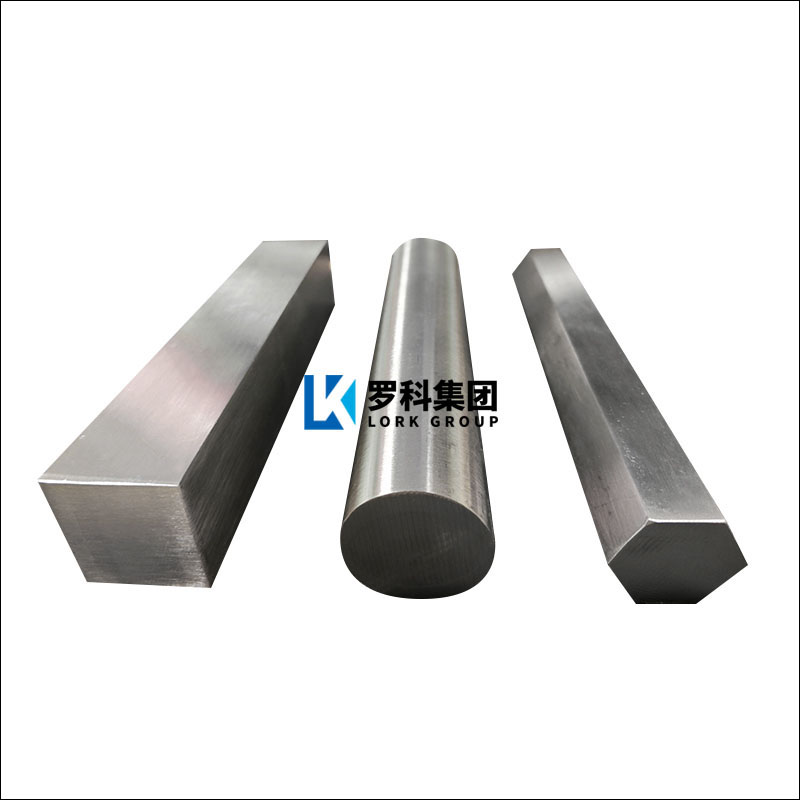
GRADES OF ZIRCONIUM ALLOYS
The American Society for Testing and Materials (ASTM) offers widely recognized grades of zirconium alloys.
Zircaloy-2 (Grade R60802) is composed of Zr-1.5%Sn0.15%Fe-0.1%Cr-0.05%Ni and has been predominantly used as fuel cladding in Boiling Water Reactors (BWR) and as calandria tubing in CANadian Deuterium Uranium (CANDU) reactor types.
Zircaloy-4 (Grade R60804) has removed the nickel and increased the iron content for less hydrogen uptake in certain reactor conditions. The alloy is typically used as fuel cladding in Pressurized Water Reactors (PWR) and CANDU reactors. The nominal Zircaloy-4 composition is Zr-1.5%Sn-0.2%Fe-0.1%Cr. Refinements in the ingot homogeneity have allowed tighter control of the alloy elements within the ASTM specification. Controlled Composition Zircaloy offers optimized in-reactor corrosion resistance by adjusting the alloy aim point within the ASTM specification ranges. Controlled Composition Zircaloy-4 has lower tin (1.3%) and higher iron (0.22%) than the standard grade.
Zr-2.5Nb (Grade R60904) is a binary alloy with niobium to increase the strength. The alloy has been utilized for pressure tubes in CANDU reactors. Advantages of zirconium alloys for long term nuclear waste disposal include excellent radiation stability and 100% compatibility with existing Zircaloy fuel cladding to alleviate any concerns of galvanic corrosion.
Non-reactor grade Zirconium 702 (Grade R60702) has 4.5% maximum hafnium.
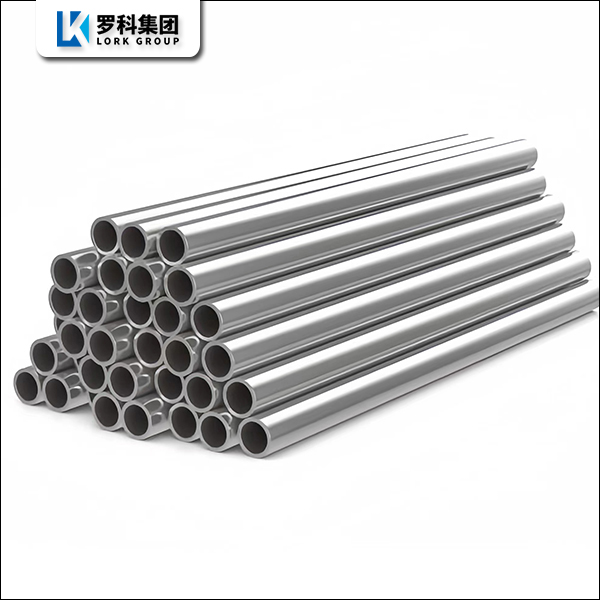
Zirconium alloys have superior thermal properties compared to other traditional materials in consideration for spent nuclear fuel containers. Zirconium alloys have a thermal conductivity more than 30% higher than stainless steel alloys. The linear coefficient of thermal expansion for Zirconium alloys is nearly one-third the value for stainless steel giving zirconium alloys superior dimensional stability at elevated temperatures. This is an advantage in nuclear waste containers where temperatures could exceed 200ºC for hundreds of years.
Zircaloy-2 and Zircaloy-4 have a hexagonal close-packed (HCP) crystal structure at room temperature as an alpha phase. The beta phase is body centered cubic (BCC) and begins to form upon heating to approximately 810ºC. The fraction of beta phase increases with temperature until complete transformation to beta phase occurs at approximately 980ºC. Zircaloy exhibits anisotropy as a result of the HCP crystal structure. The hexagonal crystal deforms by both slip and twinning to produce a strong preferred orientation of the crystals (texture) during cold working. Typically, cold rolled Zircaloy strip will have a strong normal texture where most of the basal poles of the hexagonal crystals are orientated about 35 degrees to the transverse plane of the strip.
The anisotropic properties of Zircaloy strip results in significantly higher yield strength values in the transverse direction. The control of crystallographic orientation allows designers to optimize material properties.
ZIRCONIUM ALLOY PROPERTIES
Zirconium resists corrosive attack in most organic and mineral acids, strong alkalis, and some molten salts. Solutions of nitric acid (HNO3 ), sulfuric acid (H2 SO4 ), and hydrochloric acid (HCl) with impurities of ferric, cupric and nitrate ions generally result in corrosion rates of less than 0.13 mm/a (5 mpy) even at temperatures well above the boiling point curve. A tightly adherent and protective oxide film protects the metal-oxide interface to provide corrosion resistance. An additional benefit for zirconium alloys in long-term geological disposal options is the inert nature of zirconium oxide. Application of zirconium alloys alleviates the concern of nickel and chromium contamination in the ground water in severely corroded spent fuel containers.
Zirconium alloys produced by Lork Group are available in a wide variety of sizes and shapes including plate, strip, sheet, foil, tubular products, rod, and wire. Wrought products are typically supplied in an annealed an
The Uses of Tantalum & Tantalum Alloys
Haynes 556 Alloy for Gas turbines Combustion Chamber Components
Related Article
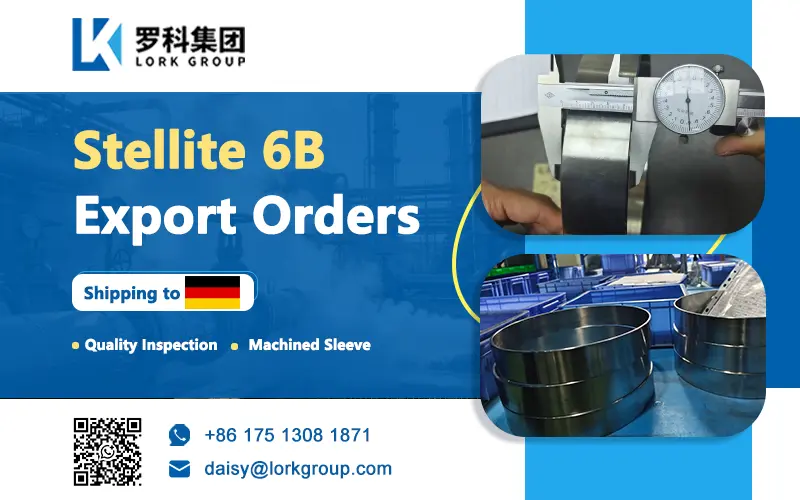
The Lork Group possesses extensive experience in processing cobalt-based alloys and maintains a comprehensive quality control system. The Stellite 6B bushings exported in this shipment—measuring 9 cm in width and 36 cm in diameter—are high-precision components. Delivery takes place only after the products have passed inspection; this process reflects our unwavering commitment to quality and is key to earning the trust of our German clients.
Lork Group Stellite 6B machined bushings exported to Germany

As an international group with 15 years of experience in specialty alloy supply chain management, Lork Group offers product selection consultation and supply services for the full range of Elgiloy, Pyromet, Elinvar, and Ni-Span-C 902 alloys. Please feel free to contact Lork Group’s sales and technical teams for the latest price quotes, material technical data sheets, or supplier coordination support.
Supplier of Elgiloy Pyromet Elinvar and Ni-Span-C 902 high-elasticity alloys
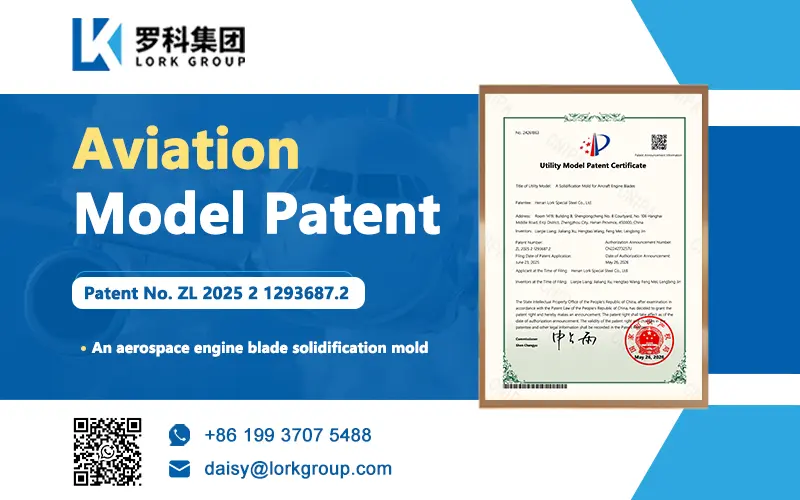
Patent No. ZL 2025 2 1293687.2 focuses on the precision casting of aero-engine blades, demonstrating the Group's sustained innovation capabilities in the fields of specialty steels and precision forming technologies.
Lork Group Granted National Utility Model Patent for an Aviation Engine Blade Solidification Mold
If you are unsure whether to use Stellite 6, 12, or 21 for your current project, simply send us a description of the operating conditions, and Lork Group engineers will provide a free "grade recommendation." Click the button below to submit details regarding operating temperature, corrosive media, and impact conditions, and we will respond within 24 hours.
Top 10 Suppliers of Stellite Alloy Materials for 2026