Lork Group Co., Ltd
    qr Code Url

    Scan qrcode to view mobile website

    Home /Blog /Alloy Knowledge /Silent Guardian of the Deep - Precision Titanium Alloy for Submarine Sonar Domes /

    Silent Guardian of the Deep - Precision Titanium Alloy for Submarine Sonar Domes

    2026-06-09

     Product Introduction

    In submarine warfare, there is a maxim: "Detection means destruction." Underwater, the only "eyes" and "ears" available are sonar systems.

    We have heard from industry technical experts that when procuring precision titanium alloys, buyers often focus heavily on sonar electronic signal processing modules while seriously underestimating the critical impact of the front-end "acoustic window"—specifically, the sonar dome and precision alloy structural components.

    Let’s cut to the chase: we will break down the key specifications you absolutely must scrutinize when purchasing these specialized alloys, examining them from the perspectives of materials science and real-world testing.

    Why Titanium? An "Uncompromising" Choice for Acoustic Transparency and Pressure Resistance

    Many newcomers to the procurement field often ask: "Why not use stainless steel or high-strength steel?"
    The answer is: the laws of physics do not permit it.
    First, there is the issue of magnetic permeability. Submarines dread detection by Magnetic Anomaly Detectors (MAD), and ordinary steel emits a magnetic signal that is far too strong. Second—and most importantly—there is the issue of acoustic impedance.
    The acoustic impedance of seawater is 1.54 × 10⁶ kg/(m²·s). Steel has excessively high acoustic impedance; when sound waves strike it, they behave as if hitting a wall—reflecting immediately and resulting in massive energy loss. In contrast, precision titanium alloys (such as the Ti-6Al-4V ELI championed by Lork, as well as specific grades of pure titanium) boast an acoustic transmission coefficient exceeding 0.85, or even reaching 0.98.
    Its unique value lies in this combination:
    While ensuring high acoustic transparency, titanium alloys offer extremely low density (approximately 4.5 g/cm³) and a high strength-to-weight ratio. This means that for a given diving depth requirement, the structural weight can be reduced by nearly half compared to steel, naturally allowing for a greater payload capacity.

    Chemical Composition and Mechanical Properties: The "Bottom-Line" Data That Must Be Verified During Procurement

    When requesting a quote from Lork Steel as a purchaser or technical reviewer, do not focus solely on the alloy grade; pay close attention to the delivery condition and trace element content.
    1. Control of Core Chemical Composition
    Standard industrial-grade titanium alloys are unsuitable for sonar components; "ELI" (Extra Low Interstitial) grade material is mandatory.
    • Key Elements: The content of Fe (Iron) and O (Oxygen) must be strictly controlled. Taking the ASTM Gr.23 or GB TC4 ELI grades supplied by Lork as examples, oxygen content is typically controlled below 0.13% (with the national standard often requiring ≤0.12%). Why? Although interstitial elements can increase strength, they severely degrade low-temperature impact toughness and fracture toughness. Deep-sea environments involve temperatures near freezing; if the material becomes brittle, the consequences can be catastrophic.
    ASTM F136 / UNS R56401 / Ti-6Al-4V ELI Implant Grade
     
    Titanium Grade 1/ UNS R50250 Pure Titanium
    2. Verification of Mechanical Properties
    Do not look only at tensile strength (Rm); when sourcing materials for sonar components, focus on the following:
    • Yield Strength (Rp0.2): This determines the point at which the structure undergoes plastic deformation under deep-water pressure.
    • Fracture Toughness (K_IC): This is a critical concern for submarine designers. Materials supplied by Lork Steel must maintain a stable fracture toughness between 80 and 110 MPa·m¹/². This figure determines whether the fairing holds up or tears apart instantly after a micro-crack develops.

    A Guide to Avoiding Pitfalls for Procurement and Technical Leads

    At Lork Steel, we believe that purchasing precision alloys for sonar applications is not merely about buying materials; it is about securing "consistency."
    1. Do Not Overlook Coupled Testing: Hydrostatic Pressure + Acoustic Transparency
    Many suppliers limit themselves to chemical composition analysis, which is far from sufficient. As a purchaser, you should explicitly require—within the contract—testing of acoustic transparency performance under simulated operating conditions. Specifically, this involves measuring changes in sound transmission loss (in dB) while the material is subjected to hydrostatic pressures of 20 MPa or higher. Lork Steel partners with laboratories capable of providing empirical data for these specific conditions.
    2. Anisotropy in Large-Format Plates
    Sonar domes often require large-scale forming. It is crucial to be vigilant regarding material anisotropy—specifically, the disparity between longitudinal and transverse mechanical properties. We advise clients to request transverse impact toughness data during the review process; this metric serves as a revealing indicator of the quality of the material's rolling process.

    Testing: Every piece of material must have "DNA."

    In military-grade applications, Non-Destructive Testing (NDT) represents the ultimate critical threshold.
    In addition to standard ultrasonic testing (UT), Lork Steel specifically recommends the following for submarine sonar components:
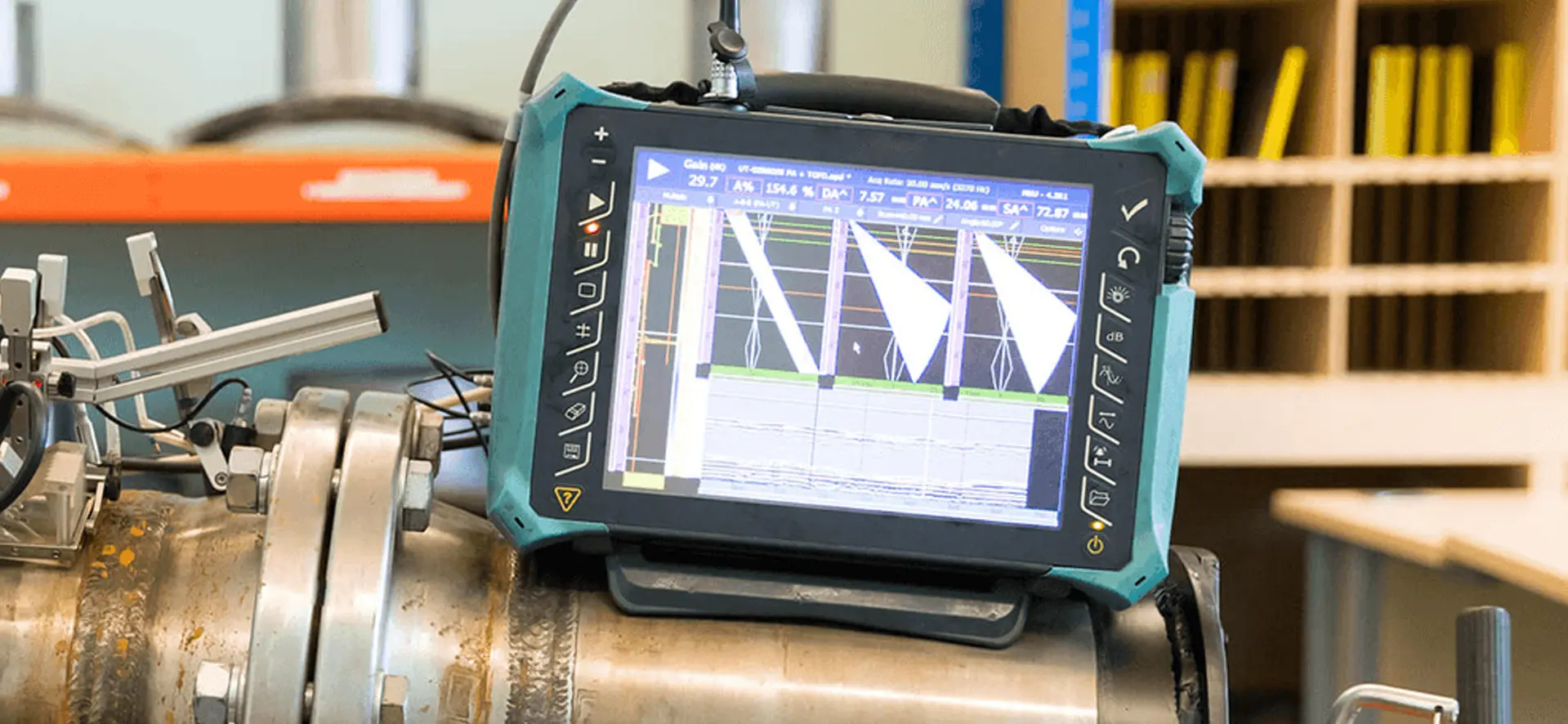
    Phased Array Ultrasonic Testing (PAUT): Particularly for titanium alloy butt welds and base materials. Under the national standard GB/T 35361-2017 (currently being updated to the 2025 version), inspection sensitivity requirements for titanium alloy welds are extremely stringent; even minute inclusions or porosities can generate acoustic noise or serve as crack initiation sites under the high-pressure conditions of deep-water operations.

    Immersion Ultrasonic Testing: For plate materials, this is the optimal method for detecting and rejecting microscopic internal defects (such as "bright spots" caused by aluminum or oxygen segregation).

     
    Contact the Lork Group Technical Team
    Don't place an order based on guesswork. Send us your drawings, operating temperature requirements, and processing specifications; our materials engineers will assist you with "Condition Matching"—completely free of charge.
    Email: [daisy@lorkgroup.com]
    WeChat/WhatsApp: [+ 86 175 1308 1871]
     
    Share:

    Shipment Record Kovar Tubes Exported to Italy Lork Group

    17-7PH vs 17-4PH - How to Choose Stainless Steel Strip

    Related Article
    image
    If you are unsure whether to use Stellite 6, 12, or 21 for your current project, simply send us a description of the operating conditions, and Lork Group engineers will provide a free "grade recommendation." Click the button below to submit details regarding operating temperature, corrosive media, and impact conditions, and we will respond within 24 hours.
    Top 10 Suppliers of Stellite Alloy Materials for 2026
    2026-07-20
    image
    To meet the demand for metallurgical equipment and industrial furnaces in post-war industrial reconstruction, Lork Group supplies nickel alloy components—including high-temperature furnace tubes (for sulfur-containing atmospheres), radiant tubes (for carburizing environments), combustion chamber liners, fasteners, and springs.
    Nickel Alloys for Core Applications in Metallurgical Equipment and Industrial Furnaces
    2026-06-24
    image
    Rapidly responding to sample requests from Italian clients—demonstrating the Lork Group's export capabilities for Kovar alloy tubes.
    Shipment Record Kovar Tubes Exported to Italy Lork Group
    2026-06-18
    image
    17-7PH and 17-4PH stainless steel strips are the two most common types of stainless steel strip materials supplied by Lork Group; we offer both stock availability and custom manufacturing options.
    17-7PH vs 17-4PH - How to Choose Stainless Steel Strip
    2026-05-27
    Lork Group

    Contact Us

    TEL: +86-17513081871

    E-mail: daisy@lorkgroup.com

    WhatsApp: +86-1751308187

    PRODUCTS

    Inconel

    Hastelloy

    Haynes

    Monel

    Incoloy

    Nimonic

    China GH Series

    Heat Resistant Steel

    Other Superalloy

    Duplex Stainless Steel

    600 Series Stainless Steel

    300 Series Stainless Steel

    Corrosion-Resistant

    Precision Alloy

    SiteMap

    Copyright © 2024 Lork Group Co., Ltd

    京公网安备 32058302002032号

    (434834)
    0