
Stainless steel pipework for water supply
2024-08-01
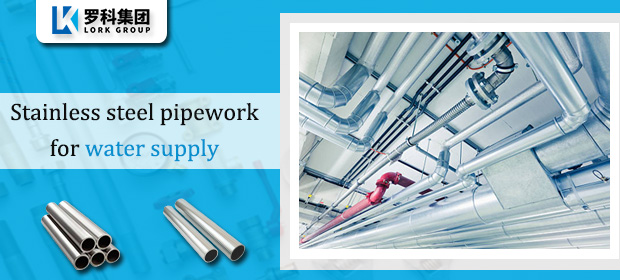
There are millions of miles of pipelines, worldwide, used for the transmission of drinking water. These pipelines must offer corrosion resistance to the water itself, soil chemistries, and treatment chemicals in order to provide both a long service life and hygienic delivery of drinking quality water.
Since lead and galvanised steel fell fromfavour, copper and sometimes plastic havebeen the usual materials for piping potablewater. But in many circumstances stainless steel will have advantages:
- Stainless steel has very good corrosionresistance. This quality holds in the fullrange of potable waters, including soft waters, and is particularly valuable in largebuildings.
- Stainless steel plumbing is particularlystrong yet ductile.
- Stainless steel pipework is unaffected byhigh water flow rates.
- Stainless steel systems have low maintenance costs and other life cycle costing advantages.
- Stainless steel pipework does not demand water treatment chemicals, other than for bacterial control.в
- Stainless steel is non-toxic.
- Stainless steel is manufactured from a high proportion of recycled material and is it self 100% recyclable.
Type 316 (2-3% Mo) stainless steel has been shown to provide the necessary corrosion resistance for most applications, at a cost competitive with other piping materials. Where additional corrosion protection might be needed, as in shoreline installations, the duplex stainless steel (3.0-3.5% Mo) can be used to achieve the required hygiene, cost and service life.
Stainless steel offers a multitude of benefits, including corrosion resistance, hygienic properties, strength, long-term performance, excellent hydraulic conductivity, and the ability to withstand high pressure and temperature requirements. It has found its place in diverse applications, from desalination plants and reverse osmosis water treatment systems to water supply for high-rise buildings and domestic tapware. Stainless steel provides a safe and sustainable solution throughout the entire lifespan of the product.
In conclusion, stainless steel, polymers, and copper all have their roles in potable water systems, driven by historical usage and inherent properties. However, stainless steel is quickly emerging as a standard construction material in various water supply applications. As the trend toward a sustainable economy and the use of reusable materials gains momentum, there will likely be shifts in priorities and preferences.
Contact Lork Group for Water Supply Stainless Steel Pipework Solutions
The experts at Lork Group are ready to help you choose the most suitable type of stainless steel for your water supply application.
We have built a reputation as a trusted partner for quality materials, distributing numerous grades of stainless steel, nickel alloy, and hard-to-find metals. Our raw metal bars, rings, plates, pipes, and tubing are available from stock.
To learn more about the Lork Group metal difference and our material offerings for water supply stainless steel, contact us or request a quote today.
Understand the differences between Inconel and stainless steel
Advantages and objectives of stainless steel bright annealing
Related Article
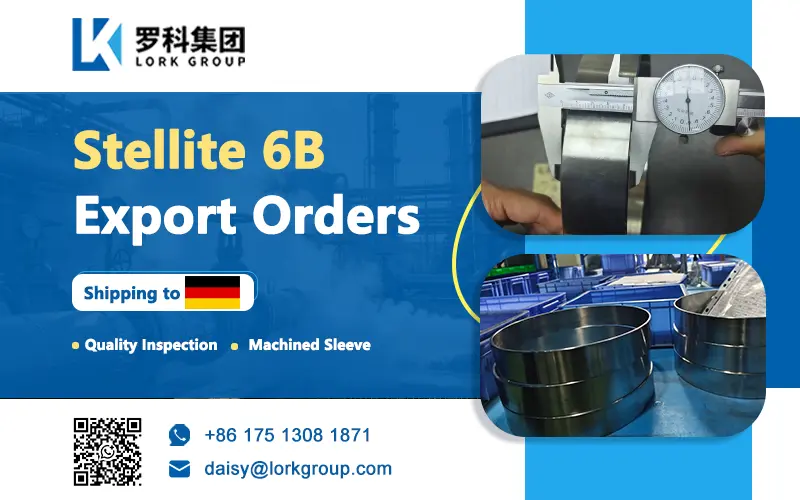
The Lork Group possesses extensive experience in processing cobalt-based alloys and maintains a comprehensive quality control system. The Stellite 6B bushings exported in this shipment—measuring 9 cm in width and 36 cm in diameter—are high-precision components. Delivery takes place only after the products have passed inspection; this process reflects our unwavering commitment to quality and is key to earning the trust of our German clients.
Lork Group Stellite 6B machined bushings exported to Germany

As an international group with 15 years of experience in specialty alloy supply chain management, Lork Group offers product selection consultation and supply services for the full range of Elgiloy, Pyromet, Elinvar, and Ni-Span-C 902 alloys. Please feel free to contact Lork Group’s sales and technical teams for the latest price quotes, material technical data sheets, or supplier coordination support.
Supplier of Elgiloy Pyromet Elinvar and Ni-Span-C 902 high-elasticity alloys
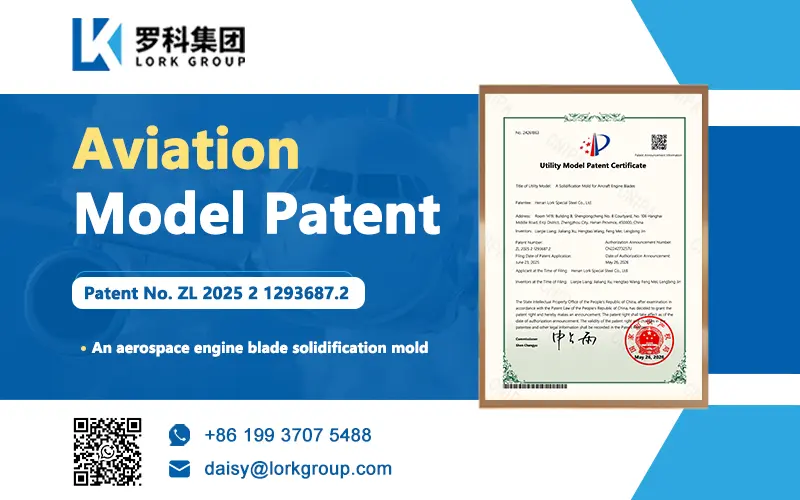
Patent No. ZL 2025 2 1293687.2 focuses on the precision casting of aero-engine blades, demonstrating the Group's sustained innovation capabilities in the fields of specialty steels and precision forming technologies.
Lork Group Granted National Utility Model Patent for an Aviation Engine Blade Solidification Mold
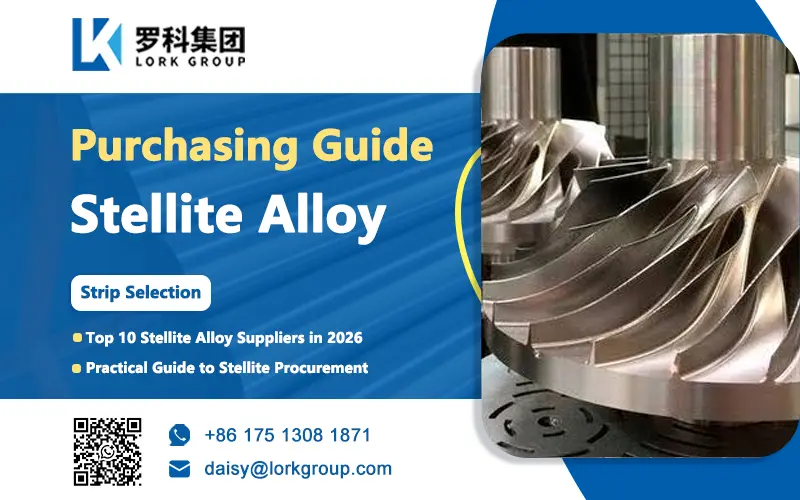
If you are unsure whether to use Stellite 6, 12, or 21 for your current project, simply send us a description of the operating conditions, and Lork Group engineers will provide a free "grade recommendation." Click the button below to submit details regarding operating temperature, corrosive media, and impact conditions, and we will respond within 24 hours.
Top 10 Suppliers of Stellite Alloy Materials for 2026