
The Advantages of Titanium Bars in Hip Joint Implants
2025-05-21
The use of titanium bars in hip joint replacements has revolutionized orthopedic surgery, offering patients improved durability, biocompatibility, and long-term performance. Titanium’s unique properties make it an ideal material for medical implants, particularly in load-bearing applications such as hip arthroplasty. This article explores the key characteristics of titanium bars used in hip joint implants, their manufacturing standards, and why they are the preferred choice in modern medicine.
Why Titanium?
Titanium and its alloys are the gold standard in implant materials due to their exceptional combination of properties:
- Corrosion Resistance – Unlike other metals, titanium forms a passive oxide layer that prevents degradation in the human body, ensuring long-term stability.
- Biocompatibility – Titanium is non-toxic and does not provoke adverse immune responses, allowing seamless integration with bone and soft tissue.
- High Strength-to-Weight Ratio – Titanium alloys provide the necessary mechanical strength while remaining lightweight, reducing stress on surrounding bone structures.
- Low Elastic Modulus – The modulus of titanium is closer to that of natural bone, minimizing stress shielding and bone resorption.
- Osseointegration Capability – Titanium’s porous surface promotes bone ingrowth, enhancing implant fixation and longevity.
Common Standards and Grades
Titanium bars for hip joint implants are manufactured under strict international standards to ensure quality and performance:
- ASTM F67 (Pure Titanium Gr4) – Used for its excellent corrosion resistance and moderate strength.
- ASTM F136 / ISO 5832-3 (Ti6Al4V ELI) – A high-strength alloy with extra-low interstitial (ELI) elements, ideal for medical implants.
- ISO 5832-2 (Ti6Al4V) – The most widely used titanium alloy in orthopedic applications due to its superior fatigue resistance.
Key Grades:
- Gr3 (Commercially Pure Titanium) – Microstructure level ≥7, tensile strength ≥585 MPa.
- Gr5 (Ti6Al4V) & Gr5 ELI – Microstructure A3, tensile strength ≥1100 MPa, optimized for surgical implants.
Most Ordered Diameters
Titanium bars for hip joint implants are available in various diameters to accommodate different surgical needs:
Common Sizes (mm): Φ16, Φ17.2, Φ18, Φ20, Φ24, Φ30, Φ40, Φ45, Φ50, Φ55, Φ65
These dimensions allow surgeons to select the optimal implant size based on patient anatomy, ensuring a precise fit and improved biomechanical function.
Key Characteristics of Titanium Bars for Hip Implants
- Superior Elasticity – Mimics natural bone flexibility, reducing the risk of implant failure.
- High Strength – Withstands cyclic loading, crucial for hip joints that endure constant motion.
- Excellent Metallographic Structure – Ensures uniformity and defect-free material for enhanced durability.
- Outstanding Wear Resistance – Minimizes particle generation, a critical factor in preventing osteolysis (bone loss).
Titanium bars have become the cornerstone of hip joint replacement surgery, offering unmatched biocompatibility, mechanical strength, and long-term performance. With standardized manufacturing processes and rigorous quality control, titanium implants continue to improve patient outcomes, reducing revision surgeries and enhancing mobility. As material science advances, titanium alloys will likely remain the preferred choice for orthopedic applications, ensuring safer and more reliable solutions for joint reconstruction.
Lork Group is a trusted supplier of high-quality implant-grade titanium bars and alloys (including Gr3, Gr5, and Ti6Al4V ELI), compliant with ASTM F67, ASTM F136, ISO 5832-2/3, and other stringent medical standards. Our titanium products are widely used in hip joints, knee implants, bone screws, dental implants, and other critical medical applications.
With superior biocompatibility, corrosion resistance, and mechanical strength, our titanium bars ensure optimal performance and long-term durability for orthopedic and dental surgeries. Whether you need custom diameters (Φ16-Φ65mm) or specific metallurgical properties, we provide reliable solutions tailored to your requirements.
Contact Lork Group today for competitive pricing, fast delivery, and expert technical support! Get your quote now and experience premium-grade titanium for medical implants.
Email: daisy@lorkgroup.com
WhatsApp: + 86 175 1308 1871
The Advantages of Titanium Plates (Gr1-Gr4) in Surgical Instrument Manufacturing
Cobalt-Chrome Alloys: Properties, Applications, and Common Variants
Related Article
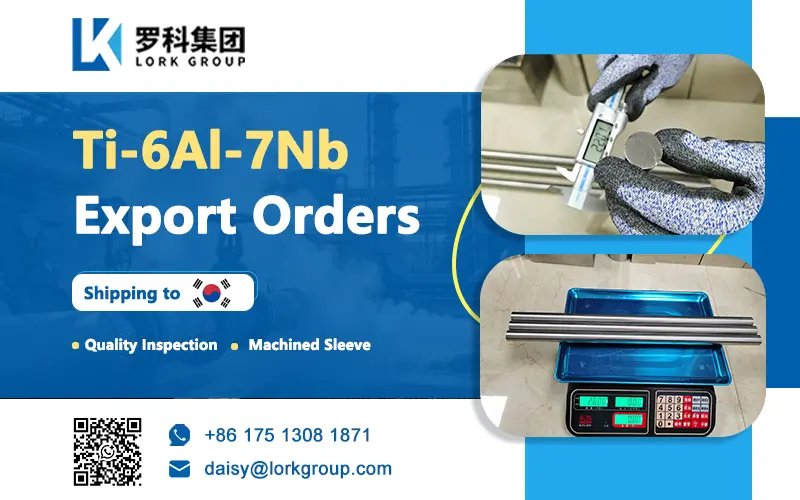
Lork Group has delivered Ti-6Al-7Nb rods to a South Korean client. These medical-grade rods are manufactured in accordance with the ASTM F1295 standard, and the company offers both sample-based trial production and volume supply.
Shipment Record Ti-6Al-7Nb Titanium Alloy Rods Exported to South Korea Lork Group
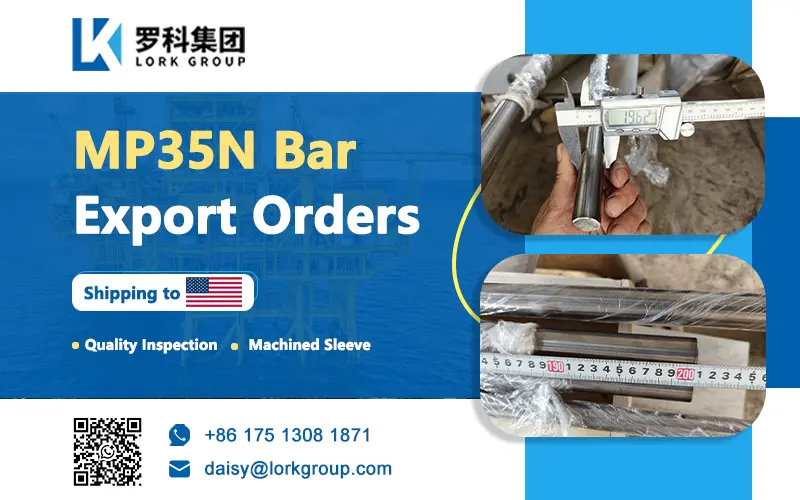
Lork Group has successfully completed the shipment of an order for MP35N cobalt-based alloy rods to a U.S. customer. The initial delivery consisted of four MP35N alloy rod samples, accompanied by a third-party inspection report from SGS confirming that all tested parameters met specifications. These materials, destined for the United States, will be used to manufacture critical components—specifically high-pressure sealing and suspension systems—for deep-sea oil and gas extraction equipment.
Shipment records of MP35N cobalt rods and SGS test reports exported to Lork Group in the United States
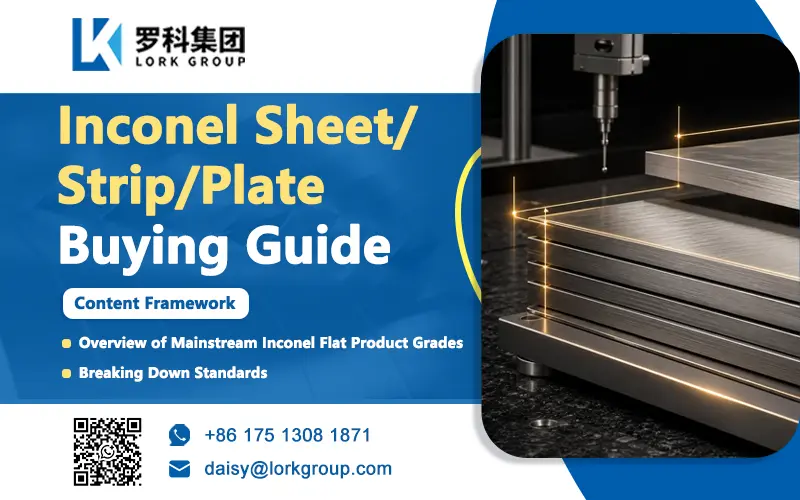
A comparison of Inconel alloy standards for sheet, strip, and plate: which grade—600, 601, 625, or 718—suits your operating conditions? While AMS and ASTM standards for the same grade may specify similar chemical compositions, AMS standards typically impose stricter additional requirements regarding grain size (ASTM E112), non-destructive testing (ultrasonic/penetrant), and traceability.
Guide to Selecting Inconel Sheet, Strip, and Plate: A Comprehensive Analysis of Mainstream Grades, Standards, and Applications for 2026
The Lork Group specializes in providing stress shielding solutions for users of titanium alloy orthopedic implants. Our materials include ASTM F1713 titanium rods, Ti-13Nb-13Zr titanium alloy, and other ASTM F1713 titanium products.
Lork Group's Medical Titanium Alloy Implants Solve the Challenge of Stress Shielding