
Understand the differences between Inconel and stainless steel
2024-08-02

When manufacturing a new part, one important question is what metal material to use. What will it be used for?
If a part needs to have superior strength and corrosion resistance at high temperatures, Inconel alloys are best.
If a part needs for handling medical supplies may be better suited for an alloy of stainless steel.
Inconel alloys tend to be better for heat treating applications and other high-temperature processes. Meanwhile, stainless steel alloys are often suitable for sterile manufacturing or medical applications (or any application involving corrosives).
In this article, we examine the properties of Inconel and stainless steel and the applications for which they’re well-suited so you can make the best decision based on your project requirements.
When comparing stainless steel vs Inconel, it is important to remember that there are different formulations for each. The variants of stainless steel have drastically different tensile strength, recommended operating temperature, and resistance to specific corrosives. For example, grade 316 stainless steel tends to have a higher resistance to chlorides than 304 stainless steel (but also has a higher cost on average).
Additionally, certain treatment and forming methods may affect the tensile strength of a metal. For example,the tensile strength of an “as-rolled” bar of Inconel 625 is 120-160 ksi (827-1103 MPa), while a “Solution-Treated” bar has 103-130 ksi (714-896 MPa) of tensile strength.
That both of these tensile strength ratings are given as a range instead of a specific number. This is because the strength of a metal may vary somewhat depending on the precise proportion of ingredients in it a slight variation in carbon, nickel, or iron content can significantly alter the final product's strength.
Inconel
Inconel is a nickel-chrome-based superalloy known for displaying an excellent strength profile at high temperatures of about 2,000°F under harsh corrosive environments. Because of these unique properties, Inconel is used in jet engines, oil and gas extractions, saltwater applications, and heat treat applications. Some popular applications of Inconel include:
- Turbines.
- Heavy machinery parts.
- Turbojet engine parts.
- Metal die casting.
- Natural gas piping.
- 3D printing.
However, Inconel alloys are much more expensive than stainless steel alloys.
Stainless Steel
Chromium is the main alloying element in stainless steel (about 10%-20%), which gives stainless steel alloy 200 times more corrosion resistance than even mild steel. It can be classified into five different groups, as follows:
1.) Austenitic Stainless Steel
Most commonly used
Weldable, non-magnetic, and non-heat-treatable
Used in food processing equipment, kitchen utensils, and medical equipment
2.) Ferritic Stainless Steel
Contains 12-17% chromium, less than 0.1% carbon, and molybdenum, aluminum, and titanium
Offers good ductility and formability
Has poor strength in high temperatures
Magnetic and non-heat-treatable
Cheapest grade
Used in making automotive parts, industrial machinery and kitchen wares as they readily undergo cold working and deep drawing operations.
3.) Martensitic Stainless Steel
Contains 11-17% chromium, 1.2% carbon, and less than 0.4% nickel
Higher carbon content affects forming and welding
Pre- and post-heat treatment is required to obtain other reliable properties
Used for dental, surgical equipment, knives, and other cutting tools
4.) Duplex Stainless Steel
Contains 20-25% chromium, 5% nickel, molybdenum, and nitrogen
Higher yield strength and greater chloride stress corrosion cracking
Used in chemical plants and piping
5.) Precipitation-Hardenable Stainless Steel
Precipitation heat treatment to reduce plasticity
Easy to machine, highly durable, and high on yield strength and tensile strength
Four times tougher than austenitic steel
Used in the oil and gas, nuclear, and aerospace industries
Machining
While it's important to understand the differences between Inconel vs. stainless steel, it's just as essential to understand how the unique properties of each contribute to its machinability.
For example, the strength of Inconel makes it hard to machine, as it is prone to work hardening and can therefore damage tools or deform the workpiece. One of the best ways to overcome this is to solutionize Inconel alloys before machining to release the stress. It is also advisable to use ceramic tools for achieving continuous cuts and reducing work hardening while cutting Inconel blocks.
Cutting stainless steel with precision is also a challenge owing to it's high nickel content, which leads to severe plastic deformation during the machining process. The surface gets hard to penetrate with subsequent attempts. As a result, the alloy requires more cutting force, which leads to tool failure due to excess frictional heat. Using industrial band saws and following the proper cutting process can help you achieve precision faster and more easily.
Contact Lork Group for metal material Solutions
The experts at Lork Group are ready to help you choose the most suitable type of stainless steel and inconel alloy for your .
We have built a reputation as a trusted partner for quality materials, distributing numerous grades of stainless steel, nickel alloy, and hard-to-find metals. Our raw metal bars, rings, plates, pipes, and tubing are available from stock.
To learn more about the Lork Group metal difference and our material offerings stainless steel and inconel alloy, contact us or request a quote today.
Hastelloy C276 is used for desulphurization of flue gas equipment and for chemical process equipment
Stainless steel pipework for water supply
Related Article
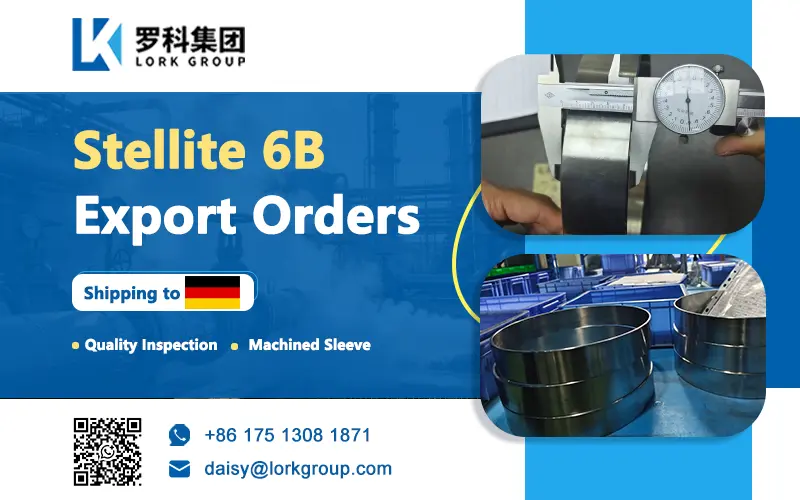
The Lork Group possesses extensive experience in processing cobalt-based alloys and maintains a comprehensive quality control system. The Stellite 6B bushings exported in this shipment—measuring 9 cm in width and 36 cm in diameter—are high-precision components. Delivery takes place only after the products have passed inspection; this process reflects our unwavering commitment to quality and is key to earning the trust of our German clients.
Lork Group Stellite 6B machined bushings exported to Germany

As an international group with 15 years of experience in specialty alloy supply chain management, Lork Group offers product selection consultation and supply services for the full range of Elgiloy, Pyromet, Elinvar, and Ni-Span-C 902 alloys. Please feel free to contact Lork Group’s sales and technical teams for the latest price quotes, material technical data sheets, or supplier coordination support.
Supplier of Elgiloy Pyromet Elinvar and Ni-Span-C 902 high-elasticity alloys
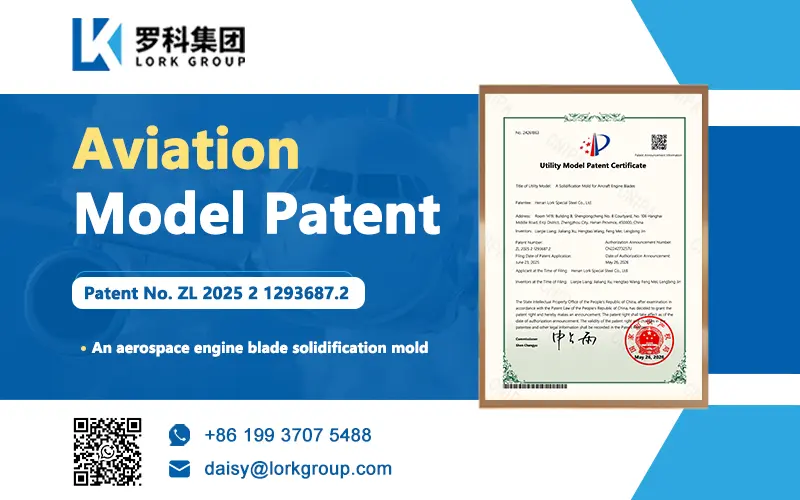
Patent No. ZL 2025 2 1293687.2 focuses on the precision casting of aero-engine blades, demonstrating the Group's sustained innovation capabilities in the fields of specialty steels and precision forming technologies.
Lork Group Granted National Utility Model Patent for an Aviation Engine Blade Solidification Mold
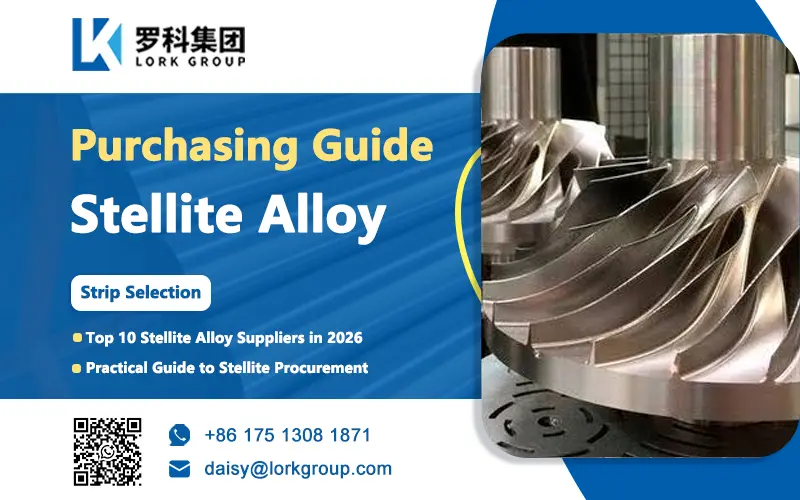
If you are unsure whether to use Stellite 6, 12, or 21 for your current project, simply send us a description of the operating conditions, and Lork Group engineers will provide a free "grade recommendation." Click the button below to submit details regarding operating temperature, corrosive media, and impact conditions, and we will respond within 24 hours.
Top 10 Suppliers of Stellite Alloy Materials for 2026