
What are the nickel-based single-crystal superalloys - Lork Group
author: Lork Group Marketing Department – Daisy
2026-03-26
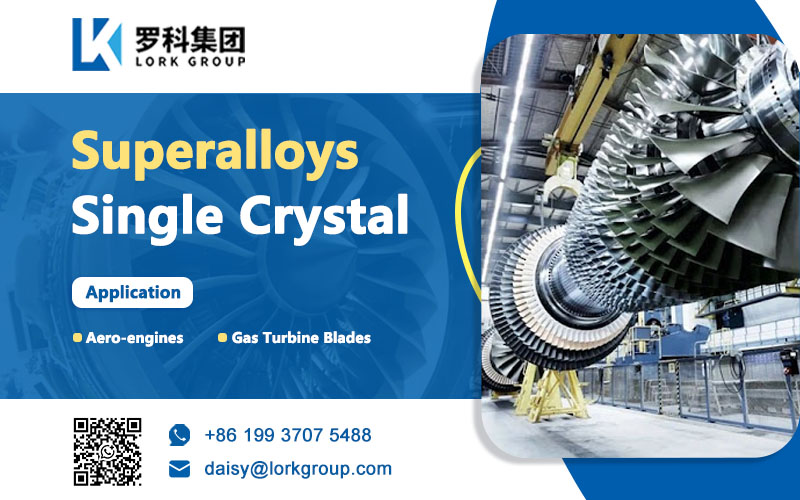
Definitions and Characteristics
Nickel-based single-crystal superalloys are high-temperature materials based on a nickel (Ni) matrix (content > 50%), in which the entire casting consists of a single grain, achieved through directional solidification techniques. Their core characteristics encompass the following three points:
High-Temperature Strength: They retain exceptional strength at temperatures exceeding 1000°C, offering thermal stability and load-bearing capacity far superior to those of conventional alloys.
Strengthening Mechanisms: Strengthening is achieved through two primary mechanisms: precipitation strengthening via the γ' phase (Ni₃Al) and solid-solution strengthening facilitated by refractory elements such as rhenium (Re) and tungsten (W).
Elimination of Grain Boundaries: By eliminating grain boundaries—which serve as weak points at high temperatures—the material's resistance to creep and fatigue is fundamentally enhanced.
Main Grade Types
Nickel-based single-crystal superalloys currently serve as the core materials for manufacturing turbine blades in aero-engines and gas turbines. Classified primarily into five generations based on their development era and thermal resistance, their evolutionary trajectory is characterized by the continuous addition of refractory elements—such as rhenium (Re) and ruthenium (Ru)—to enhance their high-temperature load-bearing capabilities.
| Generation | Key Characteristics | Typical Foreign Grades | Typical Domestic Grades |
| First Generation | Rhenium-free (Re-free); temperature capability of approximately 1040°C; laid the foundation for single-crystal alloys. | PWA 1480, CMSX-2, Rene N4 | DD402, DD403, DD406, DD407, DD408 |
| Second Generation | Contains approximately 3% Rhenium (Re); offers a temperature capability approximately 30°C higher than the first generation; currently the most widely used. | PWA 1484, CMSX-4, Rene N5 | DD406, DD419, DD499 |
| Third Generation | Contains approximately 6% Rhenium (Re); its temperature capability is about 60°C higher than that of the first generation, reaching the 1200°C class. | CMSX-10, CMSX-11, Rene N6 | DD9, DD10, DD33, DD90, DD493 |
| Fourth Generation | Approximately 3–6% ruthenium (Ru) is added to the rhenium-containing base, aimed at enhancing microstructural stability. | EPM-102, RR3010, TMS-138 | DD15, DD491 |
| Fifth Generation | Further increased Ruthenium (Ru) and Rhenium (Re) content, aiming for superior high-temperature capability. | TMS-162, TMS-196 | DD495 |
It should be noted that the criteria for classifying generations sometimes vary slightly among different materials manufacturers and research institutions, and some novel alloys (such as the fifth generation) remain in the research and development or small-scale application stages.
How to Select the Appropriate Alloy Grade?
In practical applications, a higher generation number does not necessarily equate to superior performance. Based on our market experience, we recommend selecting a single-crystal alloy generation that best aligns with your specific requirements. The following three scenarios are the most common:
Maximizing High-Temperature Capability: Prioritize fourth- or fifth-generation alloys (e.g., DD15, DD495). These are ideally suited for the turbine blades of the latest-generation engines featuring high thrust-to-weight ratios.
Balancing Comprehensive Performance and Cost: Second-generation alloys (e.g., CMSX-4, DD406) represent the most mature technology and offer relatively controllable costs; consequently, they are currently the most widely utilized materials in both industrial gas turbines and aero-engines.
Component and Process Considerations: Complex hollow blades require excellent castability (e.g., CMSX-2), whereas large-scale blades for heavy-duty gas turbines necessitate the integration of advanced manufacturing processes—such as Liquid Metal Cooling (LMC)—to ensure internal structural integrity.
Questions You May Have: Market Pricing
We have had limited exposure to this specific class of materials; however, we understand that it operates within a highly customized, non-standardized market environment where no publicly listed prices exist. Pricing is primarily influenced by the following factors:
- Market Size: In 2025, the global market size is estimated at approximately $164 million, projected to grow to $213 million by 2032. The market size within China is estimated at approximately 27 million RMB in 2025.
- Pricing Logic: As the "generation" of the alloy advances—signifying the inclusion of higher concentrations of rare and precious metals such as Rhenium (Re) and Ruthenium (Ru)—production costs rise exponentially. For instance, the cost of a third-generation alloy is approximately 50% higher than that of a second-generation alloy.
- Transaction Methods: Transactions typically involve direct negotiation between suppliers and buyers, with pricing determined on a per-kilogram basis. The final price is heavily influenced by factors such as order volume, specific compositional requirements, and the supplied form of the material (e.g., master alloy rods, powders, etc.), resulting in significant price variations across different transactions.
Product Forms:
Master Alloy Rods: The most common form of supply; purchased by blade manufacturers for subsequent remelting and casting.
Spherical Powder: Used for 3D printing; common particle size ranges include 15–53 μm and 45–105 μm.
Finished Castings: Direct delivery of precision-cast turbine blades or guide vanes.
Master Alloy Rods: The most common form of supply; purchased by blade manufacturers for subsequent remelting and casting.
Spherical Powder: Used for 3D printing; common particle size ranges include 15–53 μm and 45–105 μm.
Finished Castings: Direct delivery of precision-cast turbine blades or guide vanes.
Packaging: Due to susceptibility to oxidation, products are typically packaged under vacuum or protected by a high-purity argon atmosphere.
Key Processing Points
The processing of nickel-based single-crystal superalloys presents three core challenges:
1. **Preparation: Directional Solidification**
This constitutes the most critical manufacturing technology; nickel-based single-crystal superalloys are produced by precisely controlling the direction of heat flow, allowing the molten metal to grow from a single crystal nucleus, thereby ultimately eliminating all grain boundaries.
This constitutes the most critical manufacturing technology; nickel-based single-crystal superalloys are produced by precisely controlling the direction of heat flow, allowing the molten metal to grow from a single crystal nucleus, thereby ultimately eliminating all grain boundaries.
2. **Forming: Precision Casting and 3D Printing**
Turbine blades feature complex geometries and incorporate internal cooling channels, making precision casting the primary manufacturing method. Concurrently, additive manufacturing technologies—such as Laser Powder Bed Fusion (LPBF)—are advancing rapidly and are increasingly being utilized for the fabrication or repair of single-crystal components with intricate structures.
Turbine blades feature complex geometries and incorporate internal cooling channels, making precision casting the primary manufacturing method. Concurrently, additive manufacturing technologies—such as Laser Powder Bed Fusion (LPBF)—are advancing rapidly and are increasingly being utilized for the fabrication or repair of single-crystal components with intricate structures.
3. **Post-processing: Low-Damage Machining**
Nickel-based single-crystal superalloys possess high hardness, rendering them highly susceptible to subsurface damage during machining. Such damage can trigger recrystallization during high-temperature service, ultimately leading to blade failure. Consequently, flexible, low-stress abrasive belt grinding stands as a pivotal precision machining technique for these materials.
Nickel-based single-crystal superalloys possess high hardness, rendering them highly susceptible to subsurface damage during machining. Such damage can trigger recrystallization during high-temperature service, ultimately leading to blade failure. Consequently, flexible, low-stress abrasive belt grinding stands as a pivotal precision machining technique for these materials.
Shipping Records - 18NiC300 - ASTM A538 Maraging steel bar Export to France - Lork Group
Shipping Records - Hastelloy X - ASTM B435 Nickel Alloy Strip Export to Brazil - Lork
Related Article
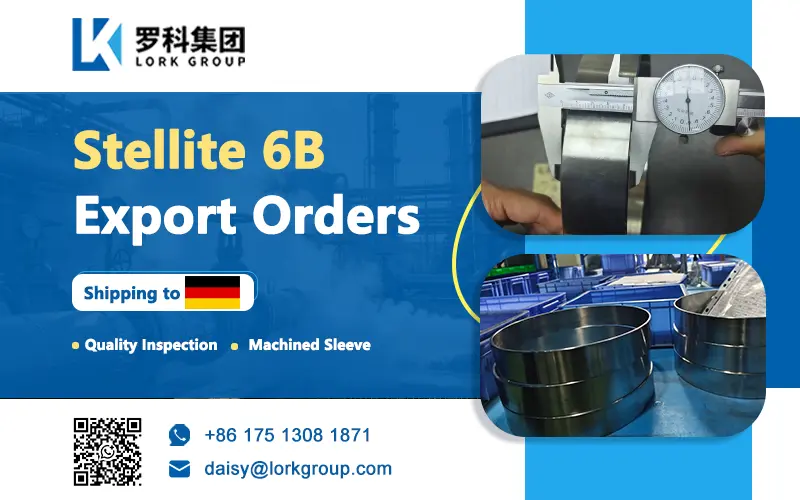
The Lork Group possesses extensive experience in processing cobalt-based alloys and maintains a comprehensive quality control system. The Stellite 6B bushings exported in this shipment—measuring 9 cm in width and 36 cm in diameter—are high-precision components. Delivery takes place only after the products have passed inspection; this process reflects our unwavering commitment to quality and is key to earning the trust of our German clients.
Lork Group Stellite 6B machined bushings exported to Germany

As an international group with 15 years of experience in specialty alloy supply chain management, Lork Group offers product selection consultation and supply services for the full range of Elgiloy, Pyromet, Elinvar, and Ni-Span-C 902 alloys. Please feel free to contact Lork Group’s sales and technical teams for the latest price quotes, material technical data sheets, or supplier coordination support.
Supplier of Elgiloy Pyromet Elinvar and Ni-Span-C 902 high-elasticity alloys
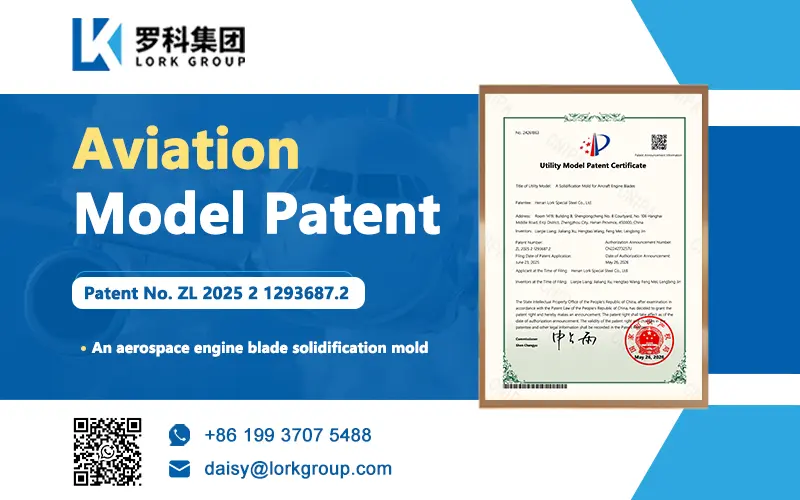
Patent No. ZL 2025 2 1293687.2 focuses on the precision casting of aero-engine blades, demonstrating the Group's sustained innovation capabilities in the fields of specialty steels and precision forming technologies.
Lork Group Granted National Utility Model Patent for an Aviation Engine Blade Solidification Mold

If you are unsure whether to use Stellite 6, 12, or 21 for your current project, simply send us a description of the operating conditions, and Lork Group engineers will provide a free "grade recommendation." Click the button below to submit details regarding operating temperature, corrosive media, and impact conditions, and we will respond within 24 hours.
Top 10 Suppliers of Stellite Alloy Materials for 2026