
Hastelloy C4:Corrosion Resistance Metal Material in Chemical Processing
2024-12-20
Hastelloy C4 (UNS N06455) is a wrought nickel-chromium-molybdenum alloy. It has high corrosion resistance. This alloy is particularly valuable in industries where metal materials are exposed to harsh environments, such as chemical processing, aerospace.

Chemical Composition
The chemical composition of Hastelloy C4 is a critical factor that contributes to its unique properties. The alloy primarily consists of nickel, chromium, and molybdenum, with trace amounts of other elements that enhance its performance.
| Element | Content (%) |
|---|---|
| Chromium, Cr | 14-18 |
| Molybdenum, Mo | 14-17 |
| Iron, Fe | 3 max |
| Cobalt, Co | 2 max |
| Manganese, Mn | 1 max |
| Titanium, Ti | 0.7 max |
| Silicon, Si | 0.08 max |
| Phosphorus, P | 0.04 max |
| Sulfur, S | 0.03 max |
| Carbon, C | 0.015 max |
| Nickel, Ni | Remainder |
Physical Properties
| Properties | Metric | Imperial |
|---|---|---|
| Density | 8.64 g/cm³ | 0.312 lb/in³ |
| Melting point | 1427°C | 2600°F |
Mechanical Properties
| Properties | Metric | Imperial |
|---|---|---|
| Tensile strength | 738 MPa | 107000 psi |
| Yield strength ( @ 0.2% offset) | 492 MPa | 71400 psi |
| Elastic modulus | 211 GPa | 30600 ksi |
| Elongation at break (in 50.8 mm) | 42% | 42% |
Thermal Properties
| Properties | Metric | Imperial |
|---|---|---|
| Thermal expansion co-efficient (@ 20°C/68°F) | 10.8 µm/m°C | 6 µin/in°F |
| Thermal conductivity (@ 23°C/73°F) | 10.1 W/mK | 70.1 BTU in/hr.ft².°F |
Heat treatment, working and machining
Recommended working and heat treatment parameters:
- Forging: 1177-954 °C
- Soft annealing: 1065±14 °C; 30 min; WQ
Forging - alloy can be hot forged within a rather narrow temperature range, starting at 1177°C and finishing at 954°C. Moderate reductions and frequent re-heating are recommended for optimal results. The alloy is sensitive to strain.
Cold working does not reduce the general corrosion resistance, but it can affect resistance to stress corrosion cracking. Post-working annealing is important for best corrosion performance.
Annealing involves heating to 1066°C and water quenching. A hold time at the annealing temperature of 10 to 30 minutes is recommended, with thicker structures requiring the full 30 minutes. Annealing is essential after hot forming operations and any cold forming that results in an outer fiber elongation of 7% or more.
Postweld heat treatment for caustic applications - Heat the material to 705 °C and maintain this temperature for at least 0.5 hours per 25 mm of thickness. Determine the heating and cooling rates based on the shape of the part. For complex shapes with nonuniform thicknesses, use heating and cooling rates of 111 °C per hour. Shapes with uniform thicknesses can employ faster heating and air cooling.
Application
- Components used in wastewater treatment
- Components used in chemical processing
- Nuclear fuel processing
Lork Group is metal material manufacturer and exporter in China
The experts at Lork Group are ready to help you choose the most suitable type of Metal for your .
We have built a reputation as a trusted partner for quality materials, distributing numerous grades of stainless steel,nickel alloy,Precision Alloy andhard-to-find metals. Our raw metal bars, rings, plates, pipes, and tubing are available from stock.
To learn more about the Lork Group metal difference and our material offerings stainless steel and super alloy, contact us or request a quote today.
ASTM F1537: Application in surgical implants
Rene 41 Alloy:High Temperature Alloys Suitable for Gas Turbine Components
Related Article
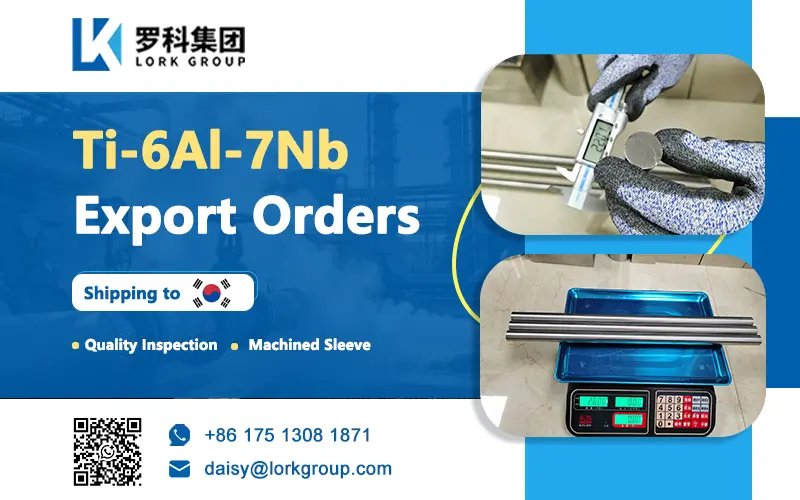
Lork Group has delivered Ti-6Al-7Nb rods to a South Korean client. These medical-grade rods are manufactured in accordance with the ASTM F1295 standard, and the company offers both sample-based trial production and volume supply.
Shipment Record Ti-6Al-7Nb Titanium Alloy Rods Exported to South Korea Lork Group
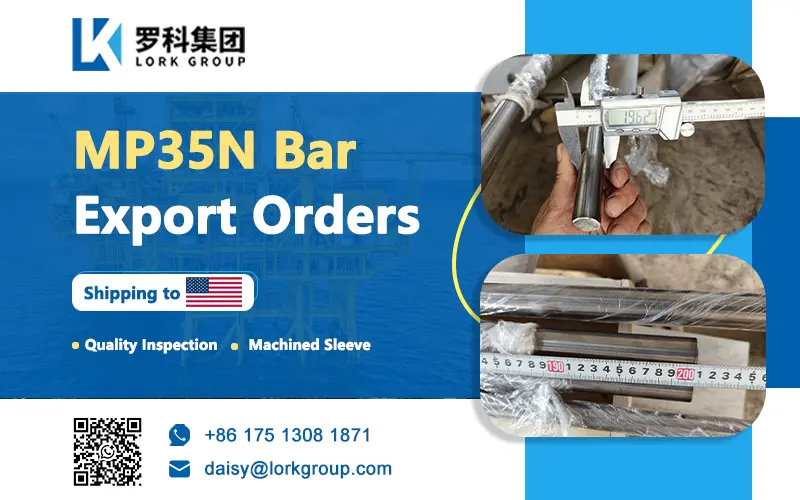
Lork Group has successfully completed the shipment of an order for MP35N cobalt-based alloy rods to a U.S. customer. The initial delivery consisted of four MP35N alloy rod samples, accompanied by a third-party inspection report from SGS confirming that all tested parameters met specifications. These materials, destined for the United States, will be used to manufacture critical components—specifically high-pressure sealing and suspension systems—for deep-sea oil and gas extraction equipment.
Shipment records of MP35N cobalt rods and SGS test reports exported to Lork Group in the United States
A comparison of Inconel alloy standards for sheet, strip, and plate: which grade—600, 601, 625, or 718—suits your operating conditions? While AMS and ASTM standards for the same grade may specify similar chemical compositions, AMS standards typically impose stricter additional requirements regarding grain size (ASTM E112), non-destructive testing (ultrasonic/penetrant), and traceability.
Guide to Selecting Inconel Sheet, Strip, and Plate: A Comprehensive Analysis of Mainstream Grades, Standards, and Applications for 2026

The Lork Group specializes in providing stress shielding solutions for users of titanium alloy orthopedic implants. Our materials include ASTM F1713 titanium rods, Ti-13Nb-13Zr titanium alloy, and other ASTM F1713 titanium products.
Lork Group's Medical Titanium Alloy Implants Solve the Challenge of Stress Shielding