High-Performance Inconel Nickel Alloy —— Selection of Materials for Corrosive Environment
2024-09-05

Material selection is critical to engineering design. Corrosion may be minimized by employing an appropriate design. The selection of appropriate materials in a given environment is a key factor for corrosion control strategy. The material selected has to meet the criteria for mechanical strength, corrosion, and erosion resistance for specific service conditions.
Inconel alloys is widely used in pollution control and waste processing, where driving demand has brought about a need for high-performance alloy materials that can withstand hazardous waste management and aggressively corrosive environments. For instance, high-performance corrosion-resistant alloys are specified for valves and piping systems in aggressive environments encountered in refineries and chemical processing plants.
Superior resistance
Inconel 625 offers high strength, excellent fabricability and has superior resistance to a wide range of corrosive environments of unusual severity, including high-temperature effects, such as oxidation and carburisation. It is also resistant to pitting and crevice corrosion.
Inconel C-276 is also corrosion resistant in a wide range of severe environments. The high molybdenum content makes the alloy especially resistant to pitting and crevice corrosion. The low carbon content minimizes carbide precipitation during welding to maintain corrosion resistance in as-welded structures. It is commonly used in pollution control, chemical processing, pulp and paper production, and waste treatment.
Acid environments
Inconel 622 gives excellent resistance to both oxidising and reducing acid environments, as well as those containing mixed acids. It is resistant to pitting and crevice corrosion in acid-halide environments. This versatile alloy is found in chemical processing, pollution control, fluegas desulfurisation, waste incineration, and pulp and paper processing industries.
Inconel 625 and Inconel 622 are also deployed in chlorine injection systems for waste water streams, whilst supercritical water oxidation technology has adopted Inconel 625 as a preferred material in reaction chambers. They are are used for gas cleaning components, slurry systems and exit ducts.
The list of factors affecting the performance of materials are: expected performance and functions of the product, physical characteristics, strength and mechanical characteristics, corrosion and wear characteristics, fabrication parameters, and recycling possibilities.
The corrosion resistance of materials depends on the nature of the corrosive environment. A material may be extremely corrosion resistant in an environment and yet fail in another environment. Therefore, the knowledge of corrosion resistance of a material in a given environment is of fundamental importance to its successful application.
Contact Lork Group for metal material Solutions
The experts at Lork Group are ready to help you choose the most suitable type of Metal for your .
We have built a reputation as a trusted partner for quality materials, distributing numerous grades of stainless steel, nickel alloy,Precision Alloy andhard-to-find metals. Our raw metal bars, rings, plates, pipes, and tubing are available from stock.
To learn more about the Lork Group metal difference and our material offerings stainless steel and inconel alloy, contact us or request a quote today.
Characteristics of Nickel Alloys
Comprehensive list of applications and industries where nickel alloys play a crucial role
Related Article
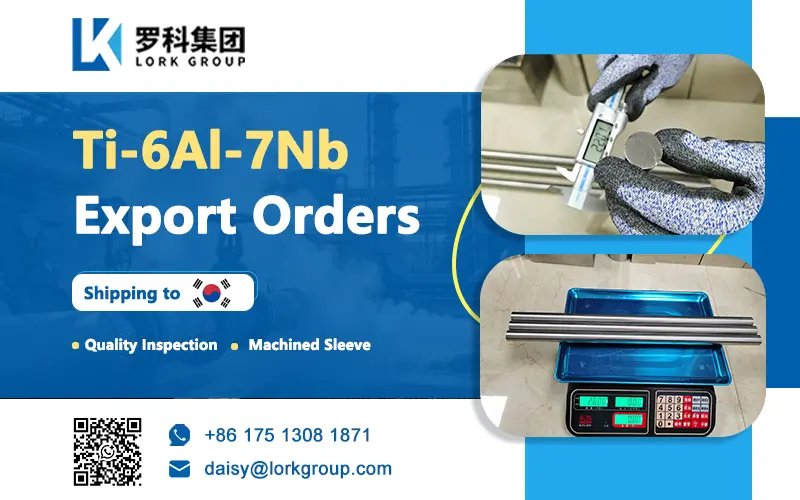
Lork Group has delivered Ti-6Al-7Nb rods to a South Korean client. These medical-grade rods are manufactured in accordance with the ASTM F1295 standard, and the company offers both sample-based trial production and volume supply.
Shipment Record Ti-6Al-7Nb Titanium Alloy Rods Exported to South Korea Lork Group
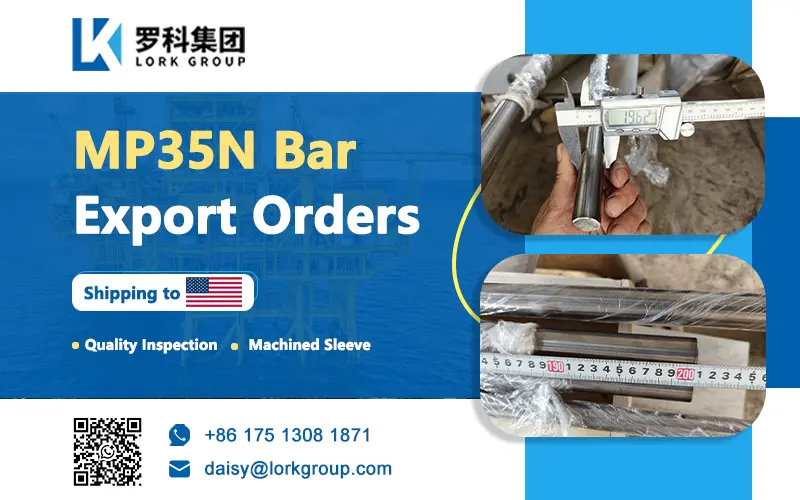
Lork Group has successfully completed the shipment of an order for MP35N cobalt-based alloy rods to a U.S. customer. The initial delivery consisted of four MP35N alloy rod samples, accompanied by a third-party inspection report from SGS confirming that all tested parameters met specifications. These materials, destined for the United States, will be used to manufacture critical components—specifically high-pressure sealing and suspension systems—for deep-sea oil and gas extraction equipment.
Shipment records of MP35N cobalt rods and SGS test reports exported to Lork Group in the United States
A comparison of Inconel alloy standards for sheet, strip, and plate: which grade—600, 601, 625, or 718—suits your operating conditions? While AMS and ASTM standards for the same grade may specify similar chemical compositions, AMS standards typically impose stricter additional requirements regarding grain size (ASTM E112), non-destructive testing (ultrasonic/penetrant), and traceability.
Guide to Selecting Inconel Sheet, Strip, and Plate: A Comprehensive Analysis of Mainstream Grades, Standards, and Applications for 2026

The Lork Group specializes in providing stress shielding solutions for users of titanium alloy orthopedic implants. Our materials include ASTM F1713 titanium rods, Ti-13Nb-13Zr titanium alloy, and other ASTM F1713 titanium products.
Lork Group's Medical Titanium Alloy Implants Solve the Challenge of Stress Shielding