
What Are Titanium Grades? – A Complete Guide
2025-07-18
Titanium is a lightweight, high-strength, and corrosion-resistant metal used in aerospace, medical, chemical, and industrial applications. To meet different performance needs, titanium is classified into grades based on composition and mechanical properties.
The most commonly used titanium grades include
1. Commercially Pure (CP) Titanium (Grades 1-4)
- Grade 1: Softest & most ductile (lowest strength, highest corrosion resistance) – used in chemical processing & marine applications.
- Grade 2: Most common CP titanium – balanced strength & formability (medical implants, aerospace components).
- Grade 3: Higher strength than Grade 2 – used in pressure vessels & structural parts.
- Grade 4: Strongest CP titanium – used in surgical devices & high-stress applications.
2. Titanium Alloys (Grades 5, 7, 9, 12, 23, etc.)
- Grade 5 (Ti-6Al-4V): The most widely used titanium alloy (90% of applications). High strength, heat resistance – aerospace, medical implants, military.
- Grade 7 (Ti-0.15Pd): Enhanced corrosion resistance (chemical processing, marine environments).
- Grade 9 (Ti-3Al-2.5V): Lightweight & strong – used in aircraft tubing, sports equipment.
- Grade 12 (Ti-0.3Mo-0.8Ni): Excellent weldability & heat resistance (heat exchangers, hydrometallurgical applications).
- Grade 23 (Ti-6Al-4V ELI): Medical-grade version of Grade 5 – superior biocompatibility (bone implants, surgical tools).

Characteristics of Grade 1 Titanium
High Ductility:
Grade 1 titanium is very flexible and can be easily formed into different shapes. This makes it ideal for products that need to be bent or molded.
Excellent Corrosion Resistance:
This grade resists corrosion exceptionally well. It can withstand exposure to saltwater and various chemicals without deteriorating, making it perfect for harsh environments.
Low Strength:
Compared to other titanium grades, Grade 1 has lower strength. It is not the best choice for applications that require high mechanical strength.
Biocompatibility:
Grade 1 titanium is safe for use in the human body. It doesn’t cause adverse reactions, making it suitable for medical implants and devices.
Characteristics of Grade 2 Titanium
Moderate Strength:
Grade 2 titanium has higher strength than Grade 1, making it more suitable for applications that require a bit more durability.
Excellent Corrosion Resistance:
Like Grade 1, Grade 2 titanium resists corrosion in many environments, including seawater and various chemicals. This property ensures long-term performance and reliability.
Good Ductility:
While it is not as ductile as Grade 1, Grade 2 titanium can still be easily formed and shaped. It offers a good balance between strength and flexibility.
Good Weldability:
Grade 2 titanium is easy to weld, making it a convenient choice for manufacturing and fabrication processes.
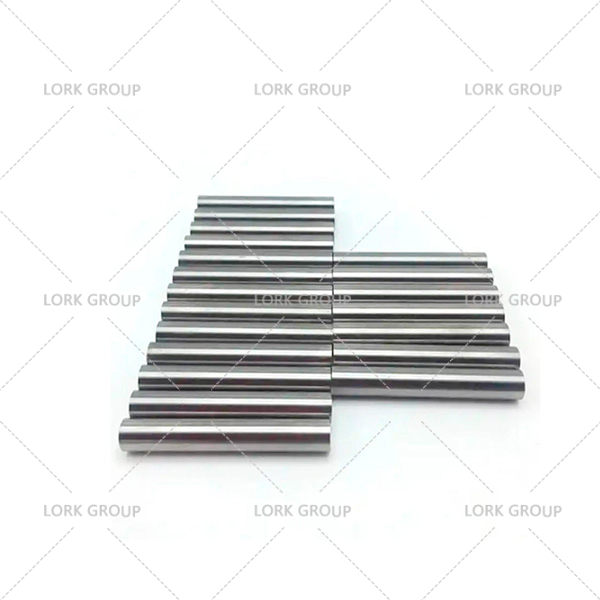
Characteristics of Grade 3 Titanium
High Strength:
Grade 3 titanium is much stronger than Grades 1 and 2. This makes it suitable for uses where durability and toughness are important.
Good Flexibility:
Even though it is strong, Grade 3 titanium can still be easily shaped and formed, making it versatile.
Excellent Corrosion Resistance:
Like other titanium grades, Grade 3 resists corrosion in various environments, including seawater and harsh chemicals.
Good Weldability:
Grade 3 titanium can be welded easily, which is important for many manufacturing processes.
Characteristics of Grade 4 Titanium
High Strength:
Grade 4 titanium is the strongest of all commercially pure titanium grades. It provides great strength for its weight, which is important in demanding uses.
Good Corrosion Resistance:
Like other pure titanium grades, Grade 4 resists corrosion well in various environments, including in seawater and chemicals.
Moderate Flexibility:
While not as easy to shape as Grades 1 and 2, Grade 4 titanium is still flexible enough for forming into different shapes.
Weldability:
It can be welded easily using standard methods, which is essential for making complex parts and structures.

Characteristics of Grade 5 Titanium (Ti-6Al-4V)
High Strength:
Ti-6Al-4V is very strong, comparable to some types of steel, but much lighter. This makes it ideal for applications where strength is important, but weight needs to be minimized.
Good Corrosion Resistance:
It holds up well against corrosion in various environments, including seawater and chemicals. This durability ensures it lasts a long time even in tough conditions.
Lightweight:
Despite being strong, Ti-6Al-4V is lightweight. This makes it perfect for industries like aerospace, where reducing weight is crucial for fuel efficiency and performance.
Can Handle High Temperatures:
It remains strong even when exposed to high temperatures, making it useful in environments where heat is a factor.
Characteristics of Grade 7 Titanium
Superior Corrosion Resistance:
Resists pitting, crevice corrosion, and reducing acids (e.g., sulfuric, hydrochloric) better than standard CP titanium.
Palladium (0.15%) enhances resistance to oxidizing and chloride-rich environments.
Excellent Weldability & Fabrication:
Can be welded using standard methods (TIG, plasma, laser) without cracking.
Good cold-forming properties (similar to Grade 2 titanium).
Mechanical Properties
Tensile Strength: ~345 MPa (50 ksi)
Yield Strength: ~275 MPa (40 ksi)
Elongation: 20% (ductile and machinable)
Biocompatibility
Non-toxic and biocompatible (used in medical implants where corrosion resistance is critical).
Thermal Stability
Performs well in temperatures up to 300°C (570°F).
How to Choose the Right Titanium Grade?
Corrosion Resistance? → Grades 1, 2, 7, 12
High Strength? → Grades 4, 5, 9
Medical Implants? → Grades 2, 5, 23
Aerospace & Military? → Grades 5, 9, 19
Need Titanium Products?
Having explored the characteristics of different titanium alloys, select the optimal grade for your application. Lork Group, a trusted titanium alloy supplier, provides high-quality materials—contact us for technical specifications and pricing.
We supply all titanium grades in bars, sheets, tubes, and custom machined parts. Contact us today for specs & pricing!
Website:+86 17513081871
Email:daisy@lorkgroup.com
What is Inconel 600 used for Lork Group - Premium Nickel Alloy Solutions
The Critical Role of Nickel-Based High-Temperature Alloys in Gas Turbines
Related Article
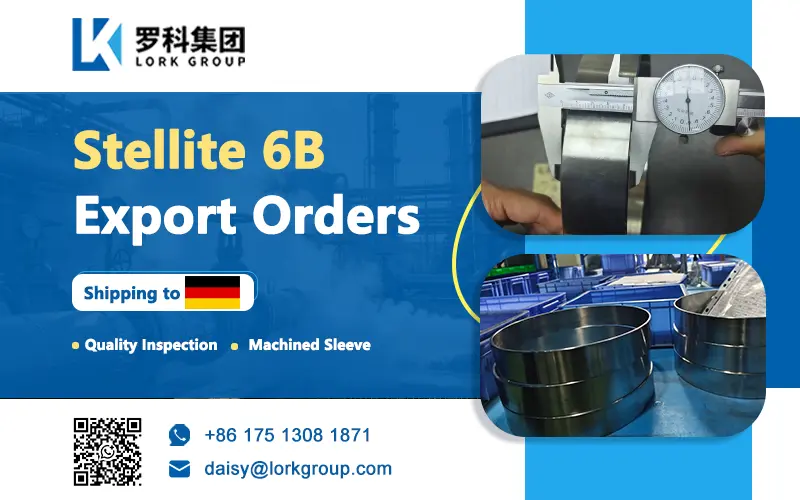
The Lork Group possesses extensive experience in processing cobalt-based alloys and maintains a comprehensive quality control system. The Stellite 6B bushings exported in this shipment—measuring 9 cm in width and 36 cm in diameter—are high-precision components. Delivery takes place only after the products have passed inspection; this process reflects our unwavering commitment to quality and is key to earning the trust of our German clients.
Lork Group Stellite 6B machined bushings exported to Germany

As an international group with 15 years of experience in specialty alloy supply chain management, Lork Group offers product selection consultation and supply services for the full range of Elgiloy, Pyromet, Elinvar, and Ni-Span-C 902 alloys. Please feel free to contact Lork Group’s sales and technical teams for the latest price quotes, material technical data sheets, or supplier coordination support.
Supplier of Elgiloy Pyromet Elinvar and Ni-Span-C 902 high-elasticity alloys
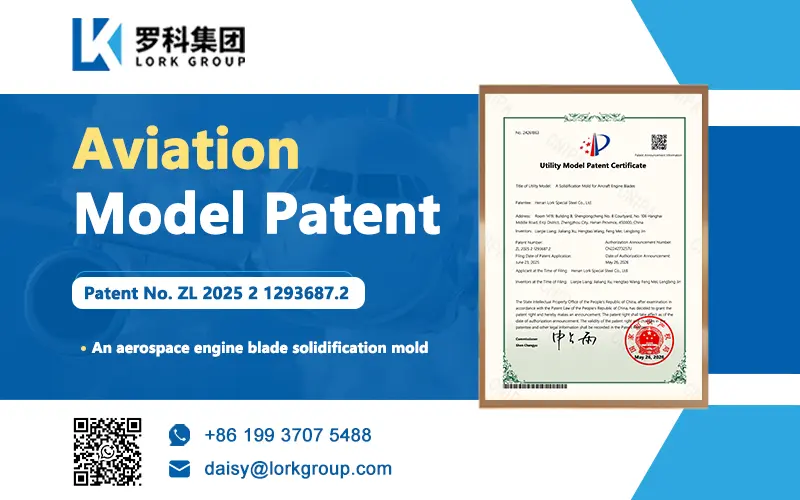
Patent No. ZL 2025 2 1293687.2 focuses on the precision casting of aero-engine blades, demonstrating the Group's sustained innovation capabilities in the fields of specialty steels and precision forming technologies.
Lork Group Granted National Utility Model Patent for an Aviation Engine Blade Solidification Mold
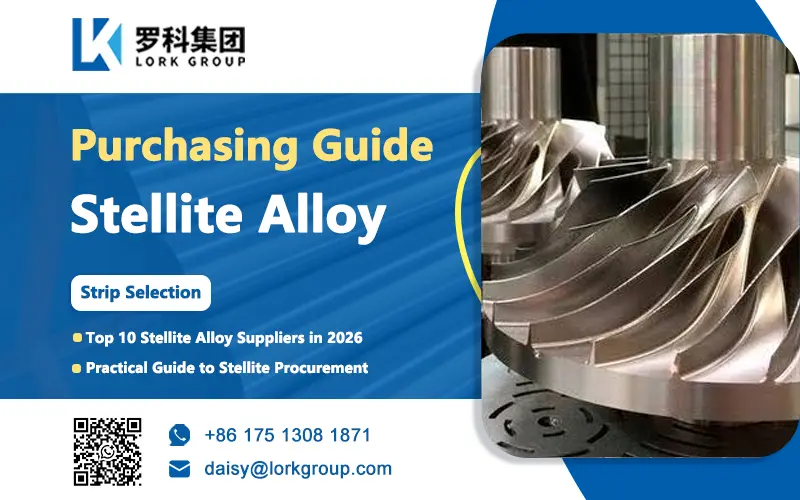
If you are unsure whether to use Stellite 6, 12, or 21 for your current project, simply send us a description of the operating conditions, and Lork Group engineers will provide a free "grade recommendation." Click the button below to submit details regarding operating temperature, corrosive media, and impact conditions, and we will respond within 24 hours.
Top 10 Suppliers of Stellite Alloy Materials for 2026