
What are the lightweight special metal materials for the Air Force?
2024-09-24
 Due to the advancement in aerospace technologies, there is a lot of demand for advanced metal materials.
Equipment used for Air Force aircraft and rockets must be light and able to withstand myriad environmental stressors, including extreme temperature and pressure fluctuations, high levels of vibration, impacts, and corrosive substances. Nickel alloys and high-temperature alloys such as Monel, Inconel, Hastelloy, and many others, have become some of the most commonly used metals in the Air Force due to their extremely high tensile strength and ability to withstand harsh environmental conditions.
When cold formed, these alloys multiply their tensile strength to withstand pressures as great as 125,000 psi. They are highly resistant to corrosion and high temperatures, which makes them perfect for engine, exhaust, and fuel system components. Their lightweight strength is ideal for use in rocket and aircraft frames, exterior panels, and fastening hardware for critical equipment operations.
Lork Group is a leading supplier of nickel alloy and high temperature alloys. In business since 2004, we have experience serving the needs of customers in diverse markets including aerospace, aircraft, automotive, medical, food service, house-wares, and many others.
Lork Group stocks a comprehensive inventory of sheet, coil, pipe, bar and strip. We are also specialists in high temperature alloy and special steel including Inconel 625, Inconel 718, hastelloy C276, hastelloy C22, haynes 25, hayness 75, monel 400, monel K500, incoloy 800,nimonic 80A, etc
Below, we will provide a detailed introduction to the applications of nickel alloys and high-temperature alloys in the aviation industry
Monel Alloy
Monel alloy is a group of nickel alloys with copper as the primary alloying element, In addition to nickel and copper, Monel alloys can also include small amouts of other elements such as iron, manganese, carbon, silicon, sulfur,aluminum, and titanium. The exact mix of these elements varies depending on the specific r'equirements andintended use of the alloy.
Monel alloys also perform well under extreme temperatures, both high and low, Theseproperties make Monel alloys suitable for a range of challenging applications.
Monel metal found bulk uses in aircraft construction, especially in making the frames and skins of experimental rocket planes, such as the North American X-15, to resist the great heat generated by aerodynamic friction during extremely high speed flight. Monel metal retains its strength at very high temperatures, allowing it to maintain its shape at high atmospheric flight speeds, a trade-off against the increased weight of the parts due to Monel's high density.
Monel is used for safety wiring in aircraft maintenance to ensure that fasteners cannot come undone, usually in high-temperature areas; stainless wire is used in other areas for economy. In addition some fasteners used are made from the alloy.
Inconel Alloy
Inconel alloys are incredibly versatile, used across a number of key industries thanks to the superior properties and high performance the materials offer.
Inconel alloys are a natural choice within the aerospace industry. Engine parts, in particular, are exposed to high temperatures and high pressure. Materials need to be able to withstand this environment and retain their strength and integrity. Inconel alloys exhibit low expansion at these high temperatures, offer creep resistance under high-stress conditions, and are corrosion resistant.
Inconel alloy 600, for example, is used for jet engine and airframe components, such as lockwire, exhaust liners and turbine seals. While Inconel alloy 601 has such high mechanical strength and is so easy to work with, making it useful across a broad range of aerospace applications.
Hastelloy Alloy
Hastelloy C276 is a nickel-molybdenum-chromium superalloy known for its versatility and ability to resist corrosion in extreme environments. Aerospace forging requires materials that withstand strong external forces and temperature variations. Unlike other materials, such as stainless steel or aluminum, Hastelloy C276 can resist corrosion from harsh chemicals in aircraft fuels and oils while maintaining strength and durability. This resistance to environmental changes and high strength make it ideal for manufacturing aircraft engine components such as turbine blades and hot sections.
The use of Hastelloy C276 is not limited to aircraft engine components. It is also critical in constructing aircraft exposed to harsh weather conditions, which can threaten the structural integrity of the aerospace components. With Hastelloy C276’s capability of withstanding high-temperature environments, aircraft manufacturing companies can ensure that their planes are sturdy enough to withstand extreme weather and comply with the FAA’s stringent safety standards.
In the aerospace industry, electronics and other components must be situated where communication signals can penetrate and remain shielded from interference. Hastelloy C276 can help by enabling manufacturers to construct strong and shielded components. The material is used to construct electronic equipment, radar calibration trays, and antennas. The shielding quality of Hastelloy C276 is critical because it prevents electromagnetic waves from coupling with the sensitive electronics on board, thus reducing the risk of electromagnetic interference.
316 Stainless Steel vs 304 Stainless Steel: Which is Better?
Hastelloy C276 widely used in the pulp and paper industry
Related Article
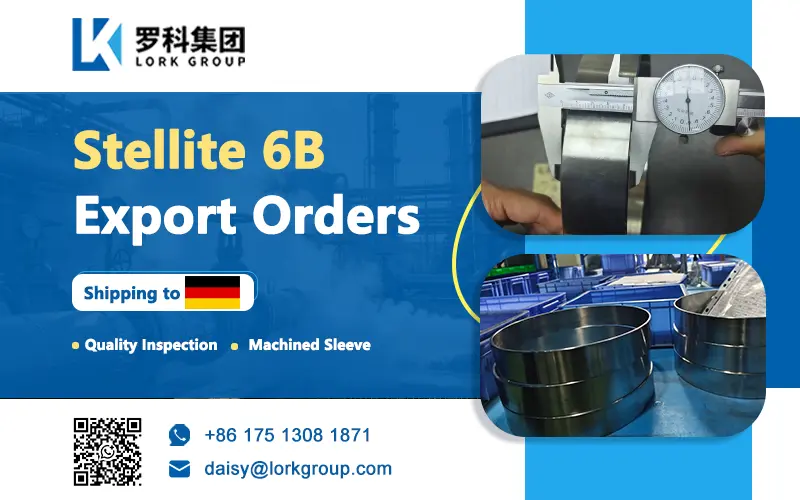
The Lork Group possesses extensive experience in processing cobalt-based alloys and maintains a comprehensive quality control system. The Stellite 6B bushings exported in this shipment—measuring 9 cm in width and 36 cm in diameter—are high-precision components. Delivery takes place only after the products have passed inspection; this process reflects our unwavering commitment to quality and is key to earning the trust of our German clients.
Lork Group Stellite 6B machined bushings exported to Germany

As an international group with 15 years of experience in specialty alloy supply chain management, Lork Group offers product selection consultation and supply services for the full range of Elgiloy, Pyromet, Elinvar, and Ni-Span-C 902 alloys. Please feel free to contact Lork Group’s sales and technical teams for the latest price quotes, material technical data sheets, or supplier coordination support.
Supplier of Elgiloy Pyromet Elinvar and Ni-Span-C 902 high-elasticity alloys
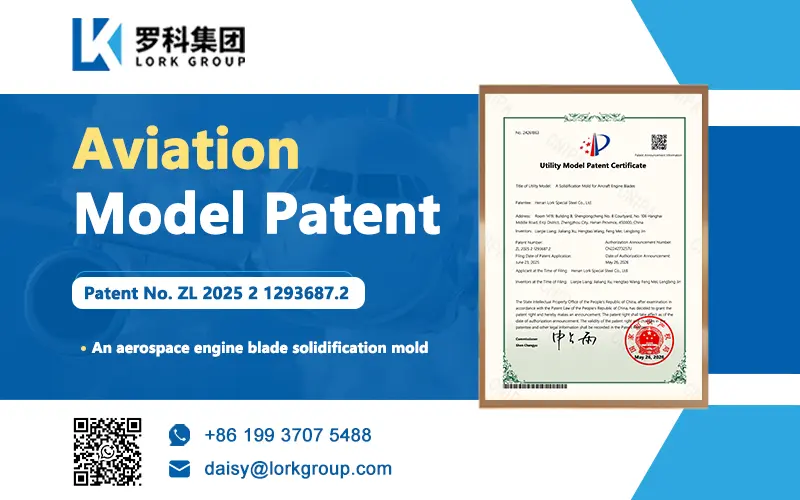
Patent No. ZL 2025 2 1293687.2 focuses on the precision casting of aero-engine blades, demonstrating the Group's sustained innovation capabilities in the fields of specialty steels and precision forming technologies.
Lork Group Granted National Utility Model Patent for an Aviation Engine Blade Solidification Mold
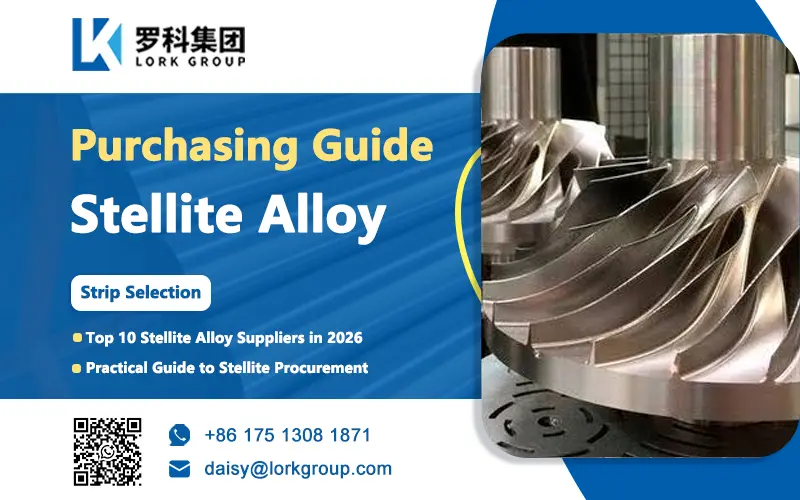
If you are unsure whether to use Stellite 6, 12, or 21 for your current project, simply send us a description of the operating conditions, and Lork Group engineers will provide a free "grade recommendation." Click the button below to submit details regarding operating temperature, corrosive media, and impact conditions, and we will respond within 24 hours.
Top 10 Suppliers of Stellite Alloy Materials for 2026